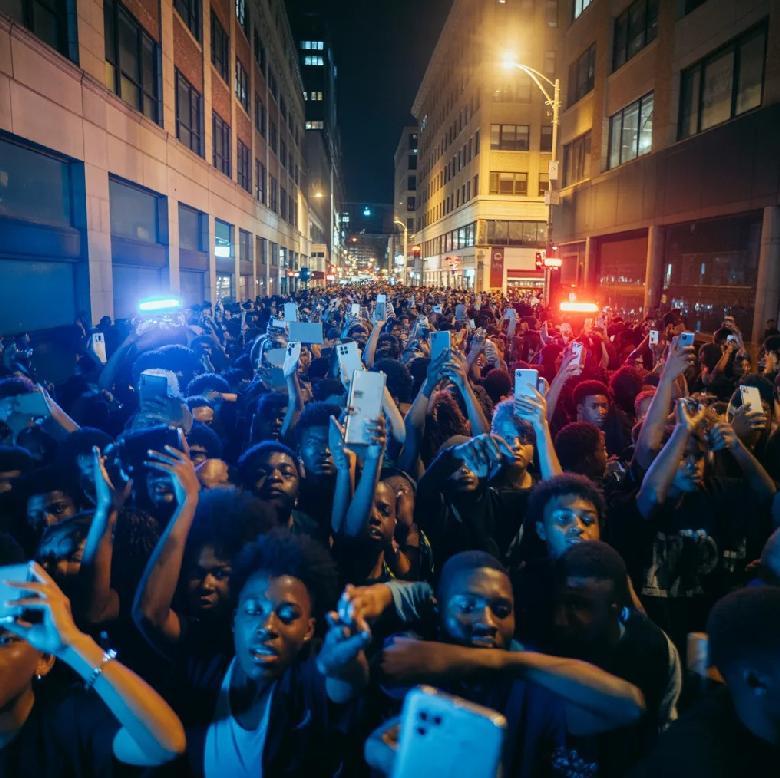
It starts with a single post. A location. A time. A challenge. Within hours, hundreds of teenagers descend on a city street, mall, or waterfront. This is the new reality of the American city. Large groups of adolescents, organized entirely through social media platforms like TikTok, Snapchat, and Instagram, are staging what have become known as “teen takeovers.” While initially intended as harmless fun or a celebration of youth culture, these events often spiral into chaos, leaving police and local governments scrambling to manage the aftermath.
In cities across the nation, the consequences of these gatherings can be severe. What begins as a planned meetup can quickly devolve into vandalism, looting, or public disturbances, prompting law enforcement to respond with overwhelming force. The sheer unpredictability of these events makes them a nightmare for security agencies, who find themselves outmatched by the sheer number of participants. With each new challenge circulating online, police departments are forced to rethink their strategies, often coming up short in the face of the swirling energy of youth.
But it’s essential to recognize the underlying currents driving these takeovers. Many teens are simply searching for a sense of belonging and excitement in spaces that feel restrictive or stifled. In a world where digital interaction often substitutes for genuine social connection, these takeovers can be seen as a misguided attempt to carve out a space for themselves. However, the consequences of their actions can have lasting ramifications, not just for the community but for the individuals involved, who face potential legal repercussions.
As cities grapple with the rise of these viral phenomena, the discussions around responsibility, safety, and community engagement become more urgent. How can authorities balance the need for public safety with understanding the cultural dynamics at play? The answer isn’t straightforward, but it’s clear that dialogue and proactive engagement are necessary to address the root causes of these takeovers. Until then, this new age of spontaneous gatherings will continue to challenge the very fabric of urban life, leaving many to wonder what the future holds for our cities and the youth who inhabit them.
About The Author