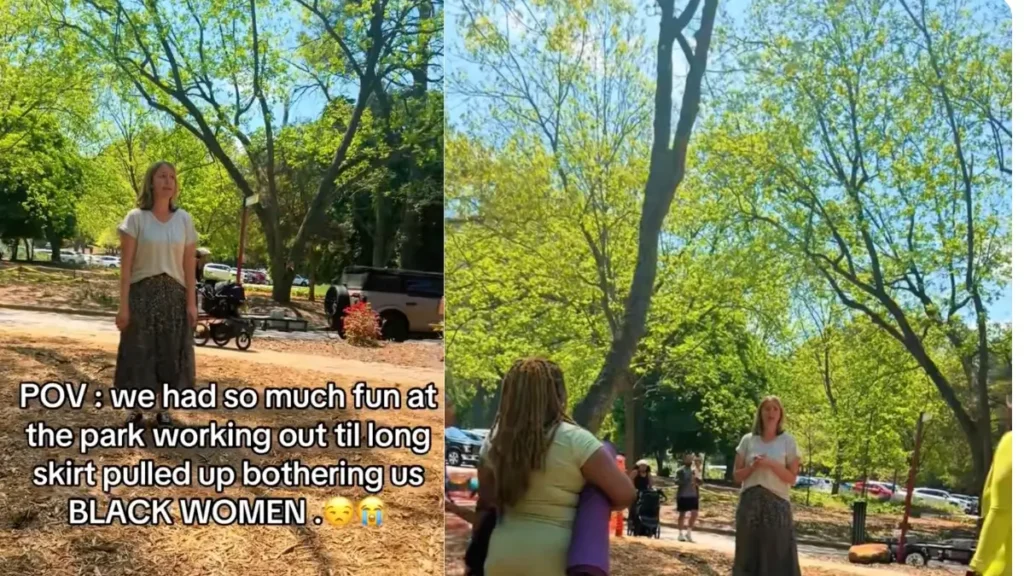
In Raleigh, North Carolina, a group of Black women enjoying a workout in the park found themselves at the center of an unsettling confrontation that echoes the larger societal tensions still present in America today. The scene started off as a typical outdoor exercise session, where laughter and determination filled the air, but quickly shifted to unease when a white woman approached them, questioning their presence and even threatening to call the police. This incident is not just an isolated case; it reflects a troubling pattern that often emerges when Black bodies occupy public spaces.
For many, the park is a sanctuary, a place to engage in self-care and community bonding through fitness. However, for that woman, it seems that the simple act of seeing Black women exercising together triggered an instinctive urge to police their enjoyment. The notion of calling the law—a thinly veiled threat—serves as a stark reminder of the historical context wherein Black people have often found themselves under scrutiny, even while engaging in harmless activities. This behavior is emblematic of a deeper societal issue where perceived trespasses against the status quo can lead to unwarranted aggression.
The group, rather than backing down under pressure, responded with strength and solidarity, demonstrating that their right to occupy space is not only valid but essential. They transformed a tense moment into an empowering statement about autonomy and resistance. The situation escalated quickly, garnering the attention of onlookers and sparking conversations about race, privilege, and the community’s right to exist freely and without fear. Their reaction highlighted the importance of unity, especially in moments where division seeks to creep in.
This incident is a powerful reflection of how systemic racism continues to manifest in everyday life, making it a crucial discussion point not only for those directly involved but for society at large. The dialogue surrounding this encounter serves as a necessary reminder that the fight for equality extends beyond the overt acts of violence and prejudice; it permeates the subtleties of everyday interactions as well. As we reflect on this event, it’s vital to recognize the resilience of those Black women and others like them who refuse to let intimidation dictate their space or silence their voices. In a world where they are often told to ‘know their place,’ they boldly assert that they belong anywhere they choose to be.
This confrontation, while alarming, has the potential to ignite important conversations about race, privilege, and the need for more inclusive spaces for all. As we navigate these complex dynamics, let’s continue to uplift the voices of those who are often marginalized, ensuring their rightful place in every park, gym, and community space. Because at the end of the day, no one should have to justify their existence or their right to enjoy a simple workout under the sun.
About The Author