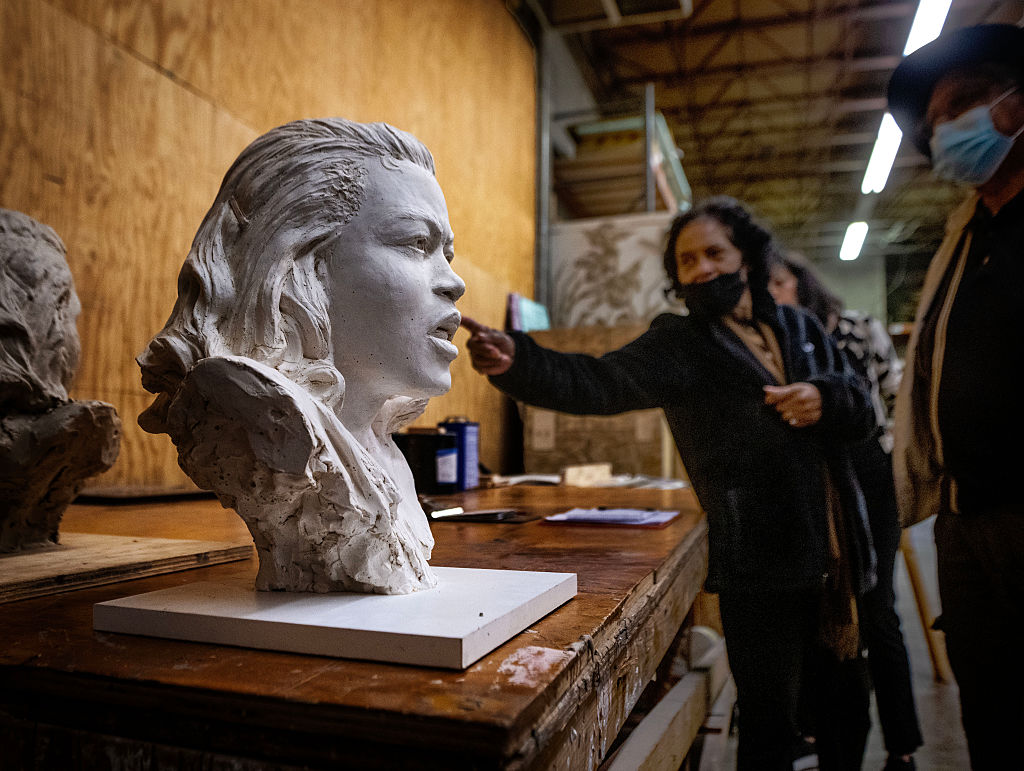
On December 16, a powerful moment in history unfolded as a statue honoring Barbara Rose Johns was unveiled in the U.S. Capitol, a tribute to a teenager whose bravery played a pivotal role in the fight against educational segregation in America. In 1951, at just 16 years old, Johns led her peers in a courageous walkout from the segregated Moton High School in Farmville, Virginia. This bold act not only highlighted the injustices of the Jim Crow era but also ignited a movement that would eventually lead to the landmark Supreme Court case, Brown v. Board of Education.
Barbara’s passion for justice and equality was sparked by the dismal conditions of her segregated school, where the disparity in resources was glaring. The walkout she orchestrated was not merely a protest; it was a declaration that Black students deserved the same quality of education as their white counterparts. Her actions were instrumental in bringing national attention to the plight of Black students, laying the groundwork for a nationwide push toward desegregation. By replacing a statue of Robert E. Lee in the Capitol, the unveiling signifies a much-needed shift in the narrative of American history—a recognition that the fight for civil rights began with the courage of young people like Johns.
As we honor Barbara Rose Johns today, we are reminded of the immense impact that youth activism can have on society. Her legacy resonates far beyond 1951; it serves as an inspiration for current and future generations in their continued struggle for equality. The presence of her statue in the Capitol is not just a testament to her bravery, but also a call to action for all of us to stand against injustice in whatever form it may take. In a time when the fight for civil rights is still relevant, Johns’ story is a powerful reminder that one voice, no matter how young, can spark monumental change.
About The Author