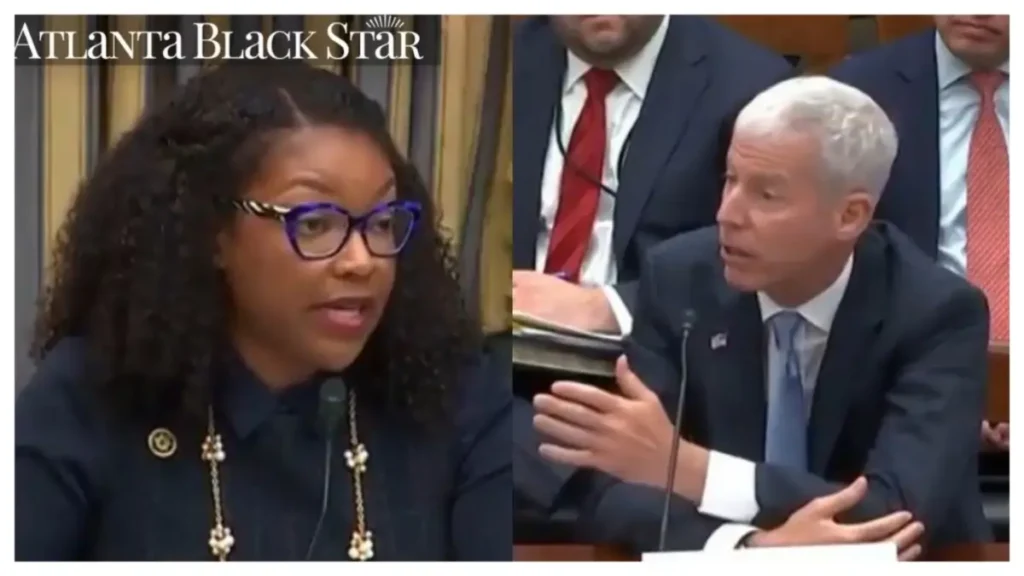
Energy Secretary Chris Wright found himself in a corner on June 10 during a heated exchange in a congressional budget hearing with Rep. Emilia Sykes. The tension was palpable as Wright attempted to sidestep direct questions about the administration’s energy policies, resorting to vague answers and slick rhetoric. But Rep. Sykes wasn’t having any of it. With a fierce determination to hold him accountable, she pressed him for clarity, challenging Wright to answer honestly about his department’s priorities.
What unfolded next was a masterclass in political strategy. Rep. Sykes seized the moment, pulling out recordings of former President Trump’s past remarks on energy and climate. Each clip was a painful reminder of the administration’s inconsistent stance on crucial issues. With deft precision, she dismantled Wright’s defenses, showcasing the contrast between his evasive answers and Trump’s own words, which painted a stark picture of the administration’s energy agenda.
This exchange highlights a critical point: accountability in leadership is paramount, especially when it comes to policies that affect the lives of millions. As Rep. Sykes laid bare the contradictions in Trump’s narrative, it became clear that Wright’s attempts to play clever had backfired spectacularly. Moments like these serve as reminders that the truth has a way of surfacing, no matter how much one tries to dance around it.
In the end, the hearing was more than just a political confrontation; it was a call to action for lawmakers to prioritize honesty and transparency in governance. As the discourse around energy policy continues to evolve, one thing is certain: we must demand the truth from our leaders, no matter how uncomfortable it may be.
About The Author