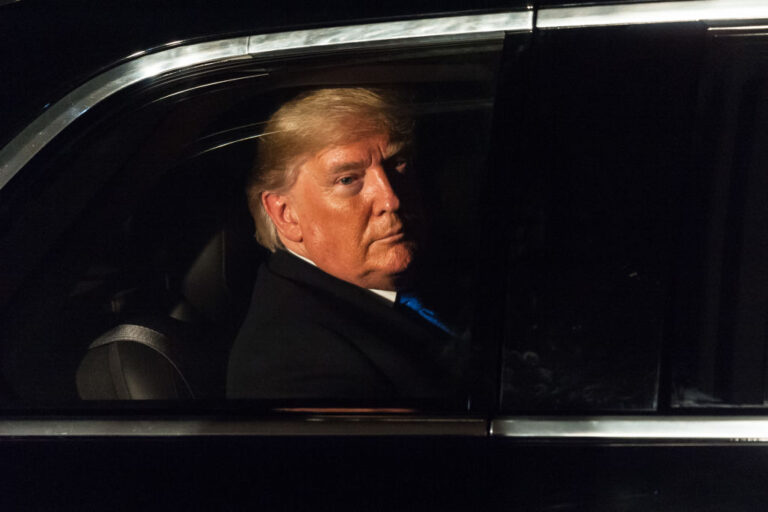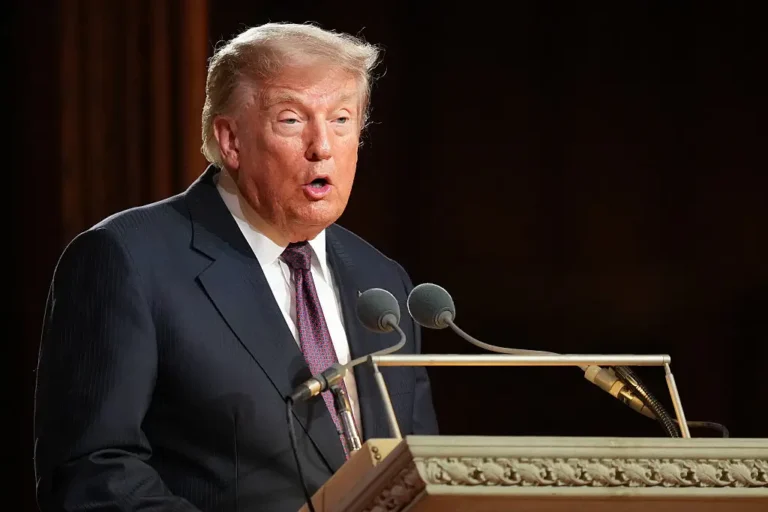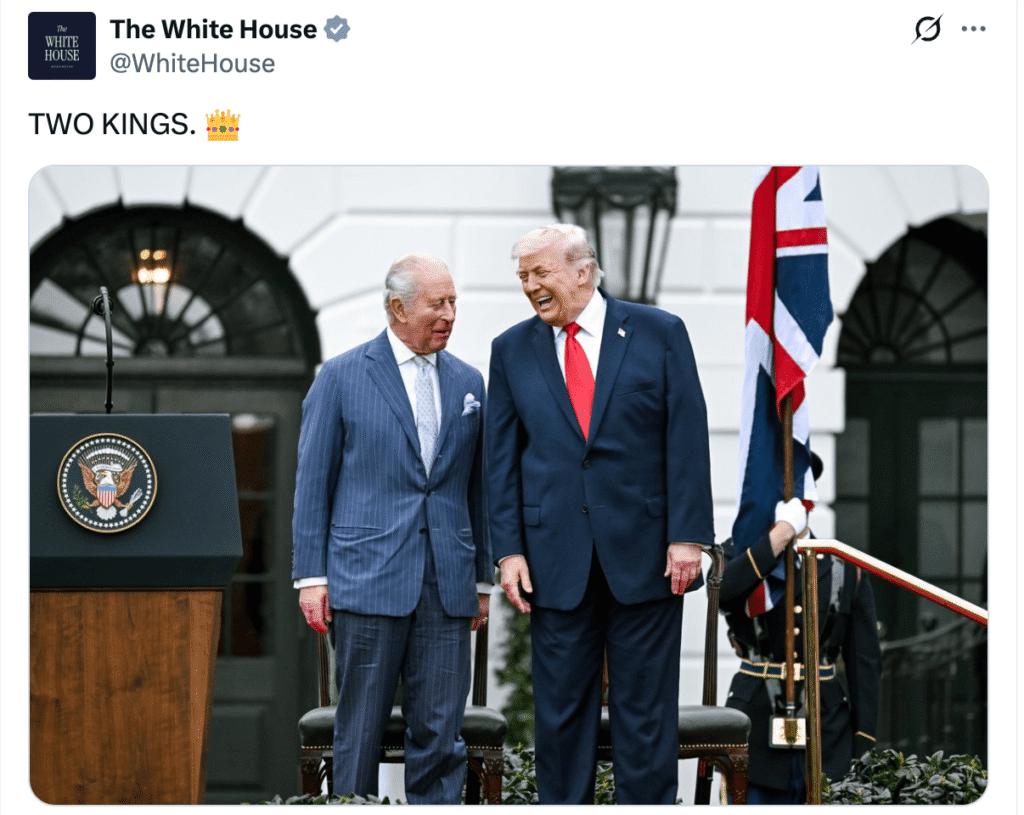
In a move that’s both cheeky and controversial, the White House recently shared a photo of former President Donald Trump alongside King Charles III, captioning it ‘TWO KINGS’. While the intention may have been playful, this social media post lands in the midst of the ongoing ‘No Kings’ movement, a protest against the very idea of monarchy and authoritarian rule. Activists are using this phrase to critique not just royalty but also the power dynamics that leaders like Trump represent.
The juxtaposition of Trump, a figure who has sparked protests and polarized opinions, with King Charles III, a monarch stepping into a long-held institution, serves as a reminder that the struggles for democracy and equality are alive and well in today’s political climate. The online snickers from the administration seem to overlook the significance of a growing movement that seeks to dismantle the remnants of oppressive hierarchies, both globally and domestically. For many, the idea of kings—be it in the form of a literal monarchy or a metaphorical one like Trump—has sparked outrage, not laughter.
It’s almost ironic that the White House thinks it can embrace such a title when countless activists are fighting against what they perceive as a figurative king of ill governance. This not-so-subtle wink from the administration plays into a narrative that many see as tone-deaf, especially in a time when the socio-political landscape is rife with protests and calls for change. The contrast highlights the dissonance between those in power and the voices of the people demanding accountability.
As protests ripple through streets and social media, echoing the sentiment that leadership should be accountable to the masses rather than elevated above them, the ‘TWO KINGS’ caption feels more like a challenge than a clever quip. It raises the question: how can those in power claim to represent the people while simultaneously embracing outdated titles? This post draws attention not just to the antiquated notion of kings, but also to the ongoing dialogue about leadership, representation, and the future of democracy in a rapidly changing world.
For those engaged in the struggles against systemic oppression, the White House’s attempt at humor seems misplaced at best. As we continue to witness the push for a more equitable society, it’s crucial to examine the power structures at play, both in the photo shared and in the broader context of our political landscape. The ‘No Kings’ movement is a reminder that true leadership is about service, not sovereignty, and it’s time to shift the narrative.
About The Author