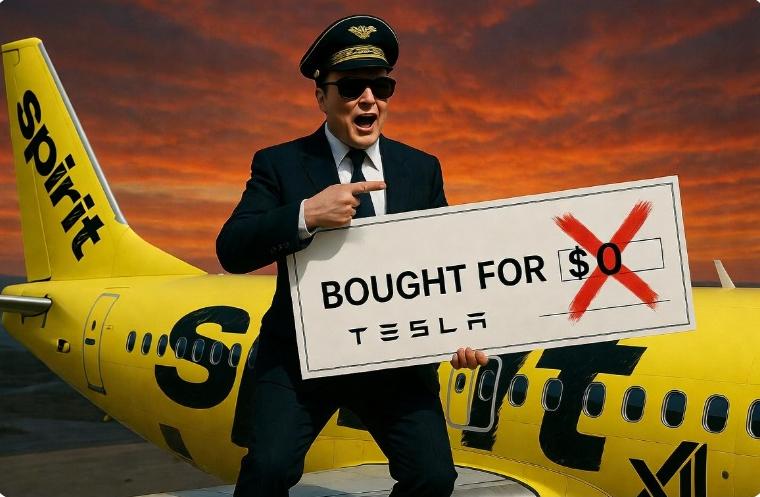
Earlier this month, Spirit Airlines officially ceased operations, leaving many passengers stranded and wondering about the future of the airline industry. As news of Spirit’s shutdown broke, a peculiar rumor began to circulate online. Some social media users reported that tech mogul Elon Musk was stepping in to save the airline, with headlines like “Elon Musk in Talks to Buy Spirit” generating a buzz that could rival any blockbuster release. However, upon closer inspection, it became evident that this claim was nothing more than a flimsy piece of internet fiction.
The genesis of the rumor can likely be traced to the internet’s penchant for sensationalism, especially when a prominent figure like Musk is involved. As the founder of Tesla and SpaceX, Musk is known for his ambitious endeavors and his knack for shaking up industries. Naturally, the idea that he would rescue a struggling airline seemed to resonate with many. But, as with many things on the internet, what sounds too good to be true often is.
In reality, the story was entirely unfounded, a mere concoction of online speculation and wishful thinking. Official sources, including representatives from both Spirit Airlines and Musk’s various enterprises, have confirmed that there are no talks or plans for any acquisition. The frantic social media posts only added to the confusion, making it difficult for the public to discern fact from fiction in an already turbulent time for the airline industry.
As we navigate a landscape rich with misinformation, this incident serves as a stark reminder to approach sensational claims with skepticism. Social media, while a powerful tool for connection and news dissemination, can also be a breeding ground for rumors and falsehoods. So, as we bid farewell to Spirit Airlines, let’s keep our collective feet on the ground and remember: not every headline is a harbinger of hope. Sometimes, they’re just smoke and mirrors in the vast arena of online chatter.
About The Author