By Renee Fontaine, PowerVault Staff
The industry will tell you to “network.” The streets will tell you to “stay dangerous.” But every real story that lasts in Black music usually starts with something a lot less glamorous: a community center, a choir room, a homie with cracked software, a teacher who let you stay after hours when they were supposed to lock up.
That is why this new move from Channel Tres hits deeper than just another brand collab. It looks like somebody who made it coming back to make sure the door actually stays open for the next kid.
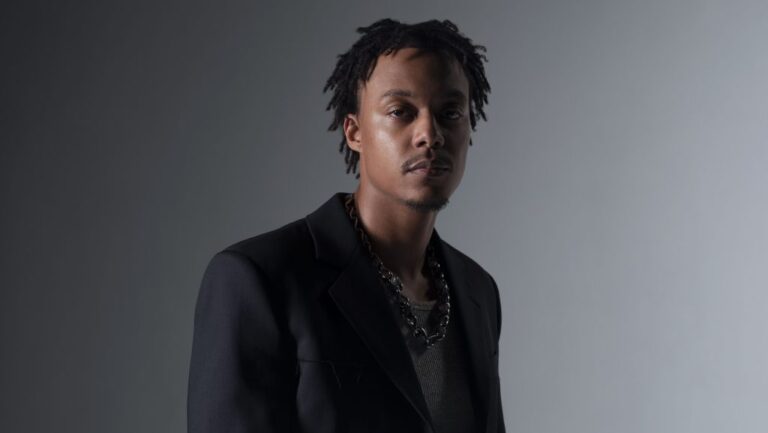
Channel Tres, the Compton raised producer, rapper and house hybrid architect who turned West Coast funk into something you can hear at Paris fashion shows and backyard kickbacks at the same time, has linked up with Harmony Project LA and Ugg to pour into young music students. Not with a quick photo op, but with time, access and a real roadmap conversation about how to move through this industry without losing your soul or your sound.
Harmony Project is not some random nonprofit name dropped for clout. This is a long running LA program that gives low income students free music education, instruments and ensemble experience across the city. We are talking about kids who might be bouncing between apartments, who might not have WiFi at home, stepping into structured rehearsals and learning theory, ear training and discipline. That is a lifeline, the same way church choirs and marching bands were the lifeline for earlier generations.
Channel Tres stepping into that space matters because the kids already know who he is. This is not an old guy in a suit telling them what “real music” is. This is the voice on their playlists talking to them in person about publishing splits, about creative control, about how to move when you are the first one in your family navigating label meetings and festival stages.
There is also the Ugg partnership piece, which at first glance might feel like random cozy boots energy, but pay attention to the pattern. A lot of these heritage or lifestyle brands are trying to buy authenticity and tap into culture. The difference is when the artist involved actually re routes that corporate money back into the block. Channel positioning this around Harmony Project and his Compton House community work says, “If you want my cool, you are going to have to invest in my kids.” That is the leverage move more artists should be copying.
Hip hop and Black music have always had this tension between individual success and collective uplift. For every story of somebody coming back to build a community center, there are ten more of people getting out the hood and never looking back. Some of that is survival. Trauma. Wanting to protect your peace. But there is also a cost when visibility does not translate into infrastructure. Programs like Harmony Project, Compton House and the rise of hip hop based school programs like Griot B’s School Yard Rap are the other side of that story, where music is not just consumed but used as curriculum, as career training, as therapy.
Channel Tres has always played the long game. While a lot of artists chase viral, he carved out a lane where Detroit house, G funk, basslines you feel in your knees and deadpan rap all live together. That kind of genre bending, Black weird kid energy speaks directly to this new generation of students who do not see themselves in just one box. Imagine being a 15 year old in South LA who loves Pharrell, Kaytranada, Larry June and Moodymann and then meeting Channel Tres in a classroom setting where he is telling you that you are not crazy for hearing all those sounds at once.
What Harmony Project provides is structure. What Channel Tres brings is proof. The combination is important. Black kids are constantly told they are talented but not often handed the actual playbook. How to set up a PRO account. What a producer agreement looks like. Why owning your masters is not just a Twitter slogan. When someone who looks like you and talks like you breaks that down in a space where you are already learning your instrument, it hits different.
There is also a mental health side of this that rarely gets talked about when brands announce “inspiring the youth” campaigns. The music industry can be brutal, especially for Black artists who did not grow up with a cushion. Every decision can feel like life or death. Take this deal and maybe save your family. Say no and risk going back to zero. Hearing an artist like Channel Tres talk about boundaries, about saying no to certain spaces, about centering community not just profit, teaches kids that their humanity matters more than their streams.
Black music has always doubled as a survival guide. That is why Black Music Month still means something beyond just playlists and award show montages. If you missed it, there is a whole breakdown on that in What Is Black Music Month Really About And Why Has Black Music Always Been Our Lifeline? and this Harmony Project moment fits right into that lineage. From spirituals coded with escape routes to Nina Simone soundtracking civil rights, to Public Enemy putting the news into the hook, to Nipsey turning mixtape money into STEM centers on Crenshaw, the pattern is the same. The songs are the entry point, but the real work is always in the institutions built behind them.
Channel Tres is not Nipsey, and this is not about forcing a comparison, but there is a shared philosophy: art tied to place. Compton is not just a brand line for him. It is in the name of his Compton House space, in the way he talks about community being “a big thing,” in how he shows up for LA kids who might never see the inside of a label office but can walk into a Harmony Project rehearsal after school.
When artists choose this path, it also quietly challenges the industry’s obsession with constant output. Fans notice when someone slows down for something that does not chart. The same way people clock when LeBron takes a second to publicly center his family, like that viral birthday post to Savannah, moments like this with Channel Tres say, “I am not just a content machine.” That is powerful for kids watching who are growing up in a TikTok era where everything feels disposable.
Of course there is always the question of authenticity with brand backed community work. Ugg is not a charity. They benefit from being associated with Channel’s cool and Harmony’s impact. But that is where intention and execution matter. Are the kids getting instruments and equipment? Are there workshops, mentorship, studio visits, scholarships, internships attached? Is this a one time panel or a year long pipeline? Those are the questions that decide whether this is just PR or something that actually shifts a kid’s life.
From what is been shared so far, Channel Tres is not treating this as a hit and run. His language around “roadmap” and “community” lines up with how he has moved for years. Compton House did not pop up overnight. His touring choices, his collaborations, even his visuals always hint at a bigger world he is trying to build, not just a moment he is trying to catch.
There is also an ecosystem effect when a respected artist touches a program like Harmony Project. Other artists notice. Younger producers from the city might volunteer a day. Engineers might pull up and talk about mixing. A&R folk might quietly scout, and if they have sense, they will do it ethically instead of just trying to poach talent without giving back. One partnership can turn a single classroom into a small network of opportunity.
It is easy to be cynical about these moves because we have seen so many surface level “inspire the youth” campaigns that never make it past the press release. But it is also true that a lot of Black legends started with one teacher and one program. Patrice Rushen came up through LA’s public school music ecosystem. So did Ty Dolla $ign, Terrace Martin, so many others. Somebody fought for those programs to exist when budgets were being cut. Somebody with a name showed up and made those kids feel seen. This sits in that same tradition.
Zooming out, the culture is in a weird spot. The algorithm is loud. Attention spans are short. Touring is stressful. We are watching artists like Kehlani cancel shows and reset for their own health, like in Why Did Kehlani Cancel Her Tour Dates, and we are seeing younger artists trying to figure out how to build something sustainable instead of burning out by 27. Community based music education, tied directly to active working artists, is one of the most practical answers to that problem.
Kids in Harmony Project will not all become Channel Tres. Some might end up as music teachers, some as lawyers, some as tech founders who just happen to understand rhythm. But they are absorbing a model where creativity, business and responsibility to your block are not separate. That will shape how they move, whatever field they enter.
So what happens next matters. If this Channel Tres, Harmony Project and Ugg link up turns into a recurring series, if it inspires similar programs in Compton, Inglewood, Watts, if other brands see that the culture will actually support initiatives that center youth and not just drip, then we are looking at something bigger than a headline. In ten years, some kid from this cohort could be on a festival stage telling their own story about the day Channel Tres walked into their rehearsal and made music feel like a real future, not just a dream.
That is the part worth watching. Not just the playlists, not just the campaigns, but the kids who quietly walk out of that Harmony Project building with a horn case or a beat on a USB drive, feeling a little more certain that there is a place for them in this thing we call the culture.
About The Author