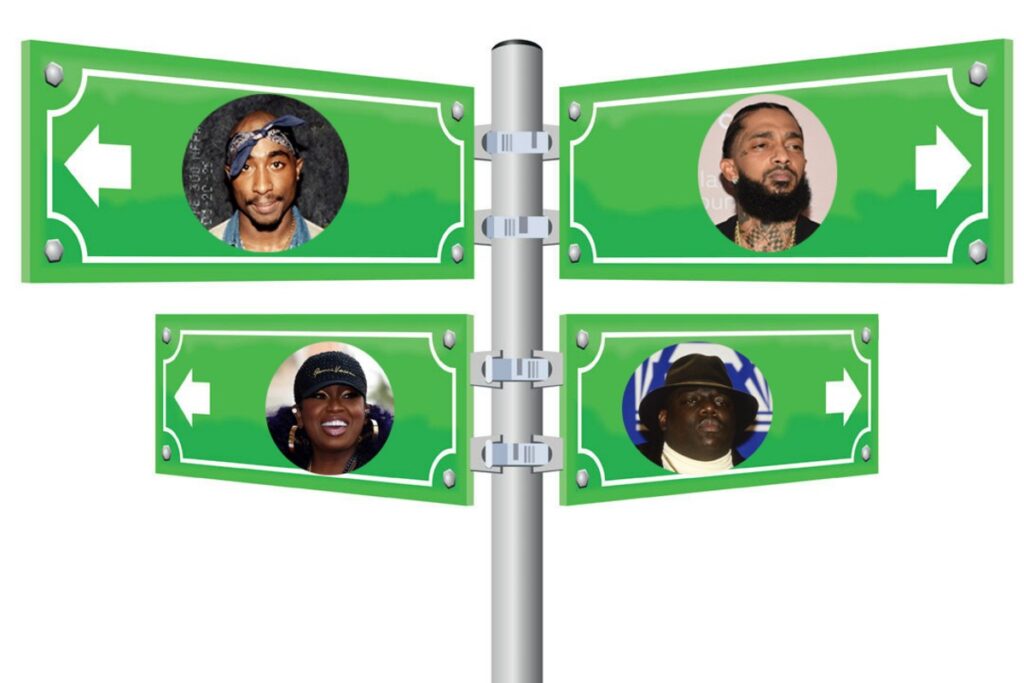
In the vibrant tapestry of hip-hop culture, few accolades are as profound as having a street named after you. It’s not just a sign; it’s a symbol of respect, recognition, and a lasting mark on the community. For many rappers, these streets serve as a physical reminder of their roots and the journeys they’ve taken, celebrating their contributions to music and society as a whole. From the gritty blocks of Compton to the bustling avenues of Atlanta, streets named after these rap icons carry stories of struggle, resilience, and triumph that have resonated far beyond their zip codes.
Take, for instance, the late Nipsey Hussle, whose legacy in Los Angeles is eternally honored with Nipsey Hussle Square located at the intersection of Crenshaw Boulevard and Slauson Avenue. This corner became a pilgrimage site for fans and aspiring artists who sought inspiration and connection to the man who transcended music to become a community leader. His dedication to his neighborhood and commitment to uplifting those around him exemplified the very essence of hip-hop: a movement rooted in authenticity and empowerment.
Then there’s the illustrious Jay-Z, whose influence stretches beyond the music charts and into the heart of Brooklyn. The intersection of Marcy Avenue and Howard Avenue was ceremoniously renamed to honor the rapper who grew up in the projects nearby. It’s a powerful statement that resonates with anyone who knows the story of a kid from Bed-Stuy who turned his dreams into a multimillion-dollar empire. Streets like these become landmarks, encouraging the next generation to dream big and believe that they, too, can achieve greatness.
Moreover, it’s not just about the men of hip-hop. Female rappers like Lil’ Kim have also carved out their legacy in their hometowns. In Brooklyn, a block has been named after the Queen Bee, cementing her status as a trailblazer in a male-dominated industry. These tributes highlight the shift in the narrative, recognizing the contributions of women in the genre and encouraging future artists, regardless of gender, to harness their artistry and voice.
In an era where social media often overshadows the authenticity of real-life connections, these streets serve as a grounding reminder of the culture and stories that birthed hip-hop. They symbolize the triumphs and trials that accompany the journey of every artist. Each time a fan passes by a street named in honor of a rapper, it’s not just a nod to their music; it’s an acknowledgment of the impacts they’ve made in their communities and the world at large. As the culture continues to evolve, we hope to see even more streets dedicated to those who have paved the way for future generations, ensuring their legacies will never be forgotten.
From The Source
About The Author