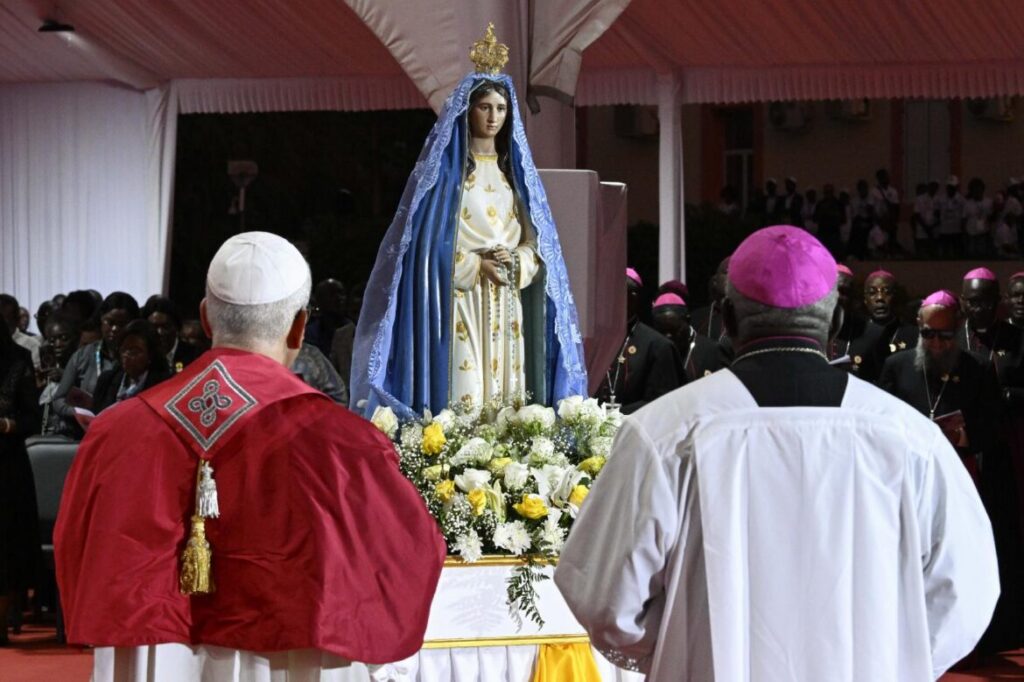
On April 19, 2026, history was made as Pope Leo XIV delivered his final blessing in Angola, a nation that bears the scars of a dark past rooted in the transatlantic slave trade. The site of this poignant moment was not a cathedral or a serene garden; rather, it was a former hub of human trafficking—a place where countless African lives were commodified, stripped of their dignity, and sold into bondage. The irony hangs heavy in the air: the same institution that historically sanctioned and profited from the enslavement of African peoples was now offering blessings in a space steeped in that very sorrow.
In this powerful juxtaposition, the Pope’s presence highlights a broader conversation about reconciliation, healing, and the legacy of colonialism. It forces us to confront the painful narratives that many would prefer to forget. For many Angolans and descendants of enslaved people worldwide, the church’s past is a bitter reminder of a system that dehumanized their ancestors. Yet, in this act of blessing, a flicker of hope emerges, suggesting that perhaps the church can also be a space for redemption and healing—where the past is acknowledged, and a new future can be cultivated.
As the crowd gathered, there was a palpable mix of emotions: reverence for the moment, frustration at the church’s historical complicity, and a yearning for real change. How can an institution seek to bless a community that has suffered so deeply at its hands? This moment challenges us to examine not only the church’s role but also our collective responsibility to confront historical injustices. It asks us to ponder the complexities of faith, power, and accountability in a world still grappling with the repercussions of slavery.
Pope Leo XIV’s final blessing was not just a ceremonial end to his visit; it was a call to action for all of us. It reminds us that we must engage with our history head-on, recognizing the deep wounds that persist and working toward genuine healing. The past cannot be rewritten, but it can inform our present and guide us toward a more equitable future. As the sun set over Angola, there was a sense that this blessing, delivered in a place steeped in tragedy, could be the first step toward a new narrative—one of redemption, hope, and the unyielding strength of the African spirit.
From The Source
About The Author