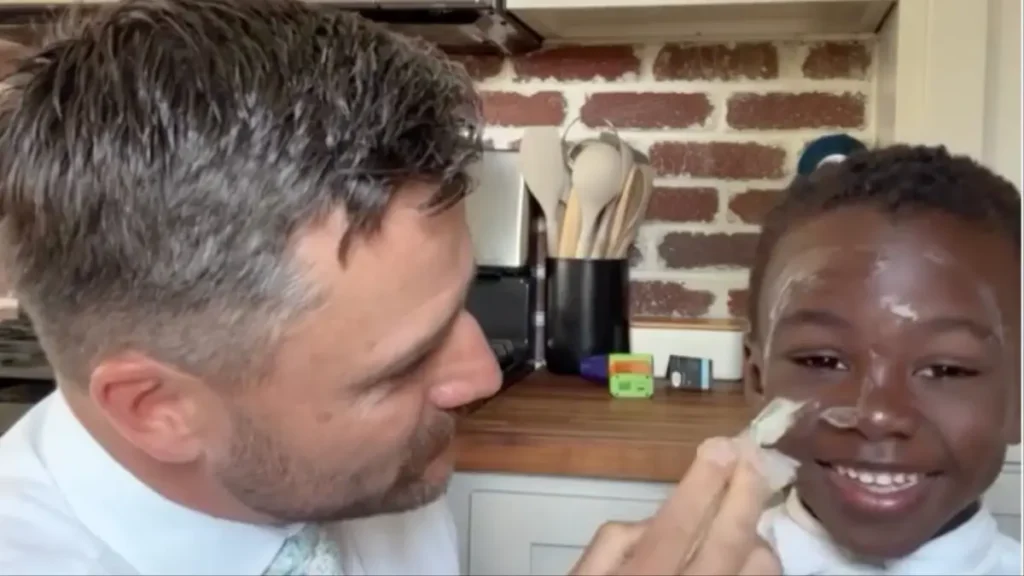
In a world where the intersections of race, parenting, and social media collide, a recent video from Reed Harris, known as Grill Father, has sparked a fierce debate online. The influencer, who boasts tens of thousands of followers, drew significant backlash after he was filmed rubbing Vaseline on the face of his adopted Black son during a family moment that was intended to be lighthearted. The video, showcased for the world to see, quickly turned from innocent family content into a topic of discussion that raised serious concerns about sensitivity, cultural appropriation, and the responsibilities of white parents raising children of color.
What began as a harmless family moment quickly transformed into a cringe-inducing spectacle for many viewers. Critics were quick to point out that the act, although seemingly trivial, echoed deeper issues related to race and the dynamics of privilege in parenting. For many, watching a white father slathering a product typically associated with Black cultural practices felt uncomfortable and struck a nerve, highlighting the need for greater awareness and understanding when it comes to cross-cultural parenting. The incident has reignited conversations about how white parents navigate raising children of different ethnic backgrounds, especially when it involves elements of cultural identity.
In the comments section, users expressed outrage, with some calling for greater accountability among influencers who have become key figures in shaping public perceptions of parenting and race. The viral nature of the video has amplified the discourse around cultural sensitivity, with many advocating for a more conscious approach to parenting that respects and honors the heritage of children who come from different backgrounds. It raises an important question: how do we ensure that actions, especially those publicly shared, do not inadvertently perpetuate stereotypes or dismiss the lived experiences of marginalized communities?
As this story continues to unfold, it serves as a reminder of the importance of listening, learning, and evolving, particularly in the realm of social media where one’s voice can carry so much weight. The backlash against Harris illustrates a broader societal awakening regarding race and representation, urging influencers and parents alike to critically examine their actions and the potential implications they hold. In a time where social media shapes conversations about culture, it’s crucial that we remain vigilant and thoughtful in our portrayals and practices, ensuring they are rooted in respect and understanding.
From The Source