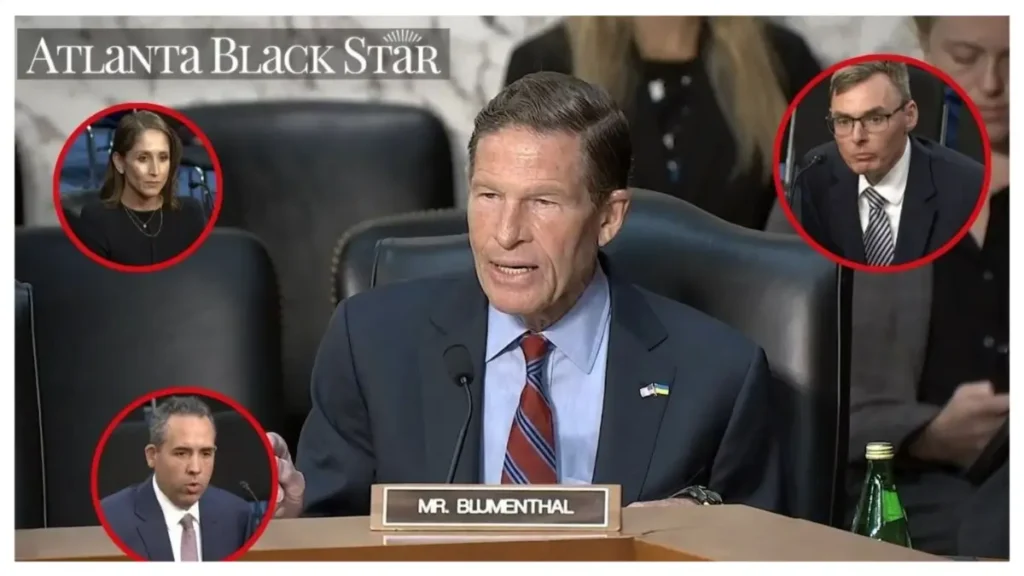
During a Senate Judiciary Committee hearing on June 10, Sen. Richard Blumenthal displayed a relentless commitment to accountability that left Trump’s judicial nominees visibly shaken. As the session unfolded, it became clear that these nominees were not prepared for the scrutiny they faced. Blumenthal posed a single, pointed question to each of them, aimed at gauging their understanding of fundamental legal principles and their fitness for the judiciary. Their hesitance in answering revealed a troubling gap in their qualifications.
Blumenthal’s strategy was both calculated and effective. By the time the nominees began to grasp the implications of his inquiry, it was too late. They had inadvertently disqualified themselves in the eyes of the committee and, by extension, the American public. The senator’s unwavering focus on their responses underscored a critical point: appointing judges who lack a firm grasp of the law endangers the very fabric of justice. Blumenthal’s line of questioning was not just about these individuals; it was a broader commentary on the implications of judicial appointments under any administration.
This moment serves as a reminder of the importance of vetting judicial nominees thoroughly. The stakes are high, and the consequences of poorly qualified judges can reverberate through our legal system for generations. Blumenthal’s probing inquiry not only highlighted the inadequacies of these nominees but also reinforced the necessity for vigilance in our democratic processes. As this hearing demonstrated, accountability must be at the forefront of judicial nominations, ensuring that only those who are truly prepared to serve are placed on the bench.
About The Author