By Jasmine Reed, PowerVault Staff
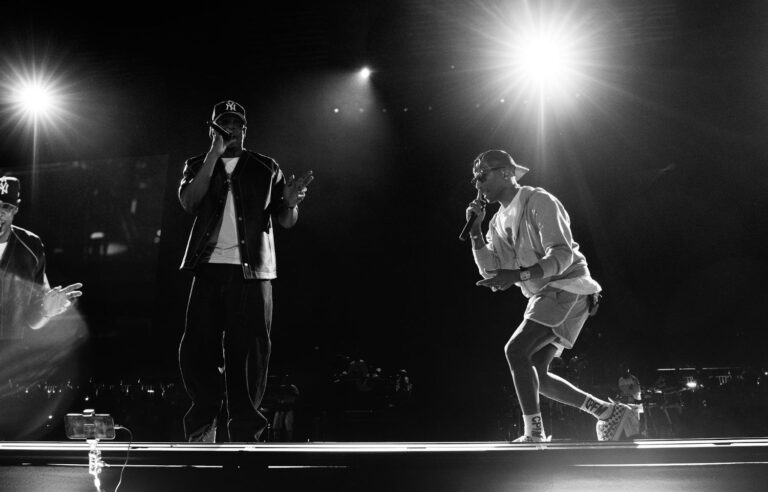
Jay-Z closed out his highly anticipated residency at Yankee Stadium with a monumental concert that brought together a constellation of stars. Despite an hours-long delay that could have derailed lesser shows, Jay-Z not only delivered a nearly three-hour set but also brought along a roster of powerhouse performers, including Beyoncé, Rihanna, Teyana Taylor, and Usher. This event wasn’t merely a concert; it was an emblematic celebration of Black culture, talent, and resilience showcased against the backdrop of one of the world’s most iconic venues.
To fully appreciate the significance of this moment, one must consider the journey that Jay-Z has taken to reach this pinnacle. From the Marcy Projects in Brooklyn to the front rows of the world’s biggest stages, Jay-Z has transcended the traditional bounds of hip-hop to become a cultural juggernaut. His ascent is not just a personal victory; it represents the collective success of a generation of artists who have fought tirelessly against systemic barriers in the music industry. Hosting a residency in the hallowed grounds of Yankee Stadium is symbolic, signifying not just Jay-Z’s dominance in hip-hop but the elevation of Black artistry in spaces historically reserved for others.
This concert is more than just a celebration of Jay-Z—it is a cultural milestone for the entire hip-hop community. By inviting fellow icons like Beyoncé and Rihanna, Jay-Z emphasized the importance of collaboration within our culture. These performances symbolize unity, showcasing the intricate web of influence and support that exists within Black artistry. In an age where the music industry often promotes divisiveness for clicks and views, this gathering stood in stark contrast, exemplifying what can be achieved when we come together to uplift one another.
Looking back, we can draw parallels between this moment and the legendary concerts of the past, such as the 1995 Source Awards or the iconic performances at the Apollo Theater. Those events served as platforms for emerging talent and helped forge the path for future generations. Similarly, Jay-Z’s concert can be seen as a pivotal moment in the ongoing narrative of hip-hop, serving as a reminder that the culture not only thrives but continues to evolve. It’s crucial to recognize that today’s artists are standing on the shoulders of giants, and Jay-Z is one of those giants.
As we turn the page on this chapter of Jay-Z’s career, it’s essential to reflect on what this means for the future. The concert isn’t just an ending; it’s a launchpad for what comes next. With artists like Teyana Taylor and Usher sharing the stage, we know that the next generation is already rising to the occasion, inspired by the legacy of those who came before them. As we look forward, we should keep an eye on how this collaborative spirit continues to shape the music industry, and how these artists will use their platforms to address societal issues, push boundaries, and inspire change. The future of hip-hop is bright, and we can expect nothing less than brilliance as this legacy continues to unfold.
About The Author