By DeShawn Price | PowerVault Network Staff
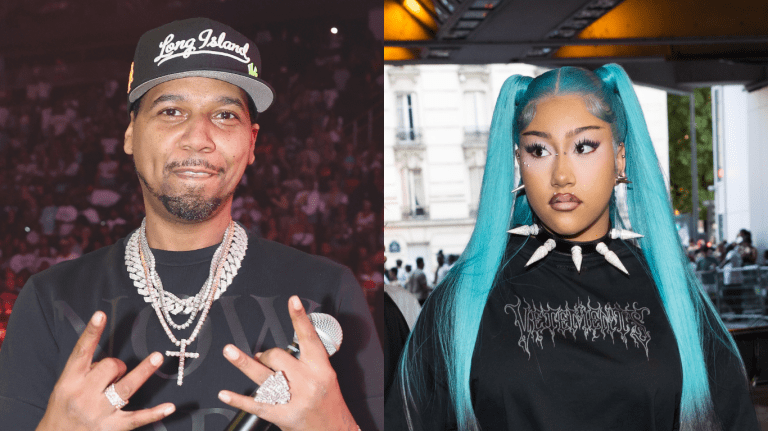
In a recent social media incident that has sent ripples through both celebrity circles and the wider culture, Juelz Santana found himself at the center of controversy when he defended his 14-year-old daughter’s birthday outfit by invoking North West’s name. Fans and critics alike were quick to respond, suggesting that Santana’s mention of Kim Kardashian and Kanye West’s daughter was inappropriate and perhaps indicative of a deeper issue within the celebrity parenting narrative. This situation has sparked discussions not only about what it means to raise children in the public eye but also about the responsibility that comes with celebrity status.
To truly understand the fervor surrounding Santana’s comments, we must consider the landscape of celebrity culture today. North West, growing up under the scrutiny of social media, is constantly compared to other children who are equally famous, if not more so. The reality is that young girls, particularly within the Black culture, are often subjected to a unique set of pressures when it comes to beauty standards and self-expression. Santana’s desire to defend his daughter—while honorable—unintentionally brought North into a discussion that should have focused solely on the individuality and authenticity of his child. It raises questions about how we perceive young girls, especially those raised in the limelight, and what narratives we create around their lives.
This incident speaks volumes about the intersection of fame, identity, and familial bonds in the hip-hop community. Juelz’s attempt to validate his daughter’s fashion choice by comparing it to that of a high-profile celebrity’s child only underscores the pervasive issue of external validation. Within our culture, there has often been a struggle for authenticity, where talent and individuality sometimes take a backseat to public perception. We should be encouraging our children to express themselves, free from the weight of celebrity comparisons. It’s a painful reminder that even in our attempts to empower our kids, we can inadvertently reinforce societal standards that dictate who they must aspire to be.
For everyday fans and members of the community, Santana’s remarks can feel like a microcosm of larger societal expectations. The constant comparisons, often superficial, can lead to insecurities that permeate the lives of young girls. This may not only affect how they see themselves but can also influence their ideas of success and self-worth. It’s vital for communities, especially those with strong cultural identities, to create spaces where children can flourish based on their own merits rather than a curated celebrity existence. We need to shift the narrative, fostering environments that value authenticity over fleeting trends.
As we reflect on Santana’s comments, we’re reminded of a crucial truth: raising children amid the glare of celebrity lights is no easy feat, but it is vital to navigate this terrain with sensitivity and intent. Our children deserve to be celebrated for who they are, not who they are compared to. Going forward, let’s challenge ourselves to support and uplift our youth, encouraging them to carve out their own identities without the burdens of comparison. In a world obsessed with image and status, we must be the ones to affirm the beauty and worth that lies within every individual. Let’s strive to create a culture that sees our children not as reflections of celebrity norms but as vibrant, unique beings deserving of recognition and love.
About The Author