By Marcus Ellison, PowerVault Staff
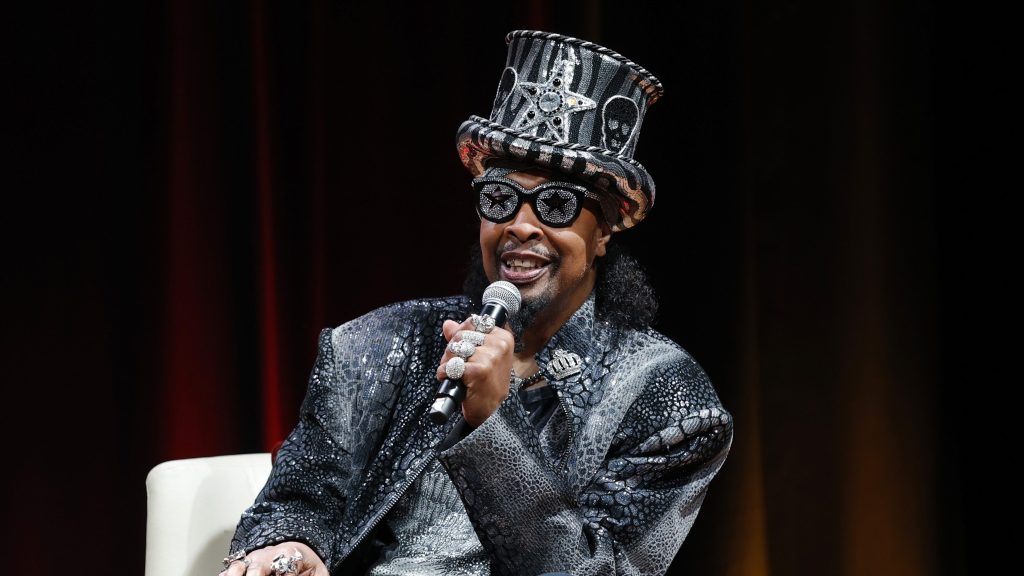
Bootsy Collins, the legendary bass guitarist whose grooves have defined decades of funk, is stepping into a new role as a champion for mental health awareness with his latest album, ‘Metal Health.’ In an industry often dominated by superficiality, Collins is using his platform to bring the conversation of mental health to the forefront, making it the focal point of his latest project. This shift not only highlights an urgent issue in today’s world but also showcases a genuine evolution in how artists are choosing to engage with their audiences.
To understand the significance of Bootsy’s endeavor, we need to acknowledge the broader societal context in which it’s happening. Mental health discussions are gaining momentum across various sectors, yet the music industry still struggles with stigma surrounding mental health issues, particularly within the Black community. Historically, our artists have often been celebrated for their talents while their struggles with mental health are sidelined or ignored. The pressure to maintain a public persona can be overwhelming, leading many to suffer in silence. By focusing on mental health in his music, Bootsy Collins is breaking this cycle, promoting a message that resonates deeply in our communities.
Bootsy’s ‘Metal Health’ isn’t just another album; it’s a cultural moment that reinforces the importance of vulnerability and self-care. In a time when we’re all grappling with the repercussions of a pandemic, social injustice, and personal hardships, Collins is shining a spotlight on mental health—it’s a reminder that behind the sequins and the funk, artists are human too. This album stands as a testament to the resilience we must cultivate, particularly in the face of persistent challenges that disproportionately affect Black individuals.
Looking back, we see echoes of this movement in the work of artists like Talib Kweli and Kendrick Lamar, who have used their lyrics to explore themes of mental anguish and societal pressures. Just as Kweli’s ‘Get By’ and Lamar’s ‘u’ illuminated struggles related to mental health, Bootsy’s ‘Metal Health’ serves to further this vital dialogue. The connection between art and mental wellness is not new; it merely finds a different expression through generations. This is a continuation of a much-needed trend that seeks to redefine how we perceive not only creativity but also the people who create it.
As we move forward, the challenge will be to maintain this momentum. What’s next for Bootsy Collins, and how will other artists engage with mental health themes in their work? The industry must not let this be a passing moment but rather a launching pad for ongoing dialogue and support. Fans and fellow artists alike should rally around this mission, pushing for more conversations and initiatives that promote mental wellness. ‘Metal Health’ could very well be the tipping point in an emerging movement that recognizes mental health as an integral part of our cultural identity. Let’s hope it inspires not just more music, but a transformative change in how we talk about mental health in our communities.
About The Author