Chris Rock’s Misty Green: Who Gets a Second Chance?
By DeShawn Price, PowerVault Staff Chris Rock’s Misty Green has The Black Watch debating an uncomfortable question: how much sympathy does a struggling Black actress owe her own bad decisions? The dramedy centers an E...
Advertisement

By DeShawn Price, PowerVault Staff
Chris Rock’s Misty Green has The Black Watch debating an uncomfortable question: how much sympathy does a struggling Black actress owe her own bad decisions? The dramedy centers an Emmy winner whose career has stalled, not a newcomer waiting for her first break. That distinction matters. She already has proof that she belongs, yet proof has not secured her future. BOSSIP and Cassius’ panel sees both Hollywood’s barriers and a woman repeatedly getting in her own way. The interesting conversation starts where those explanations collide, because neither automatically cancels out the other. An award cannot make every next move the right one.
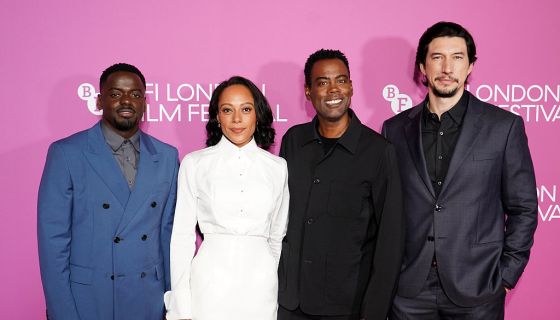
According to BOSSIP’s report on The Black Watch discussion, Rosalind Eleazar plays Misty, whose momentum faded after a successful television series. The outlet identifies Misty Green as a 2026 film, with Adam Driver, Daniel Kaluuya, and Rock also starring. BOSSIP Managing Editor Dani Canada leads the conversation alongside producer Serita Wesley, comedian and actor Carlton Foreman, and comedian and writer Richard Jones. Canada asks whether Misty deserves viewers’ support or their pity. Notice the distinction: rooting for her means believing she can change, not simply feeling bad that her career stalled. The panel’s early response leans away from sympathy. Still, its conversation makes room for the pressures surrounding her choices. That is a more useful starting point than pretending ambition always looks graceful.
Richard delivers the sharpest assessment of Misty’s decision making: “I’m surprised she had any feet left by the end of the movie because she kept shooting herself in the foot,” he says during the discussion. The joke lands because the frustration is recognizable. Watching somebody reach for success while undermining their own chances can exhaust even a generous audience. But the panel does not stop at calling Misty messy. Foreman also identifies the film’s interest in fame and the particular obstacles facing Black women in entertainment. The question becomes what she is chasing: meaningful work, public validation, or the identity she built around being a star. Those are connected concerns, not competing plot summaries. The accompanying video is below.
That tension between frustration and concern also shapes Wesley’s response in the reported discussion. “I just wanted so much more for her,” she says. “I think that’s where it kind of hurt my feelings because I want more for her.” There is affection inside that disappointment. Misty is fictional, but the impulse to root for a talented Black woman feels familiar. Audiences want the comeback, the good contract, the room that finally respects her. Then the character makes another choice that complicates the cheering section. That is the sting: recognizing her ability does not mean trusting her judgment with the next opportunity. Wesley’s reaction leaves space for both investment and criticism. Nobody has to approve of every decision to care about what happens next.
Eleazar earns a different kind of attention from the panel: praise for making this difficult character compelling. Richard says he usually associates her with more composed roles, making this performance a departure from his expectations. The British actress brings an extensive overseas résumé, and this role asks viewers to reconsider that familiar composure. He also notes her resemblance to Diana Ross. That comparison adds some sparkle, but the acting deserves its own conversation. A performer playing someone impulsive must give viewers a reason to keep watching without making every action sympathetic. The panel’s praise suggests Eleazar holds that tension. Its discussion separates the actress’s work from the character’s behavior, a distinction that celebrity commentary too often loses. A second accompanying video follows below.
The performance discussion belongs to a much older argument about who gets rewarded and what happens afterward. Hattie McDaniel won an Oscar for Gone with the Wind in 1940, but that milestone did not erase Hollywood’s racial barriers. Halle Berry became the first Black woman to win best actress in 2002. Her achievement did not produce a steady procession of Black women winning that category. Viola Davis became the first Black woman to win the lead drama actress Emmy in 2015. These are distinct careers, not substitutes for Misty’s fictional circumstances. Together, they challenge the assumption that recognition settles access. Celebrating those women means honoring their individual artistry, not asking their historic wins to serve as evidence that Hollywood has finished addressing exclusion. A trophy records one victory. It does not promise the next opportunity.
The harder question is who gets permission to fail without becoming proof against everybody else.
A Black woman should not have to be easy to love before her story deserves serious attention.
Misty deserves accountability without being reduced to a cautionary poster. A Black woman should not have to be easy to love before her story deserves serious attention. That does not mean every choice needs an excuse. It means criticism should stay specific: which decision caused harm, which opportunity was wasted, and what repair would require. Calling a character difficult explains almost nothing. Neither does demanding gratitude from her simply because she reached a level of success other performers are still chasing. Rock’s premise offers something more interesting than a flawless heroine collecting overdue applause. It puts an accomplished woman’s judgment under pressure. The test is whether viewers can recognize her agency without treating every setback as a deserved punishment. Complicated characters give Black actresses room to work beyond being admirable.
Hollywood, meanwhile, cannot use one character’s mistakes as a convenient exit from examining its own practices. Publicity can sell a comeback as personal redemption while leaving the business arrangements outside the frame. A polished interview might explain how a star has changed without revealing whether the people hiring her have changed anything. Who controls the offer? Who decides whether a performer is marketable? Who can afford to wait between jobs? A successful series and an Emmy are different assets from ownership or dependable future employment. That is why the industry argument needs more than a speech about resilience. The useful questions concern budgets, contracts, casting authority, and whether another role exists after the applause ends. Those questions remain worth carrying into the accompanying Instagram post below, without assuming it answers them.
The audience’s job is not to turn an Instagram post, a panel clip, or a fictional character into a verdict on Black women. Nobody needs another respectability hearing disguised as entertainment commentary. Viewers can dislike Misty and still ask whether the film gives her an interior life beyond her worst decisions. They can also celebrate Eleazar without pretending the character behaves beautifully. Richard calling her compelling matters here: holding an audience’s attention is an acting achievement, not an endorsement of Misty’s conduct. PVN’s look at who got their flowers from Save the Last Dance offers a related prompt: remember the performers, not only the most familiar names. Here, giving flowers means naming the craft that makes an uncomfortable role hold attention. Admiration does not require a spotless character.
Money changes the meaning of a second chance. Someone with savings, ownership, and powerful advocates can survive a dry spell differently from someone whose bills depend on the next booking. Race and gender can narrow those margins further when one woman is expected to represent an entire group. The provided reporting does not establish Misty’s finances or contract terms, so those details should not be invented. They remain essential questions for any serious discussion of Hollywood hardship. A comeback offer can look generous in a headline while the actual terms determine how much freedom a performer really gains. PVN’s coverage of who gets Snoop Dogg’s story right connects to another issue of control: who gets to shape a public image? Being visible and having leverage are not the same achievement.
Advertisement
The next useful conversation about Misty Green should move beyond whether its lead is likable. Watch how discussion treats Eleazar’s performance, how it measures Rock’s choices, and whether it separates evidence from assumptions about difficult women. The supplied report ends before fully developing the panel’s assessment of Rock’s directing, so that verdict should not be filled in for them. What is available already gives readers plenty to debate: ambition, responsibility, access, and the distance between winning an award and sustaining a career. Keep the jokes, give the actress her flowers, and ask who gets another call after making a mistake.
More from PowerVault Network: