Dr. Thomas H. Brewer: The Killing Columbus Never Answered For
By Andre Coleman, PowerVault Staff Closing time on a winter evening in downtown Columbus, Georgia. February 18, 1956. A 61 year old Black physician is shot seven times inside a clothing store at 1025 1/2 First Avenue,...
By Andre Coleman, PowerVault Staff
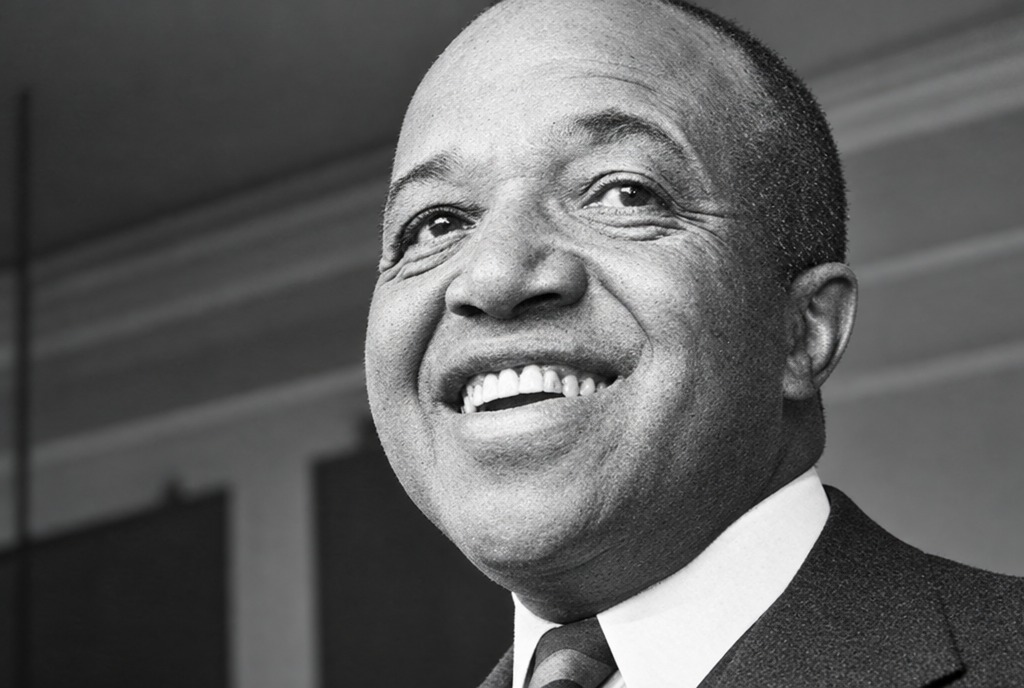
Closing time on a winter evening in downtown Columbus, Georgia. February 18, 1956. A 61 year old Black physician is shot seven times inside a clothing store at 1025 1/2 First Avenue, steps from the office where he has treated this city for thirty six years. A police officer is in the building when it happens. Two other men are in the building when it happens. And within two weeks, a grand jury will decide that nobody should answer for any of it.
The doctor was Thomas Hency Brewer Sr., and if you did not grow up in the Chattahoochee Valley, there is a fair chance you have never heard his name. That silence is part of the story too.
Brewer was born November 16, 1894, in Saco, Alabama, up in Pike County, the son of a region that offered Black boys two roads out, the pulpit or the classroom. He took the classroom. He finished high school and college in Selma, then earned his medical degree from Meharry Medical College in Nashville, one of the institutions that trained Black doctors when white medical schools would not admit them. In 1920 he arrived in Columbus and opened a practice on the 1000 block of First Avenue, joining a small but thriving community of Black physicians and dentists who served the neighborhoods nobody else would serve.
He was a healer by trade and an organizer by nature. In 1929 he and a circle of Black professional men founded the Social-Civic-25 Club, a service organization built to do what the city's institutions refused to do for its Black residents. A decade later, in 1939, that same circle became something bigger. Brewer led the founding of Columbus's chapter of the NAACP, and he served as its tactician, the man who saw three moves ahead of the white power structure and moved quietly before anyone knew a game had started.
His masterpiece was the voting rights fight. On July 4, 1944, Primus E. King, a Columbus barber and minister, walked up to the Muscogee County courthouse and tried to vote in Georgia's all white Democratic primary. King did not wander in on his own. Brewer designated him for the assignment and then raised the money for the legal war that followed. The case, King v. Chapman et al., worked its way through the federal courts, and in 1945 and 1946 those courts ruled in King's favor, breaking the all white primary in Georgia. It was the kind of victory that gets a man remembered in textbooks, except that textbooks mostly forgot him. Roy Wilkins, who ran the national NAACP, did not forget. He described Brewer as a fearless champion of the rights of his people.
The doctor kept pushing. He ran Black voter registration drives through the late 1940s and early 1950s and campaigned successfully for the city to hire Black police officers, and in 1951 Columbus put four of them on the force patrolling the Black neighborhoods downtown. The Ku Klux Klan had already noticed him by then. By the late 1940s, death threats were simply part of his mail, which is why, for the rest of his life, he carried a pistol.
The pressure kept building anyway. When the Supreme Court struck down school segregation in May 1954, Brewer pressed the all white Muscogee County school board on integrating the schools, after years of asking the same board for nothing more than equitable funding for Black schools and being shelved. In 1955 he pushed to integrate the golf course on the South Commons. That same year, a rumor circulated that he had used Republican Party connections in Washington to block a popular white Columbus man from being appointed postmaster, an allegation Brewer flatly denied and that no one ever proved. Meanwhile, up the highway in Montgomery, the bus boycott was making every white power structure in the region nervous, and nervous men do nervous things.
"Dr. Brewer had been the person behind motivating the people in this community to want more." — Lillian "Bunky" McClung, remembering the killing in a 2015 Columbus Ledger-Enquirer interview
Then came the argument that the record cannot get around. Sometime before his death, Brewer and Luico Flowers, the white owner of the F&B Department Store on the ground floor beneath Brewer's office, watched from their windows as police officers forcibly arrested a Black man outside the building. Brewer believed he had witnessed police brutality and wanted Flowers to witness it with him, to say on the record what both men had seen. Flowers disagreed, saying the man was resisting arrest. Feeling threatened, Flowers called the police and told them Brewer had threatened him.
On the evening of February 18, 1956, the disagreement ended in the store. Flowers would later give investigators a written statement saying that Brewer came in around closing time, followed him to his office, and reached toward his pants. Flowers opened fire and shot the doctor seven times. The responding officers searched Brewer's body and found a .32 caliber revolver in his left front pants pocket. It had never been fired. An officer and two other men were in the store at the time. Three witnesses corroborated parts of Flowers's account, but every one of them said it was Flowers who had followed Brewer toward the office, not the other way around.
Now do what the grand jury apparently did not do, and work the evidence the way an investigator would. Seven shots from the shooter against zero from the deceased. A pistol that never cleared the pocket. Witnesses placing the pursuit on Flowers. And the question that has never been answered credibly in any official proceeding: what Black man in Georgia in 1956 draws a weapon in front of a white police officer, inside a white man's store, and then does not fire it. The men and women of Columbus asked it in 1956, and the New Georgia Encyclopedia preserved their reasoning for the record: Brewer would never have walked past two white officers to start a gunfight. He carried the gun because the Klan had threatened his life for a decade. Carrying it was not evidence of intent. It was evidence that he knew exactly what kind of city he was trying to change.
Less than two weeks after the shooting, a Muscogee County grand jury declined to indict Flowers for anything. No trial. No cross examination. No jury of any kind. The shooter gave a statement, the county accepted it, and the case was closed before Brewer was cold in the ground at Green Acres Cemetery.
The funeral told the city what it had lost. First African Baptist Church could not hold the crowd, an estimated 2,500 mourners flowing out onto Fifth Avenue for a man everyone called Chief. Then came the exodus, and this is where the story deserves to be told with care, because these were real people carrying real grief. Brewer's widow, Lillian, left Columbus. His daughter Thelma and her husband, Dr. R. M. Haskins, left. His son, Dr. Thomas H. Brewer Jr., had left years before. His attorney, Stanley P. Hebert, moved his family out of town. So did Dr. W. G. McCoo and Dr. Mary McCoo, two of the city's Black physicians, along with their children, one of whom, a young daughter named Marilyn, would grow up to become one of the most celebrated voices in American music. In a single season, one bullet emptied Columbus of an entire generation of Black professional leadership.
Lillian "Bunky" McClung, the daughter of A. J. McClung, one of the city's towering Black leaders, remembered it decades later in a 2015 interview with the Columbus Ledger-Enquirer. "Dr. Brewer had been the person behind motivating the people in this community to want more," she said. "I remember that day he was shot. I remember when my daddy got that phone call and he ran out the door. There were several dentists, several doctors in the community. They all left when Dr. Brewer was shot."
Almost exactly one year after the killing, in 1957, Luico Flowers was found dead across the street from his store, a gunshot wound to his head. The death was officially ruled a suicide. For many in Columbus, that verdict did not close the case. It sealed it. Whatever Flowers knew about the day Brewer died, and whatever anyone else knew, went into the ground with him.
The record since then has been built by people who refused to let the silence stand. The Ledger-Enquirer's Billy Winn published a three part series on the killing in 1988 that reconstructed the final days in detail. Emory University's Georgia Civil Rights Cold Cases Project keeps a full dossier on the case. PBS Frontline's Un(re)solved investigation, which catalogued the civil rights era killings the Department of Justice reopened under the Emmett Till Act, lists Brewer among them. The FBI opened a file in 2008 and closed it in April 2009, concluding that with Flowers dead there was no one left to prosecute, that the evidence could not contradict his self defense claim, and that the statute of limitations had long expired. Read that closing memo like an investigator and one line jumps out. The case was not closed because the truth came out. It was closed because everyone who could tell it was gone.
Columbus has spent decades trying to say the name properly. In 1989, the mayor and the governor proclaimed November 19 Dr. Thomas H. Brewer Sr. Day, and the city unveiled a historical marker outside the office at 1025 1/2 First Avenue as part of three days of memorial events, alongside a tribute volume titled Brewer's Legacy: Concern for Human Rights. In 2000, the Ledger-Enquirer counted him among its 100 People to Remember. Brewer Elementary School carries his name today, which means children in Columbus walk into a building honoring a man whose killing no court in the state of Georgia ever agreed to examine.
Sit with what this case actually shows, because it is not ancient history. A Black man witnesses what he believes is police violence and tries to compel a white witness to confirm what both of them saw. Within weeks he is dead inside that witness's store, and the system accepts the shooter's written statement in under two weeks without a trial. Substitute a phone camera for a courtroom summons and you are watching the same argument this city had in 1956, except now the witnesses do not need anybody's permission to speak. The killing also did exactly what political violence is designed to do. Historians at the New Georgia Encyclopedia note that after Brewer's death, the Columbus movement took a quieter, less confrontational course than the movements in other Georgia cities. The bullet did not just end a life. It recalibrated a whole city's fight for a generation.
The statute of limitations died long ago, so nobody is marching anyone into a courtroom, and nobody should pretend otherwise. But a city's memory has no expiration date. Go stand at the marker on First Avenue and read what it says about a fearless champion of the rights of his people. Ask the schoolchildren who walk into Brewer Elementary if they know the whole story of their school's name. Ask why a city that honors the martyr has never demanded a full public accounting of the martyrdom. The family he left behind earned that question being asked with respect, and the city he died trying to move owes it an answer. That is the lesson, Columbus. Live and learn.