Florida Man Calls 911 on Black Deputy
By Renee Fontaine, PowerVault Staff Frederick Toder, a 60-year-old white resident of Boca Raton, Florida, is now facing legal troubles after a series of 911 calls that exposed a deeply troubling racial bias. The twist...
Advertisement

By Renee Fontaine, PowerVault Staff
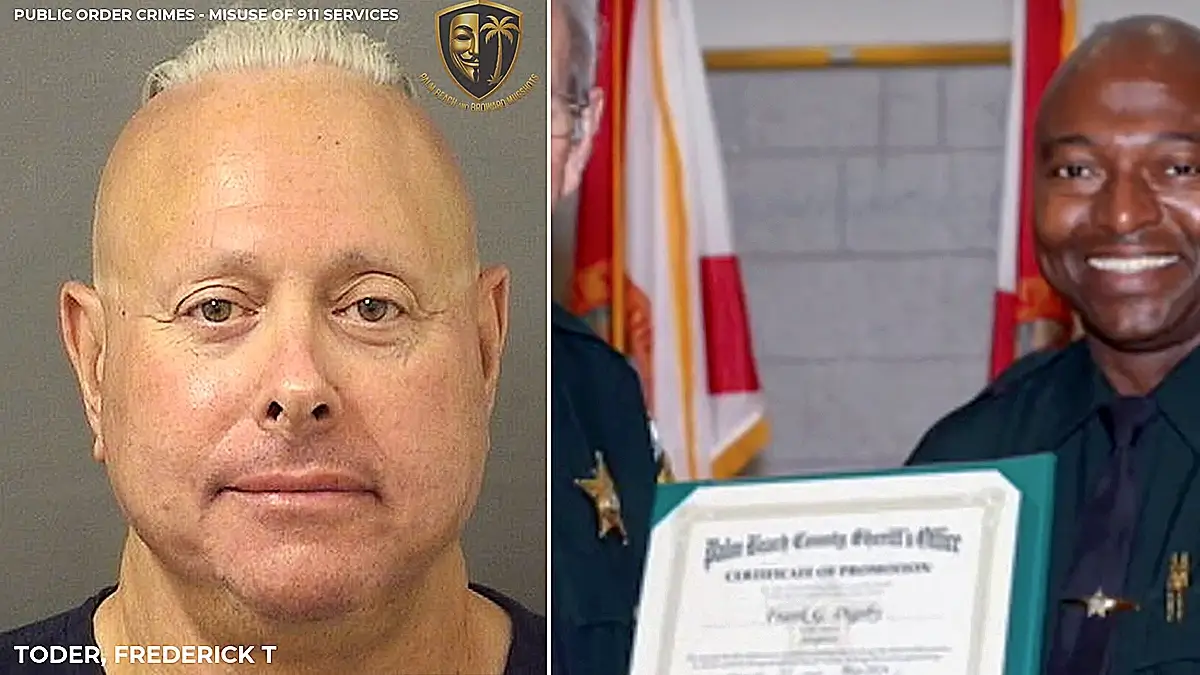
Frederick Toder, a 60-year-old white resident of Boca Raton, Florida, is now facing legal troubles after a series of 911 calls that exposed a deeply troubling racial bias. The twist in this tale? Toder initially called the police on himself during a domestic dispute with his mother. But when help arrived, his focus quickly shifted to a Black deputy, Frederick Digsby, who was part of the responding team. In an act that can only be described as audacious, Toder called 911 again, not for any immediate danger, but out of outrage that a Black deputy was present. This incident isn't just about a misuse of emergency services; it unveils a personal prejudice that has broader implications on societal harmony.
The arrest affidavit, obtained by Atlanta Black Star, reveals a troubling backstory: Toder's mother shared that her son has a long-standing history of making racially derogatory remarks. This incident serves as yet another reminder of the racial tensions simmering just below the surface in many communities today. It's not just about one man misusing emergency services; it's a window into the systemic racial biases that still persist. Toder's behavior is a reflection of a larger issue that goes beyond this particular incident, highlighting the ongoing need for conversations about race, bias, and the urgent need for systemic change. As we break down this situation, it's clear that addressing these biases is crucial for societal progress.
The initial 911 call was made to address a domestic dispute between Toder and his mother. According to her, Toder exhibited erratic behavior, including throwing shrimp tails on the floor, urinating in corners rather than using the restroom, and causing property damage by destroying window blinds. However, when Deputy Digsby and other officers arrived, what should have been a straightforward police response took a darker turn. Toder's attention abruptly shifted from the domestic issue at hand to the race of Deputy Digsby. In a move that shows his racial bias, Toder placed a second call to 911, not because of an escalating domestic dispute, but because he was upset about the presence of a Black law enforcement officer in his home.
Toder's reaction was overt and unapologetic, reportedly expressing that he did not want Deputy Digsby inside his home solely due to the color of his skin. This incident isn't merely about the misuse of police resources, it's a glaring example of the entrenched racial prejudices that continue to infect our society. By explicitly voicing his disdain for Deputy Digsby, Toder brought to light the ongoing racial dynamics that persist in law enforcement interactions. The charges he now faces go beyond a simple misuse of 911; they show the pervasive and harmful nature of racial bias. This situation demands not just legal consequences but also a broader societal reckoning with the racial prejudices that continue to shape interactions with law enforcement.
Racial tensions within law enforcement are far from a new phenomenon. Since the brutal beating of Rodney King in 1991, which sparked nationwide outrage and protests, to the more recent high-profile cases that have fueled ongoing discussions around police conduct, these issues have consistently been at the forefront of national debate. The fact that a simple 911 call could escalate into such a racially charged incident is a stark testament to the persistent struggle for racial equality and understanding. It highlights the urgent need for systemic changes in how law enforcement interacts with communities, especially those of color. The incident involving Toder is a reminder that while progress has been made, there is still a long way to go in addressing the racial disparities that exist in policing.
This incident brings to mind previous racially charged situations, such as the 2009 arrest of Harvard professor Henry Louis Gates Jr., which turned a simple misunderstanding into a national conversation about race and policing. These incidents serve as powerful reminders of how quickly everyday situations can spiral into broader racial conflicts, fueled by deep-seated biases and perceptions. The similarities between these cases are hard to ignore, underscoring the need for ongoing dialogue and reform. They highlight the importance of understanding the racial dynamics at play and the impact they have not just on those directly involved but on society as a whole. Each incident adds another layer to the complex discourse on race in America, challenging us to confront these issues head-on.
This event is a microcosm of a larger issue.
Tolerating racial bias in any form is a systemic flaw that needs immediate redress, not passive acknowledgment.
When we discuss racial bias and policing, we're addressing more than just individual prejudices; we're delving into the systemic barriers that allow these biases to persist. Tolerating racial bias in any form is a systemic flaw that demands immediate action, not passive acknowledgment. It's imperative that communities come together to actively challenge these biases and work towards a more inclusive society. This involves not only identifying and addressing individual cases of prejudice but also dismantling the structural inequalities that perpetuate them. By fostering open dialogue, promoting education, and advocating for policy changes, we can begin to create an environment where equality is not just an ideal but a reality. This requires a collective effort from all sectors of society to bring about meaningful change.
The case of Frederick Toder is part of a recurring pattern where racial bias emerges during interactions with law enforcement. While it might be tempting to view this as an isolated incident, it actually reflects a much broader issue within American society. By failing to confront and address these biases head-on, we allow them to fester and grow, resulting in more incidents like Toder's. Such cases erode trust and cohesion within communities, as they highlight the disparities in how individuals are treated based on race. It's crucial that we recognize these patterns and take proactive steps to address them. This involves not only holding individuals accountable but also implementing systemic changes that promote fairness and equality in police interactions with all communities.
For communities of color, and especially Black communities, this incident serves as a stark reminder of the double standards that persist within the law enforcement system. While the law is designed to protect all citizens equally, the reality often tells a different story. This disparity shows the urgent need for ongoing dialogue, education, and reform within our justice systems. It's essential to address these inequalities head-on to ensure that the justice system serves everyone fairly. By fostering open conversations and pushing for policy changes that promote equality, we can work towards a justice system that truly upholds the principles of fairness and equity for all. This is more than a call for reform but a demand for justice and equality in every aspect of policing and law enforcement.
The racial dynamics at play in Toder's case highlight deeper societal divisions that extend beyond individual actions. This incident isn't just about a man misusing 911; it's a reflection of the tension between racial perceptions and the role of law enforcement in addressing them. These divisions are not solely about individual prejudices but are also embedded in the systemic operations of social services and justice systems. It's crucial to recognize how these systemic issues contribute to the perpetuation of racial biases and work towards solutions that address these underlying problems. This involves reexamining the structures and practices within law enforcement and other social systems to ensure they promote equality and justice for all, rather than perpetuating existing biases and inequalities.
Advertisement
Looking forward, this incident should serve as a catalyst for conversations about reform and education within both law enforcement and the community at large. Addressing these biases requires more than just legal repercussions; it demands a cultural shift towards greater understanding and equality. As communities, it's essential to challenge these biases directly and advocate for a system that genuinely serves and protects everyone, regardless of race. This involves promoting awareness, encouraging open dialogue, and supporting initiatives that foster inclusivity and justice. By taking these steps, we can work towards creating a society where incidents like Toder's become a thing of the past, and where every individual is treated with the fairness and respect they deserve.
More from PowerVault Network: