Ohio Pastor Israel Ford's Controversial Polygamy: A Community Divided
By Malik Carter, PowerVault Staff Pastor Israel Ford of LifeWorks Church in Wickliffe, Ohio, rattled his congregation on October 25 by announcing a new polygynous marriage alongside his first wife, Lydia, and newly in...
Advertisement

By Malik Carter, PowerVault Staff
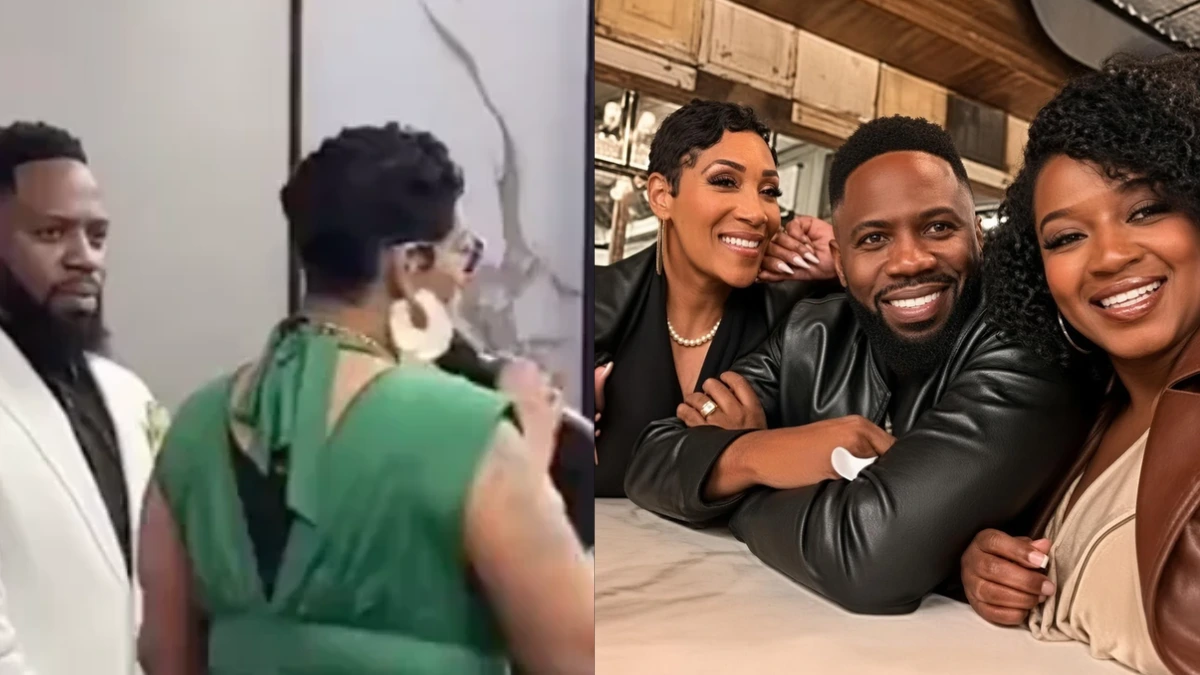
Pastor Israel Ford of LifeWorks Church in Wickliffe, Ohio, rattled his congregation on October 25 by announcing a new polygynous marriage alongside his first wife, Lydia, and newly introduced partner, Minister Shakayla Ford. The declaration has intensified the already fiery debate over religious interpretation and personal freedom versus societal norms. This announcement did more than just surprise the congregation; it challenged the very fabric of the church's belief system. Ford's revelation has prompted both theological and social conversations, forcing members and observers alike to grapple with the implications of such a union. In a community deeply rooted in traditional Christian values, this shift towards a polygynous arrangement not only raises eyebrows but also questions about the evolving nature of faith in an increasingly complex world.
Ford's decision, revealed during a service, introduced a controversial twist in a story followed closely by the community and social media. While Lydia Ford presented Shakayla as her 'sister in marriage,' both Ford and Shakayla justified the union as divinely sanctioned. Critics, however, question the theological underpinnings of Ford's claims, igniting a social media firestorm, as reported by Atlanta Black Star. The announcement not only sparked debates about religious doctrine but also invited scrutiny over the authenticity and motivation behind Ford's claims of divine approval. For many, the idea of using religious justification for such a personal decision seems like an opportunistic maneuver rather than a genuine spiritual revelation. The controversy has highlighted the tension between personal belief systems and collective religious practices, with each side fervently defending their stance.
Pastor Ford further stoked the flames by declaring online that monogamous teachings are 'unbiblical.' This sentiment, along with details of their spiritual journey, including a 40-day fast and shared dreams interpreted as divine messages, has been shared in the video below. Ford's insistence on the unbiblical nature of monogamy has not only rattled his congregation but also triggered a broader debate about biblical interpretation and its application in modern life. The 40-day fast, a period traditionally associated with purification and seeking divine guidance, is presented by Ford as a sacred process that led to a mutual vision, affirming their unconventional marital arrangement. Such claims of divine intervention, however, have been met with skepticism by many, who view them as conveniently aligned with Ford's personal desires rather than genuine spiritual insights.
Amidst the digital uproar, Ford's controversial narrative is both challenged and defended by the community. Some critics have harshly condemned the pastor, labeling the marriage an 'abomination' and demanding repentance. Meanwhile, others argue that the pastor's transparency and adherence to his beliefs should be respected, pointing out the hypocrisy in condemning open relationships while clandestine ones go unnoticed. This division shows a deeper societal issue: the struggle to reconcile personal freedom with traditional values. Supporters of Ford's decision argue that honesty about one's lifestyle is more virtuous than the deceit often found in hidden affairs. They suggest that Ford's openness challenges societal norms and encourages a dialogue about authenticity and integrity within relationships, regardless of their structure. However, detractors maintain that such public declarations disrupt community harmony and challenge established moral frameworks.
As Ford appeared on 'Larry Reid Live' with both wives, he elaborated on the origins of their relationship. Lydia, reportedly unsupportive initially, eventually consented to the union, citing a prolonged illness during which Shakayla became a close family friend. Consequently, the relationship evolved, allegedly affirmed by divine visions experienced by both Ford and Shakayla. The conversation, now immortalized online, is captured in the following video. This public discussion provides a rare glimpse into the personal dynamics that led to the controversial marital arrangement. Ford's narrative of illness leading to closeness presents a humanizing backstory to what many perceive as a radical decision. The supposed divine visions add a layer of spiritual justification, attempting to shift the focus from mere human desire to a higher calling. Yet, skeptics question whether these visions were truly divine or simply convenient rationalizations for an already formed intent.
Ford's revelation fits into a broader narrative of religious leaders challenging traditional norms. This isn't the first time religious teachings have come into conflict with modern ideals. In past decades, figures like Bishop Carlton Pearson have faced backlash for radical theological shifts, such as the doctrine of 'inclusion' in the early 2000s. Similarly, Ford's story is another chapter in the ongoing debate about the boundaries of faith and personal liberty. The tension between adhering to historical religious doctrines and embracing contemporary interpretations has long been a source of conflict within faith communities. These instances reflect broader societal changes, where evolving cultural norms challenge established religious practices. Ford’s journey is emblematic of a larger struggle to balance personal convictions with communal expectations, forcing religious communities to confront the possibility of redefining what it means to be faithful in a modern context.
Yet, the situation takes a darker turn when Ford's criminal history surfaces. His conviction for misdemeanor domestic violence in 2018, involving his then-17-year-old stepdaughter, sheds a troubling light on his character and puts a spotlight on his leadership.
Pastor Ford's story is a lens through which we see the struggle between traditional beliefs and personal revelations.
While Ford's followers appreciate his openness, his past casts a long shadow over his current actions. Does this new version of transparency mask deeper issues, and does it absolve past misdeeds? Or is this a genuine transformation inspired by faith? The resurfacing of Ford's criminal history, including a domestic violence conviction, complicates the narrative of authenticity and redemption he presents. For some, this past misconduct puts a spotlight on his suitability as a spiritual leader and whether his current openness is a strategic deflection from unresolved issues. The complexity of Ford’s past and present actions invites a critical examination of the sincerity behind his transformation. It highlights the need for accountability and the importance of genuine repentance in leadership roles, where personal integrity deeply impacts the trust and faith of a community.
The case of Pastor Ford reveals a significant conflict: the struggle within religious communities to reconcile personal spirituality with established doctrine. By challenging monogamous norms, Ford forces a confrontation with long-held beliefs, compelling his congregation, and those watching, to reassess their perspectives. This tension between personal revelation and collective doctrine is a microcosm of larger societal shifts, where individual interpretations of spirituality often clash with traditional religious structures. Ford's actions provoke a necessary dialogue about how faith communities can adapt to diverse expressions of belief without compromising core values. This complex interplay between personal and communal faith highlights the evolving nature of spiritual practice and the ongoing challenge of integrating personal truths within established religious frameworks.
For the Black community, Ford's story is a lens through which we see the struggle between traditional beliefs and personal revelations. It challenges us to consider the space for non-traditional relationships within cultural and religious contexts, raising essential questions about acceptance and authenticity. The Instagram post below captures some of these community sentiments. This narrative forces a confrontation with deeply held cultural values, as the Black church has historically been a bastion of traditional family structures. Yet, as societal norms evolve, there is an increasing need to address the complexities of personal identity and relationship dynamics within the community. Ford's story is a catalyst for broader discussions about how cultural heritage and modernity can coexist, and how individuals can handle their personal journeys while honoring the collective values of their community.
Advertisement
Issues of race and class also play a role in how this story unfolds. As a Black pastor, Ford's controversial choices are not only a personal journey but also a commentary on the broader pressures faced by Black religious leaders. The balance between maintaining cultural values and embracing modernity is fraught with tension and risk. This narrative is interwoven with the historical context of the Black church as a pillar of resilience and moral guidance within the community. Ford's actions challenge the traditional role of Black clergy as custodians of cultural values, highlighting the ongoing struggle to handle societal changes while preserving essential cultural identity. The intersection of race, class, and faith in Ford's story offers a poignant reflection on the broader societal issues faced by Black leaders in an era of rapid cultural transformation.
Looking forward, Ford's story is far from over. As community reactions evolve, this narrative will undoubtedly influence conversations around faith, leadership, and accountability. Whether Ford's congregation will continue to stand by him or demand adherence to more traditional values remains to be seen. This saga urges us to rethink what we consider acceptable and challenges religious and cultural communities to adapt in this ever-changing world. The unfolding events will test the resilience and adaptability of Ford's church and community, potentially setting a precedent for how similar situations are addressed in the future. As the conversation continues, it will be crucial for all involved to engage with open minds and hearts, seeking understanding and growth in the face of change and controversy.