Gina Hinojosa’s LBJ Gifts Carry a Bigger Question
By Andre Coleman, PowerVault Staff Gina Hinojosa reportedly received Lyndon B. Johnson family keepsakes, but the accompanying claim that she won Texas’ governorship remains unverified. That distinction matters before...
Advertisement

By Andre Coleman, PowerVault Staff
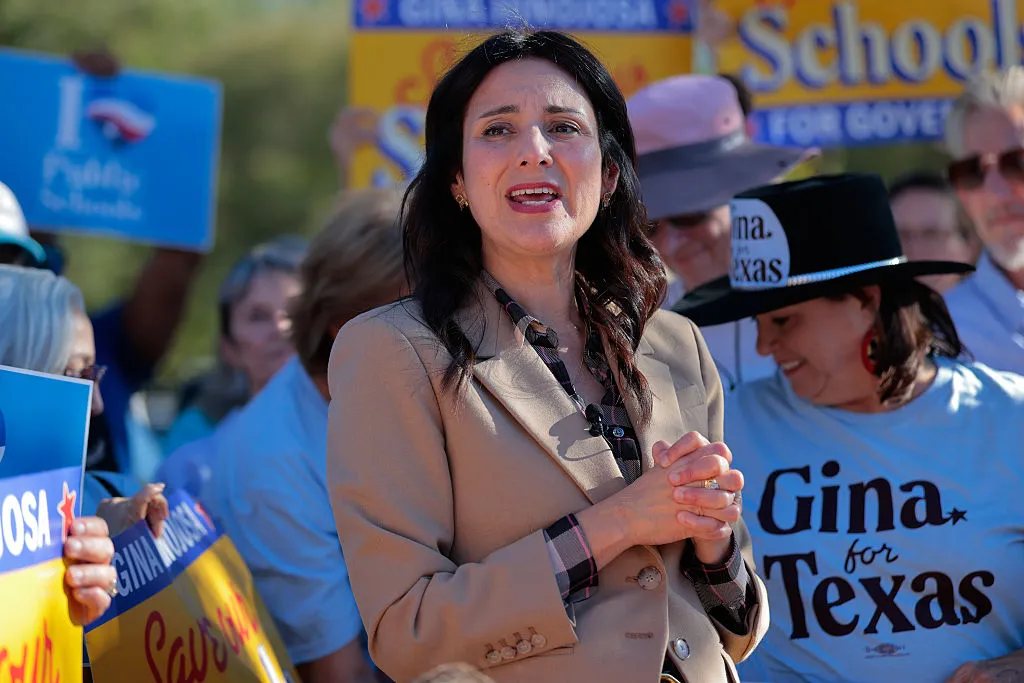
Gina Hinojosa reportedly received Lyndon B. Johnson family keepsakes, but the accompanying claim that she won Texas’ governorship remains unverified. That distinction matters before a touching political exchange becomes an election announcement readers are expected to accept. The supplied account describes Luci Baines Johnson giving Hinojosa a presidential signing pen and a Bible from her father’s estate. Those gifts carry real historical weight, especially for Black Americans whose voting rights remain contested. But affection for that history cannot replace verification of what happened at the ballot box. Readers deserve both the human story and an honest accounting of its limits.
The account dates the meeting to Oct. 8 and says Johnson supported Hinojosa’s campaign against Republican Greg Abbott. It also calls Hinojosa Texas’ first Latina governor elect and describes Democrats winning both chambers of Congress. No official election results accompany those assertions, so this article does not present them as established facts. The historical reporting is more clearly identified. KXAN reported on Johnson witnessing the Voting Rights Act signing and her distress when the Supreme Court later weakened its protections. She was 18 when she watched that signing, making the legislation part of her lived experience, not merely an inherited family story. That history explains why a pen from her father’s estate would mean more than a famous family’s collectible.
According to the supplied account, Johnson introduced the gifts as items from her father’s estate. She then connected the pen to the work she hoped Hinojosa would do. “And I hope someday you’ll sign a major piece of important legislation for the citizens of the great state of Texas,” Johnson told her. Notice the standard embedded in that wish: legislation that matters to residents. Not a flattering photograph. Not proximity to a presidential surname. Johnson also conveyed generations of her family’s faith in Hinojosa’s ability to serve Texans, making the encouragement personal while keeping public service central. The account does not identify a specific bill previously signed with this particular pen, and that distinction should remain intact. The accompanying video appears below.
The exchange described in the account centers Hinojosa’s gratitude and Johnson’s encouragement, not evidence of an election result. “That’s phenomenal. Thank you so much. I’m so honored,” Hinojosa replied, according to the supplied transcript. Her reported social media statement made the political promise more explicit: “When I am governor, I will use President Johnson’s pen to sign legislation that secures that same promise for Texas families.” She also credited his presidency with expanding access to the American Dream, tying her own stated ambitions to the reach of federal action. That wording expresses an ambition. It does not establish that she later took office. The distinction is basic reporting, especially when a circulating story turns a candidate’s future tense into a declaration of victory.
The Bible carried a different instruction. The account says it highlighted Isaiah 1:18, including the words, “Come let us reason together.” Johnson’s understanding of cooperation has a specific political foundation. According to Associated Press reporting carried by Bay News 9, she questioned why her father gave Republican Sen. Everett Dirksen the first signing pen after approving the Voting Rights Act. Johnson explained that Dirksen’s support had helped make passage possible. The lesson was about assembling votes for a consequential law, not treating every political disagreement as equally defensible. Cooperation mattered because it helped secure federal protection for Black voters. The achievement was the protection itself, not a photograph proving politicians could get along. A second accompanying video follows below.
Neither accompanying video should be treated as proof of the separate election claims. The documented history supplies enough stakes without that leap. Johnson signed the Civil Rights Act in 1964 and the Voting Rights Act in 1965. Black organizers had already risked their livelihoods and lives to force federal action. Selma’s Bloody Sunday exposed the brutality protecting voter exclusion in March 1965. The Voting Rights Act followed that August. Decades later, the Supreme Court’s 2013 decision in Shelby County v. Holder invalidated the coverage formula used for federal preclearance. Jurisdictions previously covered no longer faced that review under the old formula. Preclearance required approval before voting changes could take effect, a critical safeguard because challenging discrimination afterward can leave voters fighting damage already done. A family keepsake carries the memory of a victory whose enforcement was later weakened.
A presidential pen cannot protect a single voter until someone turns its symbolism into enforceable law.
A presidential pen cannot protect a single voter until someone turns its symbolism into enforceable law.
For Hinojosa, the gift creates a public standard, not a lifetime exemption from scrutiny. Anyone accepting Johnson’s legacy should expect questions about voting access, public education, health care and the material security of working families. What legislation would earn that pen? Who would benefit first? Which promises would survive pressure from wealthy donors or legislative opponents? A politician does not inherit moral authority by accepting an heirloom. That authority has to be earned through choices, especially choices that cost political capital. Johnson’s gesture can be generous and meaningful without becoming a substitute for examining Hinojosa’s own record. The test is whether families see an actual improvement in their lives, including those with no money to buy a politician’s attention. Black readers have watched too many politicians borrow movement language and return nothing measurable.
The larger system also deserves a harder look. American politics loves a story that lets institutions celebrate progress without explaining who forced them to change. Johnson’s legislative achievements matter. So do the organizers, church networks, lawyers and ordinary Black citizens who made inaction politically expensive. Remembering only the president holding the pen leaves the people who built the demand outside the picture. Some faced retaliation simply for trying to register. Their courage belongs in the accounting of how democracy expanded, not tucked into a ceremonial footnote. That tension also runs through debates about who gets honored and who sets institutional rules. Recognition becomes shallow when powerful institutions distribute credit while keeping control untouched. A responsible telling can honor Johnson’s action and still name the movement that made federal action unavoidable.
For the audience, the immediate obligation is simpler: do not let a satisfying political story lower the evidence standard. A moving clip can document an exchange. It cannot certify a governor’s race, congressional control or a sweeping national mandate. Those claims require election authorities and reliable reporting that actually establishes the outcome. Even an authentic recording can circulate with an unsupported caption. Verifying the footage does not automatically verify everything someone writes above it. The same habit applies when political coverage turns toward Trump’s ballroom and questions about who pays. Personality can attract attention; public accountability requires following the records. Black communities deserve journalism that checks claims before sharing them, including claims that flatter their hopes. Accuracy is not disloyalty to a cause. It protects people from being misled in its name.
Race and class determine who pays when rights exist on paper but become difficult to exercise. A salaried professional may absorb a long voting line more easily than an hourly worker without paid leave. Transportation problems can turn a distant polling place into a serious obstacle. A parent balancing child care and multiple shifts has less room for administrative confusion. These burdens make access unequal even when the formal right to cast a ballot remains on the books. That is why voting policy belongs in conversations about household money, not only constitutional principle. Black political power depends partly on whether ordinary people can participate without sacrificing wages or family stability. Calls for cooperation deserve respect when they remove those barriers. They deserve scrutiny when civility becomes an excuse to leave those barriers standing.
Advertisement
What happens next should be judged through documents and decisions, not the emotional temperature around a video. Any claim about Hinojosa winning the governorship needs verification before publication as fact. Any promise attached to Johnson’s pen deserves follow through through bill text, recorded votes, funding and enforcement. The gift offers a useful question for every politician invoking civil rights history: what will people actually be able to do tomorrow that they cannot do today? Luci Baines Johnson’s reported gesture points toward service. The public’s job is to insist on results. The pen belongs in the story; the people belong at its center.
More from PowerVault Network: