
Hercy Miller Plays Master P: Why Snoop’s Biopic Matters
By Andre Coleman, PowerVault Staff Hercy Miller will play his father, Master P, in Snoop Dogg’s biopic, putting a family resemblance inside one of rap’s biggest business transitions. The casting marks Hercy’s feature...
Advertisement

By Andre Coleman, PowerVault Staff
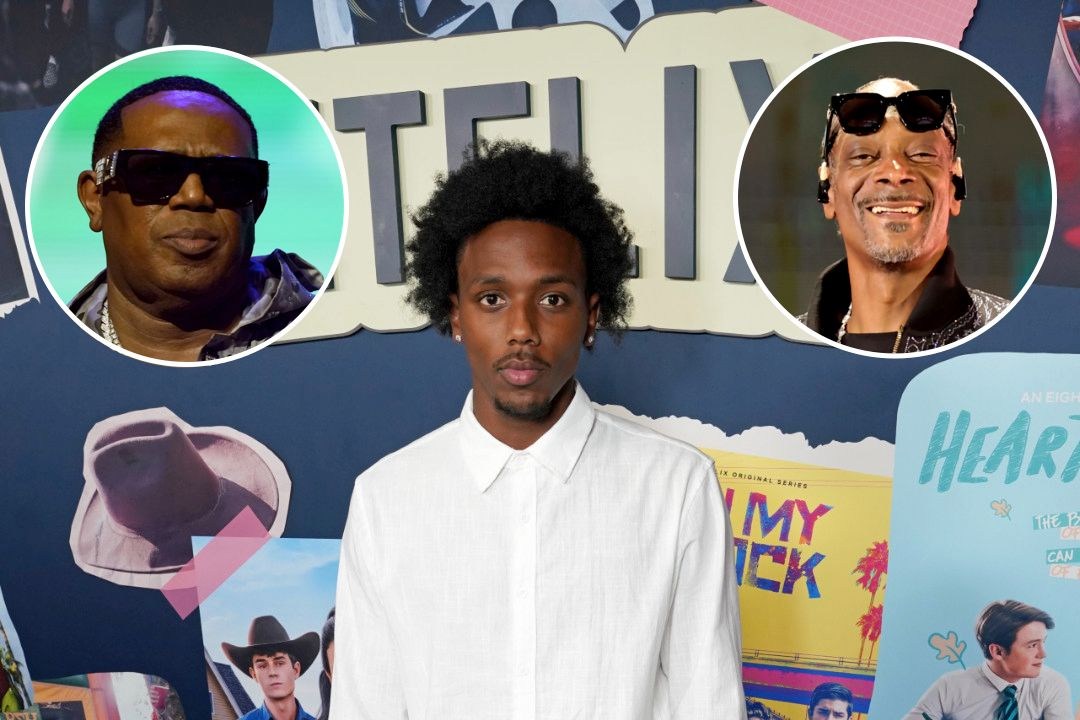
Hercy Miller will play his father, Master P, in Snoop Dogg’s biopic, putting a family resemblance inside one of rap’s biggest business transitions. The casting marks Hercy’s feature film debut. It also puts real weight on a newcomer’s shoulders. Playing Master P means portraying more than a recognizable voice or a No Limit chain. His chapter in Snoop’s career connects Southern independence, West Coast reinvention and the difference between having a hit record and having somewhere to build. For audiences who know P mainly through motivational clips, that history gives the character stakes beyond the family name. That deserves more than a familiar face getting a few minutes on screen.
According to XXL’s report on the casting, Deadline confirmed Hercy’s role on Thursday, November 5. The same announcement named P-Valley actor Zachariah Rogers as The D.O.C. And comedian Watts Homie Quan as an original character called B. Mack. Jonathan Daviss, known for Outer Banks, leads the film as Snoop. Those choices place emerging performers beside established names, but the Master P role carries a particular test. Hercy must make viewers see the executive and rapper his father was during Snoop’s transition, rather than a son doing an impression at a family gathering. His scenes with Daviss will need to establish a working relationship, not just put two recognizable rap figures together. The casting announcement establishes the opportunity, not the outcome.
Master P celebrated the news on Instagram, praising his 24-year-old son for putting in the work and landing the part. His message also saluted Snoop, making the announcement a public exchange between the man being portrayed and the film’s subject. Snoop replied directly: “He earned it the old fashion way.” That is Snoop’s endorsement, not independent documentation of how the audition process worked. No audition footage or detailed casting account appears in the supplied reporting. Fans can respect his statement without pretending it answers every question about access. Equally, a famous parent does not prove an actor lacks ability. The performance remains ahead of the public judgment, even if the comments section has already started holding court. The accompanying video follows below.
Hercy’s screen experience includes Netflix’s Calabasas Confidential, according to the report, but this will be his first feature. Familiarity with cameras helps; carrying a historical figure requires another set of muscles. A son may recognize gestures that an outside actor would need months to study. He can also be too close to notice what strangers see immediately. That tension could produce something compelling if the direction demands more than resemblance. He is playing P at a specific point in his life, which means separating the younger executive from the father he knows today. The useful question is whether Hercy can show his father making decisions under pressure. Getting the voice right matters. Showing why other people trusted that voice matters more.
The wider cast makes clear how much rap history the production plans to cover. Cynthia Erivo will portray Afeni Shakur, with Camron Jones playing Tupac. Erivo’s casting surfaced one day before Hercy’s announcement. Lauren London has been cast as Snoop’s late mother, Algee Smith as Warren G and Myles Bullock as Dr. Dre. SwayvoTwain will play The Notorious B.I.G., while G Perico portrays Snoop’s early mentor Big Reecie Cup. SwayvoTwain is also the son of the late D’Angelo and the late Angie Stone. That is a crowded room of recognizable lives, each with family, fans and contested memories attached. The report says principal photography is underway and gives August 6, 2027, as the theatrical release date. Another accompanying video appears below.
Snoop joined No Limit in 1998 after leaving Death Row, releasing Da Game Is to Be Sold, Not to Be Told that year. No Limit Top Dogg followed in 1999, then Tha Last Meal in 2000. Master P’s label had built its reach through a distribution relationship with Priority Records, a distinction worth keeping straight. Distribution generally handles getting music into the market; a traditional recording agreement can give a label broader control over recordings and release decisions. Actual contracts vary. A distributor’s logo alone does not establish who owns the masters or how much leverage an artist has over a release. Those terms should never be treated as interchangeable. Snoop’s move connected a Long Beach star to a New Orleans operation that understood regional loyalty and national demand. That shift belongs near the center of any serious account of his career.
The real test is whether the movie gives that business history the weight it deserves.
A famous last name can open the door, but it cannot carry a scene.
For Hercy, the smartest performance would resist turning his father into a walking victory speech. Master P’s public image is already built around ownership, ambition and family. A movie adds little by repeating those qualities without showing the judgment behind them. The actor needs room to play uncertainty, calculation and disagreement, not merely authority. Even a quiet reaction to somebody challenging P could reveal more than another speech about being the boss. A famous last name can open the door, but it cannot carry a scene. That standard protects Hercy as much as it challenges him. If every criticism gets dismissed as jealousy, he loses the chance to be judged as an actor. If every success gets credited to his father, the audience does the same damage from the other direction.
For the film business, this is an opportunity to stop treating rap economics like background decoration. Contracts rarely look cinematic, but their consequences shape where artists work and what listeners hear. A distribution partner, a recording owner and an artist’s employer are not automatically the same party. The movie should make those distinctions understandable without becoming a classroom lecture. Showing who can approve a release, commit a budget or refuse a request would put that power on screen without reciting contract language. PVN’s coverage of Drake questioning Billboard’s rules connects to that broader concern: audiences deserve to understand the systems behind public success. Snoop’s No Limit years offer a chance to show business choices changing a career. The Instagram post below sits beside a debate that no casting announcement can settle.
Master P’s celebratory message gives fans a father’s pride, and Snoop’s reply gives Hercy a public vote of confidence. Neither requires viewers to switch off their judgment. For younger audiences, the bigger opportunity is learning why this chapter mattered beyond the album covers and family connections. Rap history gets flattened when every era becomes a handful of famous faces. A streaming catalog puts the albums within reach, but it does not automatically explain the circumstances that brought those records into existence. PVN’s look at Prince’s 3121 Las Vegas live release approaches a related responsibility: returning attention to the work behind an icon’s image. Viewers should bring that same curiosity here. Listen for the music, watch the performance and notice which decisions the script bothers to explain.
Black ownership makes the nepotism conversation more complicated, not less legitimate. Families with money and industry relationships can offer introductions that equally talented outsiders never receive. That advantage deserves scrutiny regardless of the family’s race. Still, treating Black parents passing opportunity to their children as uniquely suspicious ignores how routinely established entertainment families do the same. The fair demand is a consistent standard. Celebrating generational wealth cannot mean pretending it brings no advantages, especially in an industry where getting an audition is itself a hurdle. Hercy should not have to apologize for his father’s success, and the production should not use that success to shield his work from criticism. Access and ability can exist together. An honest discussion holds both facts without making inherited opportunity sound like a personal achievement.
Advertisement
Next comes the work audiences can actually judge: footage, scenes and eventually the finished film. The August 6, 2027, release remains ahead, and the supplied report does not establish how much screen time Master P receives. That leaves the scope of Hercy’s assignment uncertain. What viewers should watch for is whether the No Limit chapter explains a meaningful turn in Snoop’s career or simply checks off another famous name. Hercy has a rare chance to bring family knowledge into a public history. The challenge is making that knowledge useful to people outside the family. The resemblance gets attention. The performance has to earn the rest.
More from PowerVault Network:
