Jalen Hurts' Health Crisis: NFL and Union Demand Answers Amid Controversy
By Renee Fontaine, PowerVault Staff The NFL and NFL Players Association have announced a joint investigation into how the Philadelphia Eagles managed the medical situation involving Jalen Hurts, their star quarterback...
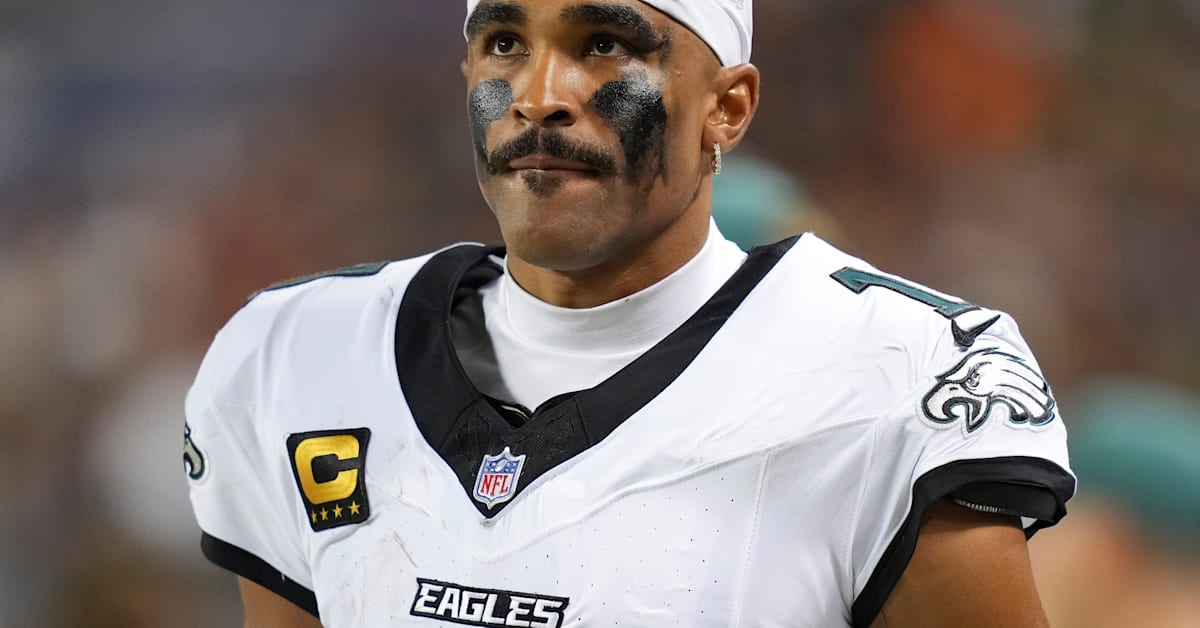
Advertisement

By Renee Fontaine, PowerVault Staff
The NFL and NFL Players Association have announced a joint investigation into how the Philadelphia Eagles managed the medical situation involving Jalen Hurts, their star quarterback. Despite Hurts receiving a serious diagnosis of blood clots, he was still cleared to play, which has raised significant questions about the medical protocols followed by the team. With the league now stepping in to scrutinize the situation, it highlights deeper, systemic issues within the NFL's treatment of its athletes, especially Black quarterbacks. These players often face unique pressures and outsized expectations, handling a scene where their health and well-being may be compromised for the sake of performance and team success.
As reported by ESPN, on October 25, the league and the players union unveiled plans for a thorough review of the Eagles' handling of Hurts' blood clot diagnosis. This development follows the NFL Players Association's demand for a comprehensive investigation to ensure that all safety protocols were rigorously adhered to. Initially, the NFL's stance was one of unwavering confidence in the Eagles' medical staff, trusting their decision-making process. However, this position now appears to be wavering in light of recent developments that have cast a shadow over the team's actions. The shift shows a growing concern about the adequacy of medical protocols and the responsibility of teams to prioritize player health above all else.
The controversy began when Jalen Hurts suffered a calf injury during a game against the Rams on October 4. Just four days later, an ultrasound conducted in London detected a superficial blood clot. Despite this alarming medical finding, Hurts was still cleared to play against Jacksonville on October 11. The decision was not made lightly; it was backed by both the Eagles' medical personnel and the doctors in London. However, it soon became distressingly clear that the condition was far more serious than initially believed. As the full story unfolded, more and more details came to light, revealing a situation where the urgency of the moment may have overshadowed the long-term health risks for Hurts.
By October 19, a follow-up examination revealed a much more severe condition: deep vein thrombosis and bilateral pulmonary emboli. This diagnosis was particularly alarming as it involved clots that had traveled to his lungs, a life-threatening situation that required immediate attention. Consequently, the Eagles made the significant decision to place Hurts on injured reserve for the remainder of the season. This is more than a routine procedural move; it was a critical step, especially given the severe risks associated with playing football while on blood thinners, a necessary treatment for his condition. The decision underscored the gravity of the situation and the precarious balance between athlete health and competitive performance.
The NFL Network's Mike Garafolo reported that the league and union have already initiated discussions on organizing the review, underscoring the urgency and seriousness of the matter. This investigation aligns with questions raised by Delaware Senator Lisa Blunt Rochester, who has called for greater transparency from NFL Commissioner Roger Goodell regarding the league's medical guidelines. Her involvement adds a political dimension to the issue, reflecting broader concerns about player safety and the protocols that govern medical decisions in the league. The push for transparency and accountability is echoed in the video below, which highlights the pressing need for reforms in how player health is managed and prioritized.
This isn't the first time the NFL has faced intense scrutiny over its handling of player health concerns. The league's troubled history with head injuries and the chronic traumatic encephalopathy (CTE) cases paints a grim picture of past negligence. In 2013, the NFL agreed to a $765 million settlement over concussion-related brain injuries among retired players, signaling an acknowledgment of its past failures. The current situation with Jalen Hurts echoes these historical issues, suggesting a persistent pattern of underestimating serious health concerns in favor of immediate on-field performance. It puts a spotlight on whether lessons have truly been learned or if the cycle of prioritizing short-term gains over long-term health continues unabated.
Now, with the spotlight on the Eagles' decision-making, it's clear that the handling of Jalen Hurts' condition goes beyond the field; it's about the systemic neglect of Black athletes' health in the NFL.
The handling of Jalen Hurts' condition goes beyond the field; it's about the systemic neglect of Black athletes' health in the NFL.
The investigation is crucial not just for Jalen Hurts but for the broader message it sends to the league about the necessity of prioritizing player safety above all else. In a sport where Black quarterbacks are becoming increasingly prominent yet remain relatively rare, the pressure to perform at the highest level often overshadows pressing health concerns, putting these athletes at greater risk. The league's responsibility should extend beyond the immediate game to encompass the well-being of the individuals who play it, ensuring their health is not compromised in the pursuit of victory. This investigation stands as a potential turning point in how the NFL values and safeguards the lives of its players.
For the NFL, this situation is more than just a challenge; it is a critical test of the league's commitment to player welfare. The question now is whether the league will continue to allow questionable medical decisions to go unchecked or if this moment will serve as a catalyst for enforcing stricter safeguards and reforms. The answers will set a precedent for how future cases are managed and perceived by the public, influencing the trust and credibility of the NFL in the eyes of its players and fans. This is an opportunity for the league to demonstrate genuine commitment to player safety and to show that it values its athletes as more than commodities.
The community watching this situation unfold sees far more than just a football problem; it is a reflection of broader societal issues that permeate sports. Black athletes often handle complex intersections of race and performance, where the stakes are invariably higher, and the safety nets are alarmingly thinner. This incident serves as a sobering reminder of the disparities in how health issues are addressed when the spotlight is not as bright. It highlights the need for systemic changes in how Black athletes are supported and protected, ensuring that their well-being is not overshadowed by the relentless demands of the sport.
Advertisement
Race and sports have always been tightly intertwined, but this incident shows how deeply class and power dynamics influence decision-making within the NFL. Black quarterbacks like Jalen Hurts are not merely athletes; they are emblematic of change and progress in a league that has historically marginalized them. The way they are treated, both on and off the field, says a lot about who the NFL truly values and reflects broader societal dynamics. The scrutiny of Hurts' situation brings to light the ongoing struggle for equity and respect in a system that often prioritizes profit over people.
As the joint review progresses, all eyes will be on the NFL to observe how it addresses these failings. The league is at a crossroads: will it take decisive action to ensure such oversights do not occur in the future, or will it revert to old patterns of defending the indefensible? The league's next steps are critical, not just in terms of reshaping its public image but also in redefining its treatment of Black athletes. The outcome of this situation will be indicative of the NFL's true priorities and its willingness to evolve in a way that genuinely values the health and safety of its players.