Jalen Hurts' Health Crisis: What It Reveals About the NFL's Priorities
By Renee Fontaine, PowerVault Staff Jalen Hurts' absence from the Philadelphia Eagles' recent rout by the Dallas Cowboys has left not just a gaping hole in the team's quarterback position but also a credibility defici...
Advertisement

By Renee Fontaine, PowerVault Staff
Jalen Hurts' absence from the Philadelphia Eagles' recent rout by the Dallas Cowboys has left not just a gaping hole in the team's quarterback position but also a credibility deficit for the NFL. The Eagles' five-game losing streak isn't merely an athletic failure; it symbolizes a broader issue within a league that seems willing to compromise player health for the sake of expanding its global market. Hurts’ situation serves as a stark reminder of the NFL's willingness to place financial gains over the well-being of its athletes. This is more than a Philadelphia problem; it’s a reflection of a systemic issue where the quest for global dominance and profit margins takes precedence over the safety and longevity of players who sacrifice their bodies for the sport.
The root of this controversy lies in Hurts’ blood clots, a condition mishandled in a way that raises serious ethical questions about the priorities of those in charge. Eagles owner Jeffrey Lurie’s induction into the team's Hall of Fame couldn't have come at a worse time, overshadowed by the cloud of uncertainty surrounding Hurts’ health. This celebration, meant to honor Lurie's contributions, instead highlights the glaring silence from the Eagles' management and medical team, a silence that is deafening and telling. Various reports, including those from Elevenlabs and Andscape, show how the league's ambition to stretch its reach across continents is increasingly at odds with its publicized commitment to player welfare. The juxtaposition of Lurie's honor against the backdrop of Hurts' health crisis shows a troubling misalignment in the NFL's priorities.
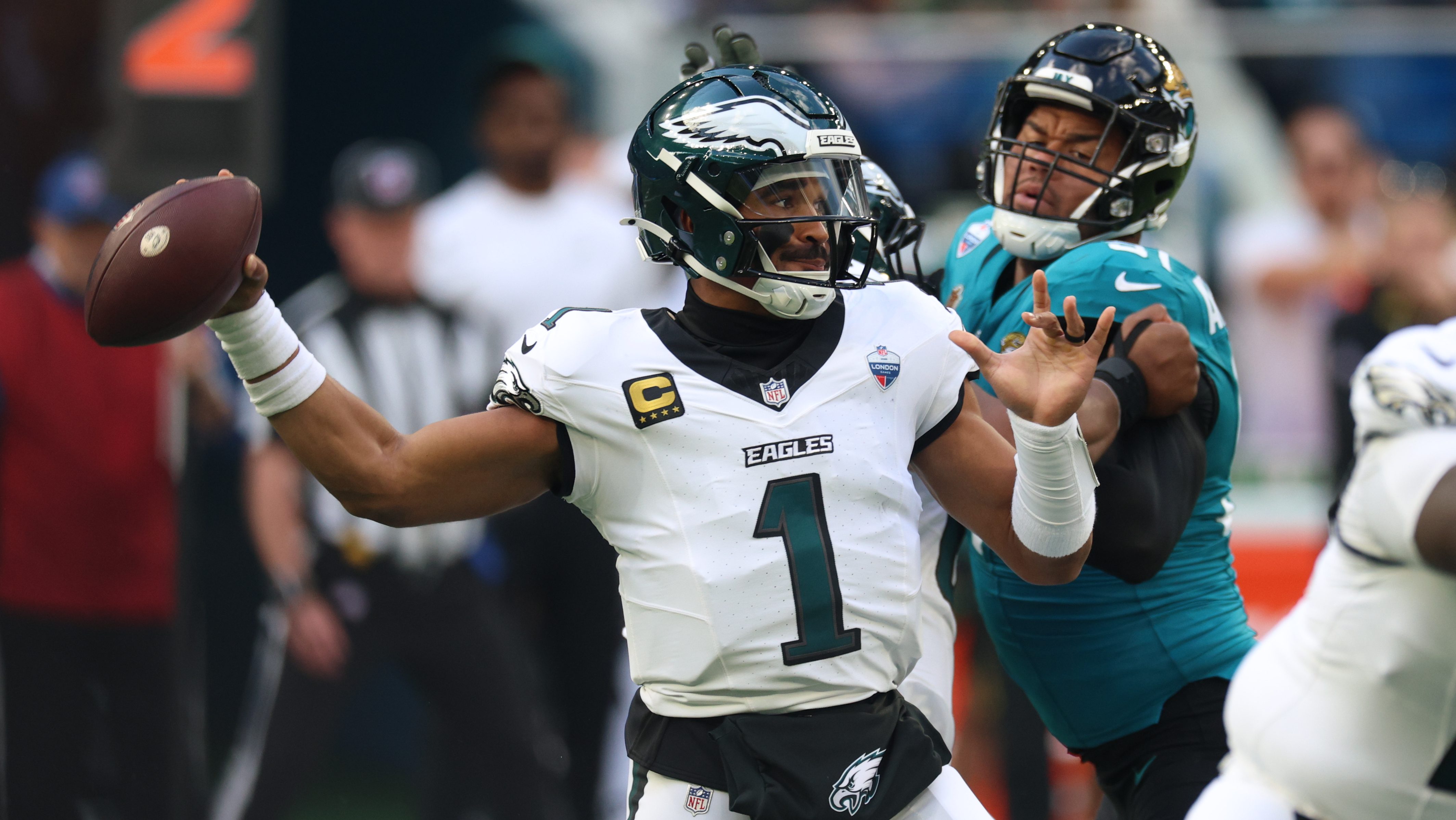
Hurts was cleared to play in London just a day after being diagnosed with a superficial blood clot, a decision that now stands as a glaring example of putting profit over player safety. The decision to play him in London, despite the medical diagnosis, reflects a disturbing trend where the allure of international exposure and revenue streams outweighs the fundamental responsibility of ensuring player safety. The game against Jacksonville not only ended in a loss but also initiated a downward spiral for the Eagles, culminating in Monday's devastating defeat to the Cowboys. It’s a series of cascading failures that illustrate the dangers of prioritizing short-term financial gains over long-term player health. The Eagles' gamble with Hurts' health has not only cost them victories but has also severely impacted the integrity of the organization.
The Eagles' decision-making process regarding Hurts’ health is now the subject of a joint investigation by the NFL and the National Football League Players Association. This collaboration itself reeks of potential conflict of interest, questioning whether the NFLPA can truly function independently in serving its players' best interests. The investigation’s credibility is already under scrutiny, given the intertwined financial interests at play. As this inquiry unfolds, the Eagles' season continues to unravel without any certainty about Hurts' return. The lack of independent oversight in this matter raises serious questions about the effectiveness of player advocacy within the league. If the institutions designed to protect players are compromised, the entire system's integrity is at risk. Hurts’ situation highlights the urgent need for more robust and transparent mechanisms to safeguard player health.
Blood clots are no small matter; Hurts’ condition worsened as the clot spread to his lungs, a diagnosis that has now sidelined him for the season. The gravity of his medical condition cannot be overstated as it has far-reaching implications for both his career and the Eagles' future. Eagles fans, who have long celebrated Hurts as a cornerstone of their team, are now witnessing the squad crumble without the guiding presence of the quarterback who has led them to two Super Bowls. This is more than just a sports story; it's a moment that exposes the NFL's prioritization of profits over players. The health crisis Hurts faces isn't just about one man's health; it's a reflection of a league-wide issue where the well-being of athletes is secondary to the relentless pursuit of revenue.
The league's aggressive international expansion is a money-making bonanza for owners and partners alike, as evident with a record nine regular-season games outside the United States this year. This global reach was intended to be a triumph, showcasing the NFL's ability to capture new audiences and generate unprecedented revenue. However, the reality for players is starkly different. Long flights, disrupted routines, and inadequate recovery times have become the new norm for athletes like Hurts, whose bodies are already taxed by the physical demands of the sport. The NFL's global push is dangerously reminiscent of other industries that prioritize profits over ethics, risking player health for financial gain. The league's ambitions, while lucrative, pose a significant risk to players’ well-being, highlighting a disconcerting disregard for the very individuals who fuel its success.
And here's the pivot: The NFL's player safety protocols are buckling under the weight of its own billion-dollar ambitions. The league's mantra of protecting players rings hollow when juxtaposed with its relentless pursuit of international dollars.
The NFL's global expansion is cutting into the very fabric of player safety, revealing a league willing to gamble with lives for profit.
The handling of Hurts' health crisis shows a disturbing trend in professional sports. As the NFL stretches its influence, the players, often Black players who already handle a fraught scene, bear the brunt of unchecked ambition. The league's relentless pursuit of expansion mirrors a historical pattern where the bodies of Black athletes are commodified for entertainment and profit. This isn't the first time an athlete's health has been compromised in pursuit of a broader market. For Black athletes, whose bodies have often been commodified in sports history, this raises troubling implications. The systemic issues at play reflect a deeper, entrenched bias within the sports industry that values financial gain over the human cost borne by its players. Hurts' predicament is a stark reminder of the ongoing struggle for equitable treatment in a world that often overlooks the contributions and sacrifices of Black athletes.
For the NFL as an institution, this saga exposes a glaring hypocrisy. The league, as much a cultural powerhouse as a sports organization, is showing cracks in its façade of prioritizing player welfare. The NFL’s carefully curated image of responsibility and care for its athletes is being questioned, revealing underlying inconsistencies in its practices. It forces us to question whether the NFLPA is more of a symbolic entity rather than a true advocate for athletes. This revelation might prompt similar scrutiny across other sports leagues. If the NFLPA is unable to effectively advocate for its players, it calls into question the efficacy of player unions across professional sports. The Hurts situation could become a watershed moment, driving a reevaluation of how these organizations operate and their true commitment to protecting athletes’ interests.
For fans and communities that rally behind these players, the stakes are high. Every touchdown and tackle carries the weight of not just a game, but a community's pride and hope. These athletes represent more than mere sports figures; they are cultural icons whose successes and failures resonate deeply within the communities they represent. The gap between what the NFL promises and delivers is widening, and fans are left to wonder whom the game truly serves. This is more than about missing a star quarterback; it's about trust eroding between the league and its most vital stakeholders. As fans become increasingly disillusioned by the league's priorities, the emotional and cultural investment in the sport is at risk, threatening to alter the fabric of the communities that have long supported it.
Advertisement
The racial and economic dynamics at play here are undeniable. The NFL, a predominantly Black league owned by white billionaires, presents a stark contrast. The power imbalance inherent in this structure often leads to situations where Black athletes like Hurts must handle a sports industry that prioritizes profit over people. Hurts’ situation is a reminder of how Black athletes must handle a sports industry that often prioritizes profit over people. As long as the league continues its exploitative practices, its credibility remains on shaky ground. Linking this issue to the broader systemic challenges highlighted in cases like the Laraven Davis case is crucial for understanding its full impact. The exploitation of Black athletes is not an isolated issue but is deeply rooted in the broader socio-economic structures that govern professional sports.
Looking ahead, the resolution of the Hurts investigation will set a precedent for how the league handles similar cases in the future. It’s not just about finding answers for one player's health crisis but redefining what player welfare truly means in a commercialized sports world. The NFL is at a crossroads, and the path it chooses will shape not just the league's future, but the very nature of professional sports. Should the league continue to gamble with the welfare of its athletes, it risks losing more than just games. The integrity and future of the sport depend on the league’s willingness to prioritize player health and safety. The outcome of this investigation could redefine the balance between profit and ethics in the sports industry, setting a new standard for accountability and responsibility.