Javits Frimpong's Murder: Unearthing the Truth Behind His Tragic Death
By Tanya Brooks, PowerVault Staff On October 29, 15-year-old Javits Frimpong became another young life prematurely lost to the violence plaguing the streets of New York City. The morning sun had barely risen when Javi...
Advertisement

By Tanya Brooks, PowerVault Staff
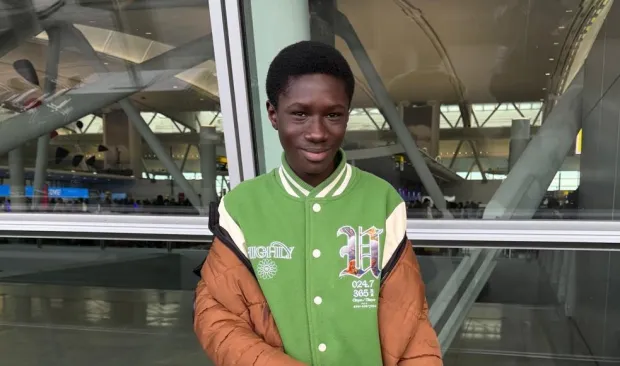
On October 29, 15-year-old Javits Frimpong became another young life prematurely lost to the violence plaguing the streets of New York City. The morning sun had barely risen when Javits was shot in broad daylight on his way to school in the Bronx’s Claremont neighborhood. This horrifying incident has rattled a community already grappling with deep-seated issues of safety and justice. Javits, who had only recently moved to the United States with hopes of a brighter future, now tragically represents the systemic failures that continue to plague our society. His untimely death is a stark reminder of the urgent need for meaningful change in how we address violence, particularly in marginalized communities.
According to a report by NBC New York, surveillance footage captured a harrowing scene: Javits, in a desperate sprint for his life, moments before collapsing from a fatal gunshot wound to the stomach. The New York Police Department is actively searching for three male suspects who are believed to be between the ages of 16 and 18. They were seen wearing all-black outfits and blue surgical masks as they fled the scene, blending into the crowded urban scene. As the investigation unfolds, pressing questions remain about what led up to this tragedy and why a young life was so violently cut short. Was this attack a targeted act of retaliation, or a consequence of the broader societal issues that have long plagued the area?
Javits' father, Thomas Frimpong, is convinced that relentless bullying at DreamYard Preparatory School played a crucial role in the tragic incident that claimed his son's life. According to Thomas, Javits had repeatedly voiced concerns about being bullied at school, complaints that seemed to fall on deaf ears until it was too late to prevent tragedy. The anguish in Thomas's voice is palpable as he tearfully appeals for justice, urging those responsible to come forward. 'I would tell them to give themselves to the police,' he implored, a sentiment captured by PIX11 News. His plea shows a father's heart-wrenching frustration and the desperate need for accountability in a system that failed to protect his son.
As Thomas recounts, just days before Javits' death, the school's principal reached out to inform him about two students who were harassing his son. 'Like three days ago, it was the principal who told me, who called me. He said two guys are disturbing my son, so he has suspended the two guys,' Thomas shared with reporters. This revelation raises serious questions about the effectiveness of the school's response to the bullying allegations. Were the school's actions sufficient to protect Javits, or did they merely serve as a temporary patch on a more significant problem? The timing of these suspensions and their potential connection to Javits' tragic death demands a thorough examination into how schools handle and prioritize student safety.
The NYPD's ongoing investigation is crucial, yet it cannot reverse the tragic loss of Javits, a quiet teenager whose life was cut short just one year after he moved to the United States from Ghana. This heartbreaking story of loss and injustice has left the Claremont community reeling, grappling with the brutal reality of gun violence that now feels all too close to home. As captured in a CBS New York interview, local residents are mourning Javits while also confronting their fears for their own children. The pervasive sense of vulnerability is evident as community members express their shock and concern, highlighting the urgent need for comprehensive strategies to address the root causes of violence and ensure the safety of all children.
The tragic scenario of Javits Frimpong's bullying allegations is not new, as school environments have long been breeding grounds for unchecked aggression. This issue is starkly highlighted by the case of Rodney Hinton Jr., a similarly tragic chain of events that shows broader implications. When bullying is allowed to fester without effective intervention, it can escalate into life-or-death situations, repeatedly reminding us of the systemic failures within both educational and law enforcement frameworks. Schools, which should serve as safe havens for learning, too often become battlegrounds where vulnerable students face relentless harassment. The cycle of bullying, when unresolved, can have devastating consequences, making it imperative that we reevaluate and reform the systems designed to protect our children.
Justice isn't served when the cries of the vulnerable go unheard.
Justice isn't served when the cries of the vulnerable go unheard.
For Javits' family, his senseless death is not only a profound personal tragedy but also a glaring indictment of systemic failures: the impotence of school administrations in effectively addressing bullying. When schools adopt a passive stance, allowing bureaucracy and red tape to outweigh the urgent need for student safety, they set a dangerous precedent. This negligence can have dire consequences, as evidenced by Javits' case, which forces us to question whether schools are truly the sanctuaries of learning they claim to be. Are they adequately equipped to handle the complexities of bullying, or are they contributing to an environment where students' cries for help go unanswered, leaving them vulnerable to irreversible harm?
On a broader scale, this tragedy is indicative of the deepening rift between communities of color and the institutions meant to serve them. The NYPD's search for the suspects must be relentless and just, yet once they are apprehended, the pursuit of justice cannot end there. The justice system, too often tilted against Black and brown individuals, must ensure that all aspects of this case are handled with transparency and fairness. Historically, racial dynamics have influenced the outcomes of such investigations, leading to disparities that erode trust within these communities. The handling of Javits' case presents an opportunity to address these systemic biases and strive toward a more equitable and just legal process.
For the wider community, Javits' death must be a clarion call for action. Mourning is not enough; mobilization is essential. Community programs, policy changes, and active parental engagement must become integral components of the solution. These transformations will not only honor Javits' memory but also work towards preventing similar tragedies in the future. By fostering a sense of collective responsibility and vigilance, we can create an environment where children feel safe and supported. It is imperative that stakeholders at all levels commit to implementing meaningful changes that address the root causes of violence and provide the necessary resources to protect our youth from harm.
Advertisement
Underlying Javits' story are complex dynamics of race and class that shape the experiences of new immigrants as they handle the cultural labyrinth of America. Often, they find themselves in precarious positions at the intersection of systemic discrimination and economic hardship. These factors contribute to an environment fraught with challenges, where young Black boys like Javits are frequently perceived as threats rather than children in need of protection. This narrative is a recurring theme, as seen in the quest for justice across communities, where societal prejudices continue to influence perceptions and interactions. Addressing these inequities requires a concerted effort to dismantle the barriers that perpetuate such disparities and to ensure that all children are afforded the opportunity to thrive.
As the investigation continues and the NYPD presses forward, the community demands not just answers but accountability. From school boards to city officials, the responsibility now lies with them to ensure another life isn't senselessly lost to preventable violence. As Javits' father so poignantly pleaded, coming forward is the first step in healing. We owe it to Javits and countless others like him to ensure their stories provoke real change. By holding institutions accountable and advocating for systemic reforms, we can honor Javits’ legacy and work toward a future where such tragedies are not repeated, and every child is given the protection and justice they deserve.