Mississippi Calls Baby Kohen Wiley's Death Justified: The Autopsy Says Otherwise
Four months after a police officer shot and killed a one-year-old boy in a Walmart parking lot, the state of Mississippi has decided nobody will answer for it. On Monday, the office of Attorney General Lynn Fitch anno...
Advertisement

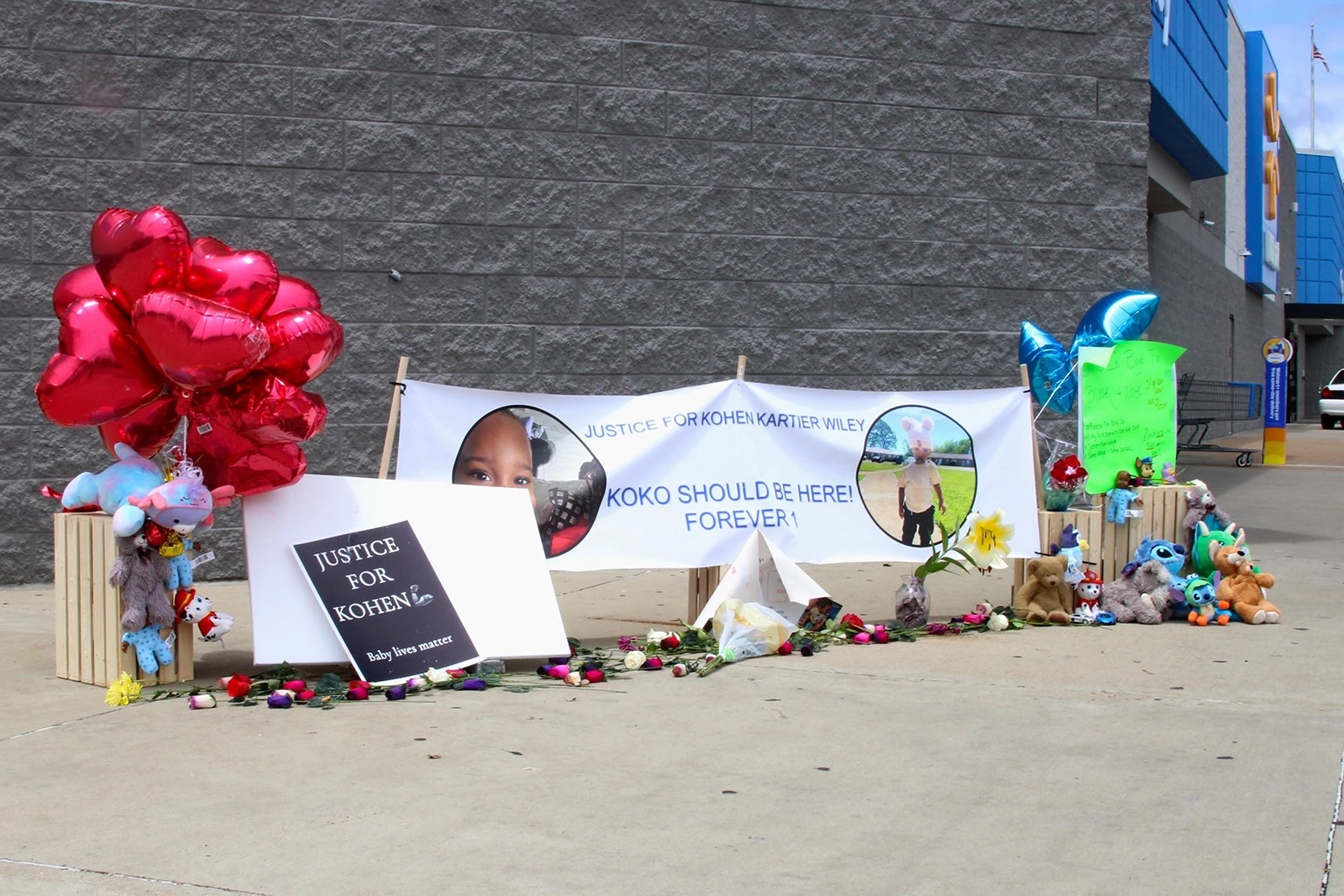
Four months after a police officer shot and killed a one-year-old boy in a Walmart parking lot, the state of Mississippi has decided nobody will answer for it. On Monday, the office of Attorney General Lynn Fitch announced that the officer's use of force in the death of Kohen Wiley was justified, and the criminal case is closed. The statement was brief. It did not mention Kohen by name. It did not name the officer who fired. It closed the book on a case where the most basic evidence, the body camera footage, has still never been shown to the family or the public.
Start with what is not in dispute. On June 14, 2026, police in Senatobia, Mississippi, a city of about 8,000 people some forty miles south of Memphis, responded to a shoplifting call at the local Walmart. The accusation involved Vellesiya Wiley, Kohen's mother, and her friend Latoya Ferrell, and the item in question was a pack of diapers. Four months later, neither woman has been charged with any crime. Officials have never released any evidence that anything was stolen. Whatever happened inside that store, it has never been proven to be anything at all.
What happened in the parking lot is where the record starts to fight itself. According to the account the state has stood behind, the women and the baby left the store, got into their car, and drove toward the officers as they pulled away. The Mississippi Bureau of Investigation, which handled the case, has claimed the driver moved in the direction of the officers and almost struck one of them. One officer fired into the vehicle. Kohen, who was in his mother's lap in the passenger seat, was killed. Ferrell was wounded.
The officer who pulled the trigger was not named in the attorney general's statement. He was identified in other records reviewed by local outlets, including Action News 5, as Hunter Foster, a sergeant with the Senatobia Police Department. Foster is white. Vellesiya Wiley, Kohen, and Latoya Ferrell are Black. That detail matters less as a description of one man than as context for a town that has been forced to confront what its police department is willing to do to its own residents. Senatobia is roughly forty percent Black.
Here is what does not fit. The family's legal team, led by attorney Ben Crump, released an independent autopsy, and it found that Kohen was shot through the side of his body. Not from the front. The side. At a press conference this summer, the family's lawyers displayed a photograph of the passenger side of the car with the window almost entirely blown out. If the rounds came through that window, the car was moving alongside the officer's position, not charging at him. That is not a rounding error. It is a contradiction at the center of the state's entire justification for closing this case. An autopsy is not an opinion. It is physics.
Vellesiya Wiley has given her own account of those seconds, and it is the one the state's two-line statement never touches. She says she lifted Kohen up in the car, holding her baby where the officers could see him, to make clear there was a child in the vehicle. She says the officer fired anyway, three to four shots, and that one of them struck her son's ribcage while he sat in her arms. No officer, to this day, has publicly disputed that a mother was holding her baby when the bullets came through the window. At a press conference after the shooting, she said the words that no parent should ever have to say: I watched my baby take his first breath, and I watched my baby take his last breath.
Crump's response to Monday's ruling was pointed. How can anyone accept that conclusion, he asked, when Kohen's family and the public still have not been allowed to see the body camera footage? He is right, and the question is not rhetorical. The footage exists. MBI has it. Investigators have had it for four months. If it showed a car charging at an officer, there would have been no surer way to quiet a grieving town than to release it on day one. Instead, the people who were there that day have been asked to accept a summary from an agency they have never been allowed to check, and the family has been told to trust a process that has kept them locked out of it from the beginning.
None of this happened in a vacuum. Senatobia's police department has spent the last few years building the kind of record that makes trust impossible. In 2023, one of its officers arrested a ten-year-old Black boy for urinating in public, booked him, and put him in a cell. The child was later sentenced to probation. In September of this year, the department's chief, Harold Vanderford, was fired after reports that he used racial slurs. Vanderford was the chief on duty when Kohen was killed. The town has since installed a new chief, Angelica Maze, who is Black. Maybe that changes things going forward. It cannot change what already happened under the old regime, and Crump said as much when he pointed out that the racist language that cost Vanderford his job is exactly why this family cannot simply be told to trust the process.
Advertisement
From an investigative standpoint, this is what a compromised case looks like. The state says the car drove at the officer. The autopsy says the bullets came from the side. The state says the shooting was justified. The state will not show the footage. The state says the women stole diapers. The state has charged no one and shown no evidence. Every single unresolved question could be answered with a video the state already possesses, and the state has chosen silence instead. When a public record can be verified and the authorities decline to verify it, that is a choice, and the public is allowed to ask why it was made.
Kohen Wiley was one year old. He had done nothing, his mother has been accused of nothing she has ever been charged with, and his family is being asked to move on with no charges, no named officer, no footage, and no apology. There may still be a road to accountability. The family's civil case continues, and federal authorities remain able to examine whether a one-year-old's civil rights ended in that parking lot. None of it brings him back, and none of it should be necessary. A state that closes a case this quickly, this quietly, owes its people more than a two-paragraph press release. It owes them the tape. The family has asked for it. The town has asked for it. Four months is long enough.