Pete Hegseth’s Arlington Boos Put Respect on the Line
By Malik Carter, PowerVault Staff Pete Hegseth reportedly faced boos at Arlington National Cemetery during Donald Trump’s Veterans Day remarks, turning a tribute into an accountability test. The supplied account also...
Advertisement

By Malik Carter, PowerVault Staff
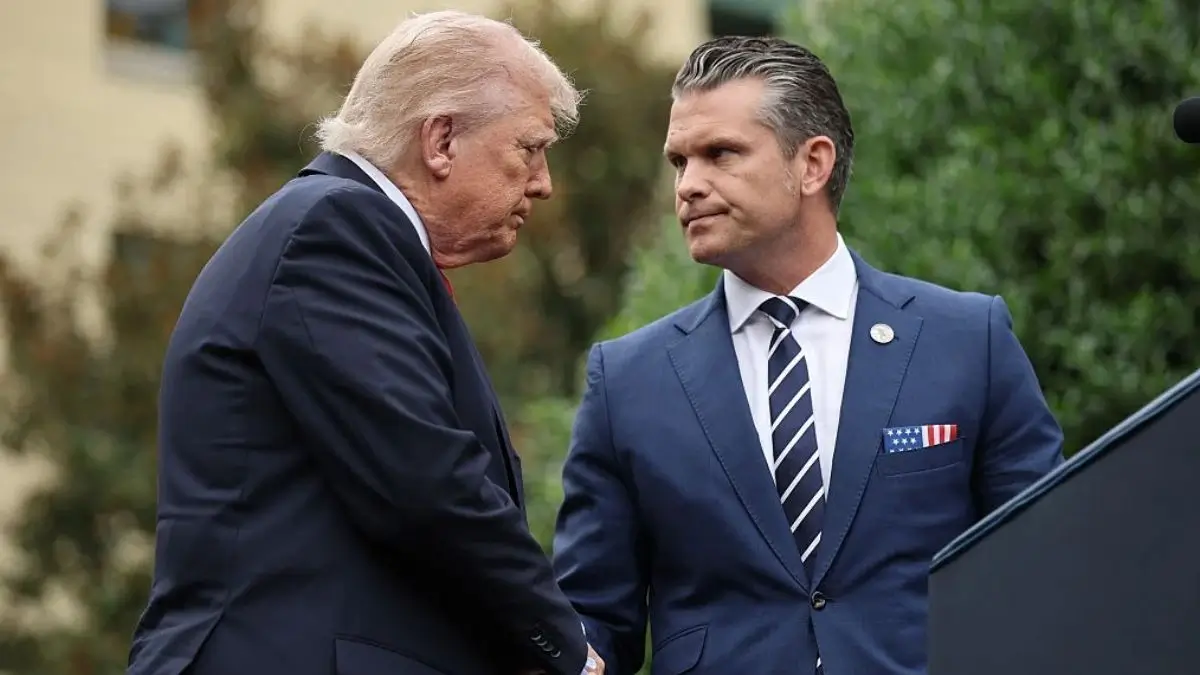
Pete Hegseth reportedly faced boos at Arlington National Cemetery during Donald Trump’s Veterans Day remarks, turning a tribute into an accountability test. The supplied account also describes a soldier correcting members of Hegseth’s entourage for laughing. That contrast carries the story: someone responsible for maintaining decorum reportedly had to remind powerful guests where they were. Arlington is not a campaign rally or a Cabinet member’s promotional stop. Before anyone turns the episode into another Washington humiliation contest, the people buried there deserve a different question. Why did the behavior of administration officials become the focus of a ceremony honoring military service?
Atlanta Black Star’s account frames Trump’s introduction of Hegseth as an uncomfortable public spotlight on a controversial appointee. The outlet has also published related coverage of Trump defending Hegseth. But the excerpt supplied for this story ends before describing the full exchange at Arlington. It does not establish the soldier’s identity, provide that person’s exact words, or document the size of the group booing. Those limits matter. Readers deserve reporting that distinguishes what happened from what a headline invites them to believe about an official’s political future. A report of boos supports describing an audible protest. It does not support declaring that every veteran present rejected Hegseth, much less that Trump had decided to remove him from office.
Trump introduced Hegseth as “the Secretary of War, Pete Hegseth,” according to the supplied account. That wording deserves attention because official branding can carry a political message before an official discusses a single policy. The source describes an administration shift toward the Department of War name in September. It does not supply the legal documents establishing the scope of that change. A ceremonial introduction alone cannot settle questions about an agency’s statutory name or authority. Renaming an institution for public consumption is not the same as explaining how its responsibilities have changed. What it does show, through the reported quotation, is the language Trump chose for an event honoring veterans. The accompanying video provides material readers can examine against that reported description.
That video should be assessed for the specific exchange, not treated as permission to invent motives. The supplied report characterizes Trump as fatigued and describes his speech in unflattering physical terms. Those impressions do not establish a medical condition, impairment, or inability to perform his duties. Nor does introducing Hegseth prove Trump was conducting a secret loyalty test. Political coverage loses its footing when body language becomes a diagnosis and an awkward introduction becomes evidence of an impending firing. That shortcut also gives officials an easy opening to dismiss legitimate questions by attacking the speculation instead. There is enough substance here without either leap: a solemn public ceremony, reported disrespect from an entourage, and a defense leader whose reception became part of the story.
The reported correction by a soldier deserves the same evidentiary discipline. Without the complete exchange, readers cannot know precisely what prompted it, how everyone responded, or whether the laughter had an explanation. No explanation would automatically excuse disrupting a solemn observance. Still, accountability requires identifying conduct accurately before assigning blame. Rank and access should not exempt powerful visitors from the standards everyone else is expected to follow. The headline’s “Give That Man A Raise” captures approval of the soldier, but the excerpt does not identify who said it. It should not become a claim about military opinion or a verified demand for a promotion. The second accompanying video gives readers another opportunity to evaluate the incident rather than rely on a celebratory headline.
The second video belongs beside a history much larger than one official’s embarrassment. Arlington includes the story of Freedman’s Village, established on the estate in 1863 for formerly enslaved people. Black freedom and military remembrance occupy the same ground there. President Harry Truman ordered equality of treatment and opportunity in the armed forces through Executive Order 9981 in 1948. Implementation took years, and military service did not erase discrimination outside the gates. A Black veteran could serve the country and still return to communities where segregation restricted housing, schooling, and opportunity. The uniform was no shield against racism. That history makes Arlington an especially poor place to confuse patriotic branding with respect. Black families have supplied military labor, endured exclusion, and fought to have their service recognized. Their stake in the institution predates the officials currently standing at its microphones.
The real test is whether respect travels beyond the ceremony and into decisions affecting military families.
A uniform should never become a costume that politicians borrow to escape accountability.
For Hegseth, the reported episode exposes a basic leadership problem: an entourage reflects on the person it accompanies. A secretary cannot demand discipline from service members while treating discipline among his own guests as somebody else’s concern. If the account is accurate, the appropriate response starts with acknowledging the disruption and establishing what happened. It does not require a public relations campaign against critics. The soldier reportedly enforcing decorum should not have needed to supply the judgment that powerful visitors brought with them. Trump also bears responsibility for keeping a veterans’ observance centered on veterans. A president can introduce an official without turning the moment into a referendum on personal loyalty. The standard should be simple enough for any administration: arrive prepared, behave respectfully, and remember who the ceremony exists to honor.
For the political system, the danger is a familiar substitution: spectacle standing in for oversight. A crowd’s reaction can embarrass an official, but it cannot audit a department, investigate misconduct, or evaluate military readiness. Those jobs require records, testimony, inspectors general, and lawmakers willing to challenge their own party. An uncomfortable clip becomes useful only if scrutiny continues after cameras move on and officials must answer specific questions about their decisions. PVN’s question about Tyler Perry and Keisha Lance Bottoms applies here too: Who benefits from proximity to power? When access protects an official from scrutiny, service members lose a route to accountability. A uniform should never become a costume that politicians borrow to escape accountability. The salute belongs to the office’s obligations, not the officeholder’s brand.
For Black readers, cheering a correction can offer a satisfying moment without delivering a single benefit to a veteran’s household. The useful follow through is less glamorous and more demanding. Ask whether veterans can reach a benefits counselor, obtain treatment, and challenge a wrongful denial. A delayed answer can mean another month of family members covering bills or taking time away from work to chase paperwork. Separate Pentagon responsibilities from those of the Department of Veterans Affairs, because blaming the wrong agency lets the responsible one escape. PVN’s coverage of who shows up after the Veterans Day parade points toward that practical standard. Applause is not a housing payment. Political coverage should help families locate responsibility, not leave them holding another clip while their paperwork sits unanswered.
Race and class sharpen the stakes because military service has never guaranteed equal access to the rewards attached to it. The 1944 GI Bill expanded education and housing opportunities, but discrimination blocked many Black veterans from receiving equal benefits. Segregated colleges had limited capacity. Racist lending and housing practices restricted where families could buy homes and build wealth. Those exclusions helped determine which children inherited property and which families kept paying rent. The damage extended beyond individual applicants because a lost opportunity to buy property could affect a family’s finances for generations. That history does not prove a specific present policy discriminates. It does explain why Black readers should demand evidence about who receives benefits, who faces delays, and who can afford help appealing a denial. A ceremonial promise cannot answer those questions.
Advertisement
The next step is verification, followed by scrutiny that survives the news cycle. Fuller footage and on the record accounts could clarify the reported laughter, correction, and boos. Any response from Hegseth’s office should address conduct rather than attack the legitimacy of criticism. Reporters should also watch what lawmakers actually investigate and what military families say they need. Nothing in the supplied excerpt establishes that Hegseth’s job is ending or that Trump intended to threaten it. The public does not need that speculation to demand better. Arlington should never become a place where the powerful receive more protection than the dignity of those they came to honor.
More from PowerVault Network: