Scott Colom’s Mississippi Race: Who Gets Counted?
By Renee Fontaine, PowerVault Staff Scott Colom’s Mississippi Senate race remains unresolved in the supplied reporting, putting Black voters’ ballot access at the center of the story. NewsOne describes outstanding abs...
Advertisement

By Renee Fontaine, PowerVault Staff
Scott Colom’s Mississippi Senate race remains unresolved in the supplied reporting, putting Black voters’ ballot access at the center of the story. NewsOne describes outstanding absentee and affidavit ballots as central to the remaining count. Its account places Mississippi alongside Alaska as the last two states with Senate races still awaiting calls. That makes this a story about more than a candidate approaching a possible victory. It concerns whether eligible voters get heard after showing up and following the rules. The material provided contains no certified result or complete vote tally. Colom should not be declared the winner on that record. The people working to ensure every eligible ballot counts, however, deserve attention right now.
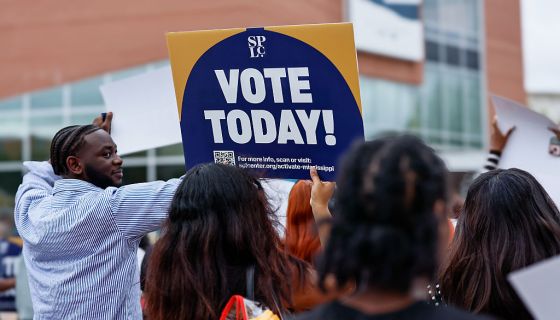
The NewsOne account of Colom’s race credits local organizing with challenging assumptions about Mississippi’s political possibilities. It also cites Mississippi Today’s reporting on an action outside Jackson City Hall during a press conference involving federal and state officials. The action took place Monday, bringing demands for a complete count directly to the setting where officials addressed the public. Those details describe an organized demand for public accountability, not evidence that any particular ballot was unlawfully rejected. That distinction matters. A close election requires careful verification, and voters deserve reporting that separates documented obstacles from allegations. Calling Mississippi permanently unwinnable also obscures the work residents perform before national outlets decide a race deserves attention.
Harya Tarekegn, director of advocacy and policy at the Mississippi Center for Justice, identified one concrete concern: voter records. According to the supplied reporting, she questioned the secretary of state’s use of Experian data to place people on an inactive list. That claim deserves a specific official response explaining the data, safeguards and correction process. An inactive designation should not be casually confused with proof that someone cannot vote. At Friday’s press conference, she also called for transparent, timely affidavit ballot counting as officials move toward election certification. Tarekegn also insisted that organizing receive its due. “Mississippi really showed up in this election, and that needs to be the story,” she said. The accompanying video follows this discussion of participation and ballot access.
The access question extends to a mismatch described by NAACP President and CEO Derrick Johnson. “Poll books are printed 45 days before the election, but voter registration closes 30 days before the election,” he said in remarks quoted by the source. If those schedules leave eligible registrants absent from printed books, voters need a reliable way to establish their eligibility. Affidavit ballots can provide that route, subject to verification. They are not evidence of misconduct simply because additional review is required. Johnson also faulted the state for failing to invest in upgraded voting systems, putting responsibility squarely on government. Election officials should explain how registration updates reach polling places and how voters can check whether an affidavit ballot was accepted.
Mississippi’s participation rules create another practical barrier. The supplied account says the state lacks broad, no excuse early voting, instead allowing absentee voting for people who meet specified qualifications. It also identifies Mississippi as one of eight states without online voter registration, a policy tracked by Ballotpedia’s registration guide. Residents must use paper applications rather than complete registration through a statewide online process. Those applications must be mailed or submitted in person at the local circuit clerk’s office, according to the account. These are distinct policies with a shared consequence: less flexibility. Someone working unpredictable shifts has fewer options when registration and voting require extra planning. The next video accompanies that broader discussion of participation and election administration.
That access debate carries a history Mississippi cannot wish away. The state’s 1890 constitution imposed devices including a poll tax and literacy requirements that helped strip Black citizens of political power. During Freedom Summer in 1964, organizers challenged a system that made registration dangerous and exclusion routine. Fannie Lou Hamer’s Mississippi Freedom Democratic Party challenged the state’s segregated delegation at the Democratic National Convention that same year. The Voting Rights Act followed in 1965. These fights concerned who could exercise power over public institutions, not simply whose name appeared on a registration form. Access determined whose demands officials could afford to ignore. Modern administrative failures are not automatically identical to those deliberate exclusions. But history explains why Black communities demand evidence before accepting official assurances. A system with that record must earn public trust through transparent procedures and equal treatment.
Black voters should not need an emergency organizing campaign to make ordinary election administration work.
Black voters should not have to become election lawyers to receive the rights other Americans treat as routine.
The first obligation is to the voter whose ballot needs review, not the campaign awaiting a favorable count. Black voters should not have to become election lawyers to receive the rights other Americans treat as routine. Consider what a disputed registration can demand: another phone call, another trip, another explanation to a supervisor. Those burdens exist even when the voter ultimately prevails. Winning recognition of an existing right does not reimburse lost wages or return the hours spent proving eligibility that should have been straightforward to establish. Organizers deserve their flowers for helping people through the process. Officials should not receive a pass because volunteers repaired the damage. A functioning system would reduce the need for rescue work. Celebrating community determination must never become an excuse to tolerate avoidable government failure.
The second obligation belongs to institutions that measure success by whether Election Day ends without a spectacle. A quiet polling place can still leave eligible people confused, delayed or diverted into additional paperwork. Better measures would examine registration errors, affidavit acceptance rates, processing times and whether problems cluster in particular communities. Those records can distinguish an isolated mistake from a recurring failure. Public explanations should account for rejected ballots as carefully as accepted ones, so voters can understand the decisions rather than simply trust the totals. National attention should demand that evidence rather than treating a press conference as proof of competence. The standard of accountability cannot depend on which party expects to benefit. The accompanying Instagram post follows here; the stronger test of official performance remains the public record.
A social post can bring attention, but readers need usable information after the attention moves elsewhere. Anyone who cast an affidavit ballot should ask the appropriate local election office how to confirm its disposition. Deadlines and available remedies must come from current official guidance, not assumptions based on another state’s rules. If the answer is unclear, request the written procedure and an explanation of what, if anything, the voter must do next. A viral claim cannot replace that guidance. The same demand for substance applies to political endorsements. PVN’s coverage of Nicki Minaj’s support for Trump belongs to a broader conversation about political influence. Celebrity approval cannot answer whether an administration protects access. Readers deserve a clear separation between a politician’s appeal and the government decisions affecting their rights.
Race and class determine who can absorb administrative friction. A salaried professional may rearrange an afternoon. An hourly worker may lose pay, need childcare or struggle to reach an office without reliable transportation. Those examples explain the stakes; they do not establish how many Mississippi voters encountered each burden. A formally identical requirement can impose sharply unequal costs when one household has paid leave and another cannot spare a shift. Mississippi has the highest Black population share of any state, making equal access especially consequential for Black political power. The state’s wider racial climate also deserves scrutiny, including the conduct examined in PVN’s coverage of Ole Miss students filmed making apparent monkey noises. Campus conduct and election procedures require separate evidence. Both demand institutions willing to confront discrimination rather than protect their image.
Advertisement
The next meaningful developments are the remaining ballot decisions, official totals and certification, followed by any properly documented legal challenges. Reporting should establish how many ballots remained, why they required review and how officials resolved eligibility questions. Colom’s prospects cannot substitute for those answers. Neither can vague claims of fraud or blanket assurances that everything worked perfectly. Mississippi organizers have earned recognition for insisting that participation extend beyond casting a ballot to having it counted. Their work should produce lasting improvements, not another demand that Black communities improvise around government shortcomings. The right to vote should come with a working system, not a rescue assignment.
More from PowerVault Network: