Nicki Minaj and Trump: What Her Michigan Support Means
By Renee Fontaine, PowerVault Staff Nicki Minaj joined Donald Trump at a Michigan rally, according to supplied reporting that has not been independently verified here. The account describes the rapper praising his lea...
Advertisement

By Renee Fontaine, PowerVault Staff
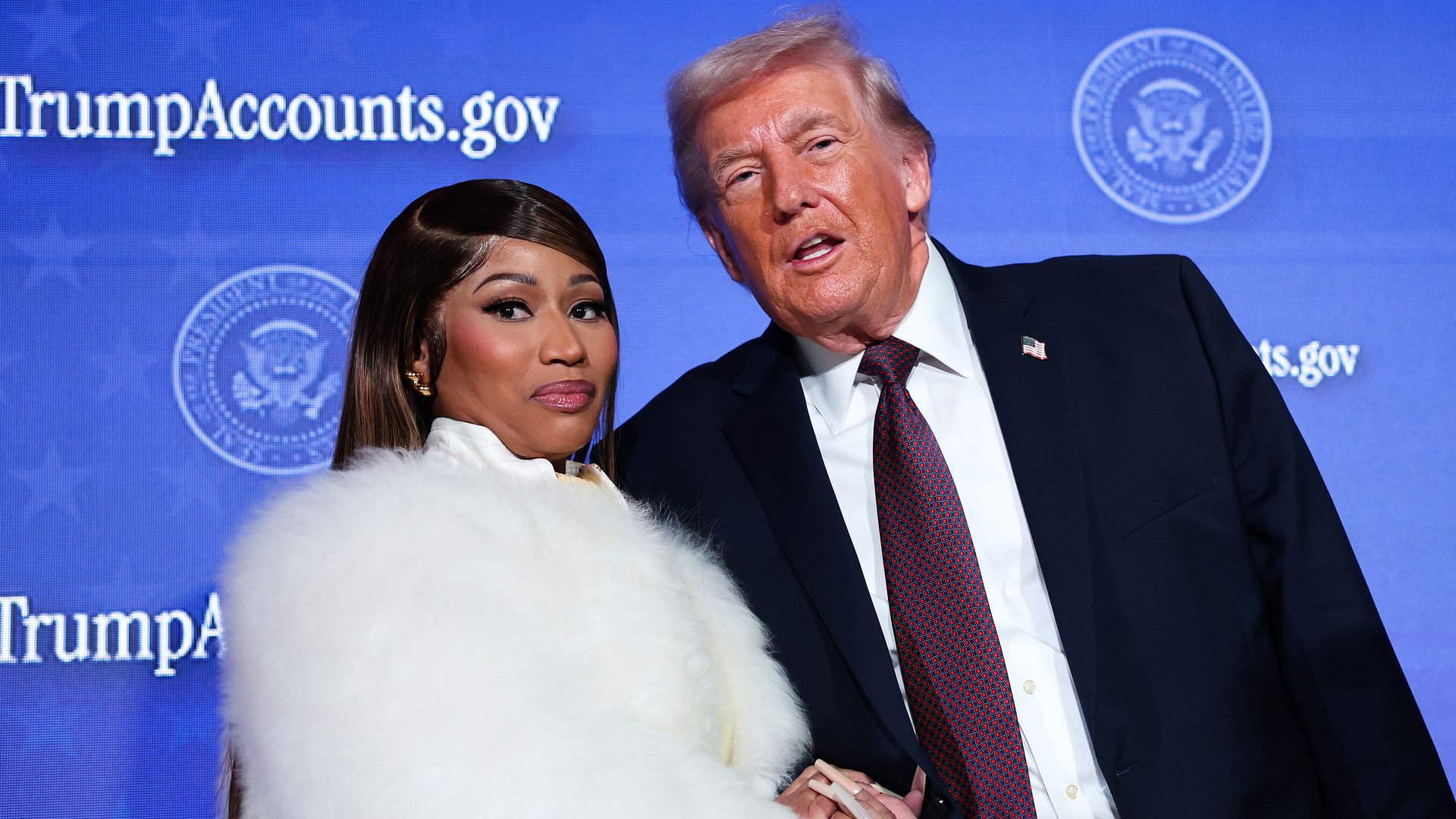
Nicki Minaj joined Donald Trump at a Michigan rally, according to supplied reporting that has not been independently verified here. The account describes the rapper praising his leadership, campaigning for Republicans and traveling aboard Air Force One. Her reported message was sweeping: Trump had “changed the energy of the country.” That is a political endorsement, not background entertainment. The distinction matters when celebrity enthusiasm helps sell candidates whose decisions can reach household budgets, health care and civil rights long after the applause. For Black voters, the useful question is what that endorsement asks them to overlook, especially when the same account describes Trump attacking a Senate candidate through his Muslim faith.
The supplied report places the appearance in Port Huron before the November 3 midterms, during a close Senate contest between Democrat Abdul El-Sayed and Republican Mike Rogers. It also says Barack Obama campaigned with El-Sayed on the preceding Saturday. The report describes congressional control as the broader prize, with consequences for the remaining years of Trump's presidency. An essential sourcing limit belongs up front: no original outlet, article URL or polling evidence accompanied the material. Its description of a tight race therefore remains attributed reporting, not an independently established finding. November 3 has also passed as of publication, so this article does not treat the election as upcoming or claim an outcome the supplied material does not provide.
Minaj reportedly wore a gold Gucci suit and led chants for Trump and Republican candidates. “We really need all these great people to be elected, because this is a major turning point for our country,” she said, according to the account. That language matters because it moves beyond personal affection for a president. She was asking an audience to help determine who exercises government power. Calling candidates “great” supplies approval without explaining their records, their promises or what voters should expect them to deliver once the campaign ends. The account also quotes her saying, “He's given us a future to look forward to.” Readers can examine the first supplied video below, while keeping those sourcing limits in view.
The video accompanying this account should not be mistaken for independent verification of every reported detail. One especially revealing detail concerns how Trump allegedly introduced Minaj. The supplied reporting says he commented on her body before inviting her to stand, then praised her intelligence after she spoke. He also reportedly said he hoped she was not “insulted,” acknowledging the possibility without withdrawing the remark. “She gets it. She's smart,” he reportedly said. A woman can choose her politics without anyone questioning her right to choose. That does not make a president's public treatment of her irrelevant. Political acceptance should not require a famous Black woman to smile through objectification before receiving recognition for having a brain.
Trump's reported remarks about El-Sayed carry stakes well beyond celebrity optics. The account says he alleged the candidate would “invite jihadists” into America. No supporting evidence for that allegation appears in the supplied material. It should not be repeated as a credible warning. A Muslim candidate's faith is not evidence of support for violence, and voters deserve arguments about his actual proposals rather than insinuations about religious identity. El-Sayed's reported response accused Trump of using his name and faith to distract voters from costs at gas stations, grocery stores and doctors' offices. Those are different political tests: fear of a candidate's identity versus scrutiny of governing results. The second supplied video follows for readers examining the account.
Neither linked video replaces the history behind the dispute. Trump's first administration issued its initial travel restriction order in January 2017, targeting nationals of seven predominantly Muslim countries. A later version reached the Supreme Court, which upheld it in Trump v. Hawaii in 2018. Religious suspicion has therefore operated as more than rally language in his political career. Government restrictions determine who can travel and which families can reunite, turning political rhetoric into decisions with consequences beyond the campaign stage. Black America has its own long Muslim history, from Malcolm X to Muhammad Ali and generations of worshippers outside the spotlight. Casting Muslim identity as evidence of danger reaches Black families, too. Treating those communities as outsiders erases people already woven into Black life. Religious freedom cannot protect the church down the street while becoming optional for the mosque around the corner.
A celebrity endorsement deserves scrutiny because its consequences reach people who never bought the music.
A backstage pass is not a public benefit.
Minaj's reported support should be judged as political conduct, not treated as a mystery fans must solve through old lyrics. The account says she previously criticized some first term Trump policies and now calls herself his “number one fan.” People can change their minds. The missing piece is the explanation connecting that change to concrete public benefits. The reporting also links her advocacy to Trump's allegations of Christian persecution in Nigeria, another subject requiring scrutiny beyond the force of a celebrity endorsement. Which policies earned her support? Whose circumstances improved, and by what measure? PVN's coverage of Minaj's support for Blakeman offers another entry into that accountability question. Her fame does not cancel her political agency. Her agency does not cancel the public's right to demand specifics.
The system benefits when celebrity access substitutes for answers about government. According to the supplied account, Minaj filmed an Air Force One video pretending to interview for the White House press secretary job. The report says the clip appeared on X, but provides no verified reach figures. It also describes an actual vacancy after Katie Zacharia left five days following a shaky public debut, giving the performance a connection to White House staffing turmoil. The political value of such content is straightforward: it makes proximity to power look fun, familiar and available. A backstage pass is not a public benefit. PVN's analysis of Trump's answer about forgiveness reflects the same editorial obligation: examine what public figures say, then ask what accountability follows. Charm cannot do that work.
Black audiences do not owe any entertainer a transfer of political trust. Loving an album creates no obligation to accept the artist's preferred senator, immigration policy or president. Nor should disagreement become permission for sexist abuse. The stronger response is more demanding: separate admiration from evidence. Ask how candidates would handle health coverage, voting access, housing costs and workplace protections. Those questions apply to Democrats, too. Obama's reported appearance with El-Sayed is an endorsement, not proof that every position deserves support. A familiar face can draw attention to a campaign, but it cannot answer for the candidate's record or substitute for enforceable commitments. Black voters have spent too many election cycles being courted as an audience when they deserve to be answered as constituents. The standard should travel across party lines.
Class is the other divide hiding beneath the photo opportunity. Air Force One access and designer clothing describe a level of proximity most working families will never experience. The supplied account also connects Minaj's support to Trump's “gold card” immigration initiative, described as offering residency and a citizenship pathway to applicants. Those program details require verification before readers rely on them. Still, the policy question is unavoidable: does access depend on wealth, and what happens to families without it? Application costs, eligibility rules and processing requirements matter more to those families than any celebrity's welcome aboard a presidential plane. Minaj's Trinidad and Tobago birthplace does not dictate her immigration views. It does make questions about unequal access relevant. A wealthy immigrant's access cannot establish whether an immigration system treats ordinary applicants fairly.
Advertisement
The next useful reporting should establish the original source, verify the rally footage and examine the election results through official records. The supplied account cannot answer those questions by itself. Beyond verification, Minaj should face the same substantive questions any prominent political advocate faces. What did she ask of the candidates she endorsed? What commitments did they make? What would cause her to withdraw support? Readers should watch those answers rather than mistake access for influence. Political power becomes valuable to a community when it delivers something the community can use. Nobody can pay a grocery bill with somebody else's presidential photo.
More from PowerVault Network: