Rihanna Addresses Rumored EJ Johnson Beef After Paris
By Simone Walker, PowerVault Staff Rihanna says there is “no beef” with EJ Johnson after their Paris Fashion Week moment sparked rumors of tension. That answer deserves more weight than a comment section’s favorite in...
Advertisement

By Simone Walker, PowerVault Staff
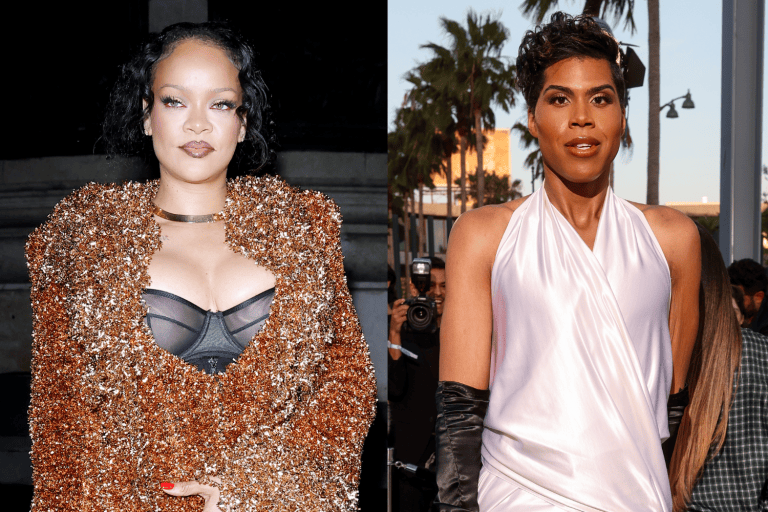
Rihanna says there is “no beef” with EJ Johnson after their Paris Fashion Week moment sparked rumors of tension. That answer deserves more weight than a comment section’s favorite interpretation of her face. The singer also said she “felt bad for him” and suggested Johnson deserves a chance to walk in a Fenty fashion show. There is the actual development: a denial, a remark that invites interpretation, and a fashion compliment. Turning those pieces into proof of a secret feud would require evidence the reported exchange does not supply. The group chat can have jokes. The headline still needs receipts.
The video at the center of this update was obtained by TMZ, according to the source account, which describes Rihanna answering questions about Johnson. Asked about the viral Paris interaction, she told reporters, “There’s no beef.” That is an on the record denial from one of the people involved, not an unnamed associate offering a convenient explanation. There is no mystery source to decode here; Rihanna put her own name and voice behind the answer. That carries editorial weight. PVN’s related coverage of Rihanna’s response addresses that same central distinction. A public interaction generated speculation; her subsequent answer pushed back on it. Neither moment establishes everything about their relationship, but the answer matters more than strangers confidently assigning motives.
Her next comment is where the eyebrow went up: “I just felt bad for him,” Rihanna said in the reported exchange. That sentence can sound sympathetic, pointed, or playfully dry depending on delivery and context. The available account does not establish which interpretation captures her intent. Crucially, she did not identify an ongoing dispute in the remarks provided. The phrase should therefore stay attached to her denial, rather than being clipped into a separate confession of hostility. A reaction caption can sell a completely different scene simply by leaving out the answer that came right before the punchy quote. Rihanna has a public reputation for sharp humor. That reputation is not permission to translate every ambiguous sentence into the harshest possible version.
Then came the part that deserves attention beyond the alleged shade. According to the source account, Rihanna said Johnson deserves an opportunity to walk in one of her Fenty fashion shows. That is a positive assessment of his place in fashion, even if it arrived during an awkward round of questions. It is not an announced booking, a signed modeling agreement, or confirmation of an upcoming production. No show date or formal casting arrangement appears in the account. In fashion, public encouragement and an actual casting decision are separate steps, with real work between them. Still, giving someone public fashion recognition is different from dismissing them. That distinction gets lost when every detail must serve the feud people already decided they wanted.
The Instagram reactions included in the source account show that split. One commenter, @_delorean_11.11, repeated the “felt bad” remark with a laughing emoji. Another, @jed_instakindal1fe, argued that Rihanna would have said so if there were a dispute. Meanwhile, @jovonnieb wrote, “RiRi just being RiRi; I love Her,” reading the exchange through affection for Rihanna’s familiar public personality rather than alarm. Those are audience readings, not independent evidence about either person’s intentions. The selected comments also cannot establish what everyone watching believed. No response from Johnson appears in the supplied account, so his perspective remains absent from this particular report. That gap should stay visible. A celebrity can become the subject of thousands of interpretations without any of those interpretations becoming his own words.
Rihanna’s fashion history gives the runway comment substance beyond celebrity politeness. Her Fenty Puma collection debuted at New York Fashion Week in February 2016. Fenty Beauty launched in September 2017 with 40 foundation shades, making the beauty industry’s narrow shade ranges harder to excuse. Savage X Fenty staged its first New York Fashion Week runway show in September 2018. Its September 2019 show later streamed on Amazon Prime Video, bringing its casting and performance choices to a broader audience. These were distinct businesses and productions, not interchangeable Fenty events. Together, though, they established Rihanna as someone whose public ideas about who belongs can translate into visible commercial space. For Black consumers accustomed to being treated as an afterthought, that shift deserves flowers without turning every encouraging remark into a business commitment. That history makes precision about any future opportunity especially necessary.
The real test is whether a denial gets the same attention as the suspicion.
Black celebrity coverage should have room for a clarification that does not become another accusation.
For Rihanna and Johnson, the fairest outcome is also the least profitable for the mess merchants: let the clarification count. Neither person owes the public a friendship performance to make a denial believable. They do not need matching selfies, a dinner sighting, or an elaborate explanation of every facial expression. Demanding that kind of proof turns ordinary boundaries into suspicious behavior and gives the audience a relationship neither celebrity actually agreed to perform. A public figure can find an encounter awkward without maintaining a feud. Someone else can leave that encounter without becoming a punchline. Black celebrity coverage should have room for a clarification that does not become another accusation. Keeping it cute means recognizing when the available facts stop, even when a more dramatic ending would produce better engagement.
For entertainment media, this is a useful test of editorial discipline. An initial clip can generate a headline, reaction posts, response videos, and then coverage of the reaction itself. Each repetition can make the original allegation feel more established without adding evidence. Publicists understand that cycle, but there is no basis here to claim a coordinated campaign or a deliberately timed fashion tease. A compliment is not automatically a launch strategy. Before calling something a brand move, ask what was actually announced, who confirmed it, and whether the supposed deal exists beyond a caption. Responsible coverage separates what someone said from what a brand might eventually do. If an actual runway appearance follows, that becomes a new story with concrete details. Until then, casting speculation should not dress itself up as industry reporting.
For the audience, the challenge is resisting the demand to pick a winner in every celebrity interaction. Laughing at an awkward exchange is one thing. Building a hierarchy of human worth from it is another. Some reactions in the supplied account move beyond interpreting Rihanna and toward belittling Johnson. The comment “You don’t compete where you don’t compare” introduces a contest that Rihanna’s reported denial does not establish. The audience supplied that scoreboard themselves. That is where playful commentary starts losing its point. PVN’s coverage of a Chris Brown fan sharing her concert experience offers a related editorial principle: the people involved deserve room to describe their own experiences. Readers can enjoy celebrity coverage without treating their first impression as a verdict nobody is allowed to challenge.
Money and access complicate this conversation, too. Johnson is Magic Johnson’s son, so pretending he approaches fashion without famous family connections would miss an obvious advantage. Yet wealth does not erase the scrutiny directed at a Black man whose feminine fashion choices challenge conventional masculinity. We can discuss who gets invited into exclusive rooms without suggesting that a man’s clothes make him less deserving of respect once inside. Rihanna’s status also shapes the reaction: her approval carries weight because she has built businesses around her taste. Neither reality makes Johnson inferior or Rihanna responsible for managing everyone’s response to him. The sharper question is why audiences so often treat one Black celebrity’s standing as permission to diminish another. Access deserves scrutiny. Personal expression does not deserve punishment disguised as fashion criticism.
Advertisement
What comes next should be measured in actual developments, not increasingly creative readings of the same remarks. A confirmed show announcement, a direct statement from Johnson, or further comments from Rihanna could add something meaningful. Another loop of the Paris moment, by itself, cannot establish a hidden dispute. A slower news day does not lower the standard for calling something a new development. Until more emerges, the strongest supported account remains straightforward: Rihanna denied beef and spoke positively about Johnson getting a fashion opportunity. There is room to enjoy her delivery without inventing his humiliation. The next time the group chat crowns a winner, somebody should ask why this needed a loser.
More from PowerVault Network: