Shedeur Sanders: What Will It Take to Win Browns QB1?
By Simone Walker, PowerVault Staff Shedeur Sanders threw for 297 yards and two touchdowns, but the Browns quarterback job remains unsettled despite Todd Monken’s praise. That is the tension Cleveland now owns. Sanders...
Advertisement

By Simone Walker, PowerVault Staff
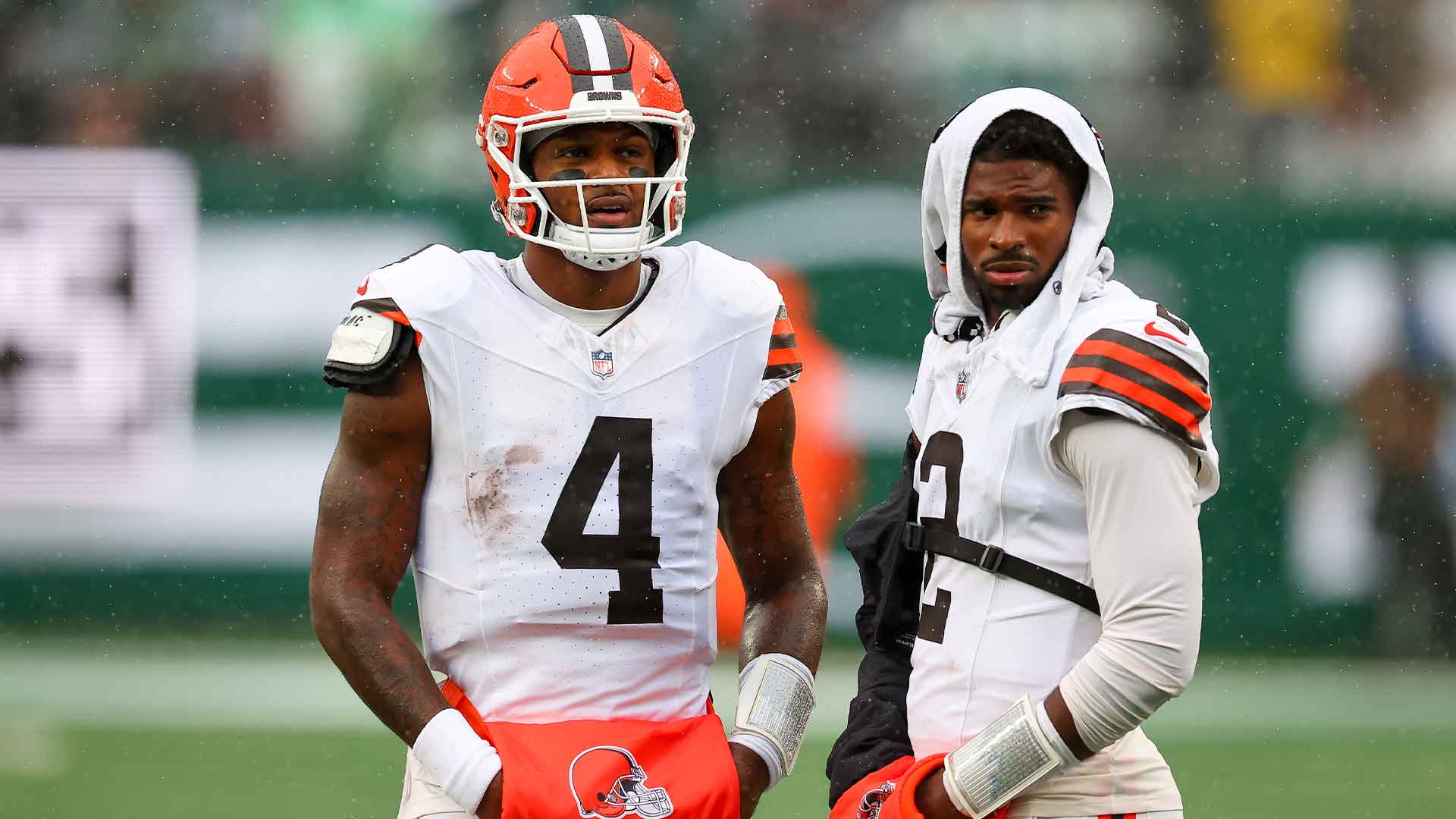
Shedeur Sanders threw for 297 yards and two touchdowns, but the Browns quarterback job remains unsettled despite Todd Monken’s praise. That is the tension Cleveland now owns. Sanders produced in his first start of the season, then watched his coach decline to discuss whether he should replace Deshaun Watson permanently. The Browns lost 23 to 22 in overtime against New Orleans. Nobody gets to erase that result. Nobody should use it to erase what Sanders showed, either. A backup delivered enough offense to force a real evaluation. At 24, Sanders needs those opportunities to become evidence that actually carries weight inside the building. Cleveland owes him that evaluation, not necessarily the starting job.
According to ESPN’s reporting, Watson cleared concussion protocol after being sidelined following the Pittsburgh game. Sanders still started against New Orleans because he had handled the practice repetitions throughout the week. ESPN’s Jeremy Fowler reported Monday that Cleveland planned to start Watson against Houston, although Monken declined to confirm it. That distinction matters. A reported plan is not an announced decision, and neither tells fans how the coaches graded Sanders. Medical clearance establishes availability, not which quarterback gives this offense its best chance now. PVN’s coverage of the Sanders and Watson decision tracks the stakes. The immediate issue goes beyond who takes the next opening snap. Cleveland must decide whether this performance changes its evaluation or merely fills an injury absence.
Sanders completed 19 of 31 passes, but the more revealing detail came from Monken’s assessment of his preparation. The coach said Sanders had gone roughly 10 weeks without taking snaps with the starters. That does not excuse every missed throw. It does change the conditions under which those throws should be judged. Timing with receivers takes work. Protection calls require shared understanding. A quarterback entering without regular first team work is being tested on connections he has had fewer chances to build. Practice access is a coaching decision, not something a backup can manufacture through extra film study. Monken recognized that imbalance when he praised Sanders for continuing to battle. Keep that preparation gap in mind alongside the accompanying video below.
The preparation gap matters most when judging how Sanders recovered from a slow start. He found rookie Denzel Boston for a 60 yard gain, then connected with KC Concepcion for a 64 yard touchdown late in the fourth quarter. Sanders also moved Cleveland into position for a tying field goal. His 39 yard touchdown pass to Harold Fannin Jr. In overtime created a chance to win. The deciding two point attempt fell incomplete. Those plays deserve separate grades, not one emotional verdict. Explosive completions can reveal arm talent and opportunity. The failed conversion also belongs in the review. Neither the highlights nor the final incompletion should swallow everything between them.
Monken offered praise without offering a promotion. “He’s really mature,” the coach said, citing Sanders’ work ethic, diligence and questions during preparation. Asked about the quarterback decision, Monken pushed back: “How long has it been? Thirty minutes since the game ended?” A coach can reasonably want more time before making that call. Still, his comments establish something useful. Publicly, Monken described a prepared player who communicates and works, not someone coasting on his surname. Those observations should matter whenever the conversation drifts from his football into assumptions about his personality. Sanders supplied his own explanation: “I would say I feel the best when a lot of pressure’s on.” That confidence now meets the harder business of earning another opportunity. The second accompanying video follows below.
The pressure discussion surrounding those clips belongs to a history much older than Sanders. Doug Williams became the first Black quarterback to start and win a Super Bowl in January 1988. Warren Moon reached the NFL in 1984 after six seasons in the Canadian Football League, having gone undrafted in 1978. Their careers exposed how poorly football’s gatekeepers could measure Black quarterback talent. The lesson is not that every disputed depth chart repeats their experience. It is that evaluators can sound certain while undervaluing the very abilities their teams need. Today’s league offers far more opportunity, and Sanders’ competition with Watson involves two Black quarterbacks. That difference matters. History cannot prove bias in this particular decision. It can explain why Black audiences pay close attention when a player’s confidence receives scrutiny that his actual preparation should answer.
Cleveland does not owe Sanders a coronation, but it owes him a standard that stays put.
Praise costs a franchise nothing; opportunity requires it to change somebody’s plan.
For Sanders, the next step should be a specific football conversation, not another round of applause. Which reads did he miss? Where did his footwork break down? Which protections did he identify correctly? What would earn him more work with the starters? Praise costs a franchise nothing; opportunity requires it to change somebody’s plan. Sanders cannot control the depth chart, but he can reasonably expect useful instruction about it. That means corrections tied to identifiable plays, with chances to demonstrate that he has absorbed them. Monken’s praise creates a responsibility to explain what remains missing. Otherwise, “mature” becomes a compliment that helps keep a player patient rather than helps him improve. Development needs a route from good preparation to meaningful snaps. Cleveland should be able to describe that route without promising its destination.
For the Browns, the challenge is separating evidence from institutional comfort. Watson led Cleveland to a 5 and 3 record through eight games. Monken chose him after the preseason competition because he believed the veteran offered the better chance to move the ball. Those are legitimate reasons to resist changing starters after one afternoon. They are not reasons to stop collecting evidence. A winning team record matters, but it cannot substitute for evaluating the quarterback’s individual contribution. Front offices and coaches can become attached to decisions they helped sell. Reversing course carries professional costs, even when the new choice makes sense. That question of who benefits also runs through PVN’s Jaylen Brown trade analysis. Cleveland’s test is whether its original judgment remains a working conclusion or has become something nobody wants challenged.
For fans, supporting Sanders should mean demanding a fair evaluation rather than treating every criticism as disrespect. His exchange involving Saints defensive end Carl Granderson shows why that distinction matters. Granderson interpreted Sanders’ comments about New Orleans’ defense as dismissive and sacked him twice. He said Sanders “took us as a joke,” making clear that he heard more than harmless confidence. Sanders apologized afterward, saying, “I was never ever throwing a shot.” The supplied reporting does not settle whether the original remarks deserved Granderson’s interpretation. It does show Sanders addressing the dispute directly. Black athletes deserve room to explain themselves without every awkward exchange becoming a character trial. They also deserve coverage that takes opponents seriously. Defending Sanders does not require pretending Granderson had no right to take offense.
Money adds another layer, but it should not become an invented explanation for Monken’s thinking. Cleveland gave Watson a five year, fully guaranteed $230 million contract in 2022. That investment is part of the franchise’s institutional history. The supplied reporting does not establish that ownership or salary considerations dictated this decision. Still, fans understand why expensive commitments attract patience that backups rarely receive. Guaranteed money remains committed regardless of who starts; it cannot complete the next pass. The racial issue here is not a simple contest between a Black player and a white player. Both quarterbacks are Black. It is how a predominantly white ownership structure distributes security, credibility and second chances among them. A famous surname brings Sanders attention. It does not grant him control over who gets the practice repetitions.
Advertisement
The Houston decision will reveal Cleveland’s immediate preference, but the more useful evidence comes afterward. Watch whether Sanders receives meaningful practice work, whether Monken explains the football reasoning, and whether the standard changes when either quarterback struggles. Should Watson return, Sanders’ performance should remain part of the evaluation rather than disappear behind the depth chart. Should Sanders get another start, one productive afternoon cannot exempt him from correction. Fairness requires scrutiny and access to the work needed to improve. The Browns have enough evidence to ask harder questions now. The next answer needs to come in practice repetitions, not another compliment.
More from PowerVault Network: