
Travis Thompson Talks Sobriety and Screenwriting Plans
By Simone Walker, PowerVault Staff Travis Thompson says sobriety has changed his relationship with rap, and writing movies and television is now part of his plan. The Burien rapper still wants to record and tour. He a...
Advertisement

By Simone Walker, PowerVault Staff
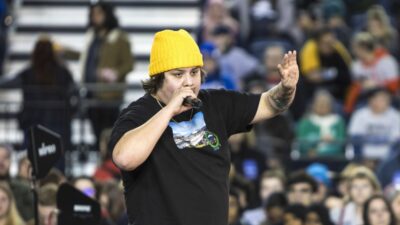
Travis Thompson says sobriety has changed his relationship with rap, and writing movies and television is now part of his plan. The Burien rapper still wants to record and tour. He also wants something the music business can make surprisingly difficult to claim: room to become somebody else without apologizing for who he was. His next ambition centers on making screen projects with friends, not collecting another stamp of approval for his bars. That distinction deserves attention. Especially when the applause can get so loud that an artist's own interests become background noise. A rapper expanding his creative life should not automatically trigger retirement rumors or a referendum on whether music worked out.
Speaking with Seattle Refined, Thompson described a future that includes music, acting and, especially, writing. "I'll rap and tour until I can't, but I really want to make movies and TV with my friends," he told the outlet. Notice what he actually said. There is no farewell announcement in that sentence. The interview, as described in the supplied reporting, establishes an ambition, not a studio deal, production schedule or finished screenplay. Those distinctions matter when entertainment coverage can turn a casual career goal into a supposed Hollywood takeover. A headline can move faster than development, but that does not put a project into production. Thompson is talking about the work he wants to do. The industry paperwork is a separate story.
The personal reset followed a difficult stretch after Thompson left Epic Records in 2022, according to Seattle Refined's reporting. He described a rough night after a European tour in 2023, followed by a call to his manager. The manager suggested Alcoholics Anonymous. That is the account available, and it should stay that specific. There is no need to invent a dramatic rock bottom or diagnose someone through an interview. Making that call matters without turning the night before it into entertainment for the timeline. Nor does the reporting establish why the label relationship ended. Leaving a major label and seeking help appear in the same account, but proximity does not prove that one caused the other. Recovery deserves better than a manufactured origin story.
Thompson told Seattle Refined that sobriety has left him calmer and less invested in proving his technical ability as a rapper. His focus now includes making songs that connect with people. That is a meaningful shift in a genre where skill can become both an artistic tool and a permanent audition. Being able to rap is one question. Deciding what a song should give somebody is another. Sometimes the line listeners carry through their day matters more than the one that wins a debate. The distinction does not mean he has stopped caring about craft. It suggests that technique no longer has to carry the entire burden of his identity. A verse can reach someone without submitting a résumé between every rhyme.
There is already a screen connection through Turtle Island Rap, the documentary directed by Alexandra Lazarowich. The film follows Thompson, Wiidaaseh and A$h Da Hunter through performances, personal lives and the labor behind their music. That places Thompson inside a project concerned with artists as people, not simply finished products. Following that work also gives audiences something a polished performance alone cannot: context for what reaching the stage requires. Still, appearing in a documentary is different from writing a television pilot or feature screenplay. One credit should not be stretched into another. What the film offers this conversation is a concrete connection to screen storytelling. His stated writing ambitions remain the next chapter to watch, rather than an accomplishment coverage should award him early.
Hip hop has made room for that crossover before, even when gatekeepers treated rappers as visitors. Ice Cube cowrote Friday, released in 1995, helping turn a neighborhood comedy into an enduring touchstone. Queen Latifah began starring in Living Single in 1993, bringing a rapper's presence into a sitcom centered on Black friendship and adulthood. Donald Glover, already a television writer before his recording breakthrough, launched Atlanta in 2016. Give those contributions their flowers: Black artists helped make everyday neighborhood rhythms and specific cultural experiences central to stories with lasting screen lives. These careers are different, and none predicts Thompson's outcome. Together, they challenge the idea that rap must be an artist's final creative address. They also show that screen work demands its own craft. Familiarity gets attention; writing has to give people a reason to keep watching.
The real test is whether an artist gets permission to grow without turning growth into another performance.
Fans can celebrate an artist's recovery without demanding a better album as proof that it worked.
For Thompson personally, the most encouraging detail is his interest in making things with friends. Friendship does not guarantee a good script, a healthy production or a successful collaboration. It does suggest that his stated goal includes enjoying the people beside him, rather than simply reaching a bigger platform. That is worth protecting. There is something refreshing about an ambition that names the company he wants to keep, not just the destination. Not every creative desire needs to become an empire before it counts. A completed script, a workable partnership or a song made without constant self judgment can have value before any executive approves it. The win would be having more choices about his working life. Hollywood recognition, if it comes, should not become the replacement test he must pass.
For the industry, this story challenges the habit of treating an artist's value as whatever a company can sell next. A label can support recording and distribution, but its business priorities cannot define every worthwhile creative direction. PVN's coverage of IDK's Shady and Interscope deal points to another artist choosing a label partnership. Thompson's situation should not be forced into a simple labels versus independence debate. The better question is whether artists have support when their goals change. That support might mean accepting a slower release schedule instead of treating every quiet month as a branding emergency. Managers, collaborators and business partners should be able to hear a request for help without immediately asking how to package the comeback. Care should exist before the campaign.
For audiences, there is homework too. Fans can celebrate an artist's recovery without demanding a better album as proof that it worked. Sobriety is not a deluxe edition rollout, and listeners are not owed private details because they streamed the songs. People can discuss the music honestly while leaving someone's health outside the review score. A disappointing single would still be a disappointing single, not evidence that his personal progress somehow failed the listening public. PVN's question about what comes after rest for Lionel Richie offers a related conversation about careers that need room to breathe. The circumstances are different. The audience responsibility overlaps: stop treating uninterrupted output as the only evidence that an artist is serious. Sometimes continuing requires changing the terms under which the work happens.
The money question belongs here, especially for a Black audience familiar with talent being praised while ownership stays elsewhere. Hip hop grew from Black communities whose creativity has repeatedly generated wealth for companies with greater access to capital. Moving into film does not automatically escape that imbalance. Scripts need development; productions need financing; contracts decide credit, control and payment. Thompson has not disclosed those arrangements in the reporting provided. Still, any future deal deserves scrutiny beyond the announcement photo. Who owns the writing? Who gets paid for revisions? Can collaborators afford the time required? Making something with friends makes clear agreements more important, not less; affection cannot settle a dispute over whose contribution earns a credit. Creative freedom becomes much less romantic when everyone except the financier is expected to work for exposure.
Advertisement
Next, watch for something concrete: a writing credit, a named project, a production partner or work Thompson chooses to share. None needs to arrive immediately to make his current goals legitimate. His music can continue on its own terms while screenwriting develops at a different pace. The strongest response is neither premature coronation nor suspicion that branching out means defeat. Give the ambition room, evaluate the finished work honestly, and keep recovery separate from commercial expectations. Thompson has described wanting a larger creative life. The audience should be curious enough to follow without insisting that every step become a public test.
More from PowerVault Network:
