
IDK Joins Shady and Interscope for All Future Releases
By Renee Fontaine, PowerVault Staff IDK has partnered with Shady Records and Interscope for future releases, launching the announcement alongside “WELCOME,” his Eminem collaboration produced by J Dilla. That is a seri...
Advertisement

By Renee Fontaine, PowerVault Staff
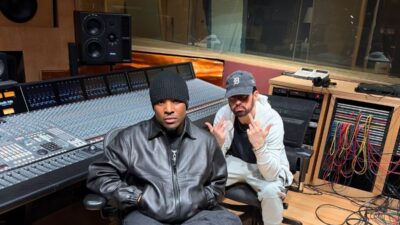
IDK has partnered with Shady Records and Interscope for future releases, launching the announcement alongside “WELCOME,” his Eminem collaboration produced by J Dilla. That is a serious combination of names, and each brings a different kind of weight. Eminem supplies the superstar connection. Dilla brings a production legacy that commands its own respect. IDK is the artist whose next chapter sits at the center of it all. Pairing the news with music gives listeners something to judge beyond a label announcement and its carefully chosen language. The win deserves flowers. The business deserves a closer look, too, because a famous partner and a promising partnership are not automatically the same thing.
According to AllHipHop’s reporting, Interscope announced the arrangement Friday alongside the song. The agreement covers IDK’s future releases, but the announcement did not disclose financial terms or its duration. Those missing details matter more than the celebratory wording might suggest. Public information does not establish his advance, ownership rights, release commitments or revenue split. Nobody outside the arrangement should fill those blanks with confidence. A partnership announcement is not a contract summary, even when the logos make the group chat ready to celebrate. What is confirmed is a new business relationship involving IDK, Shady and Interscope, introduced through an Eminem collaboration. That gives the rollout a clear hook without giving the public a look inside the contract.
IDK’s own explanation starts with gratitude toward Dilla, not a victory lap about label status. He told AllHipHop that, while working on the music, he looked toward his ceiling and said “thank you.” The artist explained that he was addressing Dilla because the opportunity seemed to come together organically. He also described the opportunity as “a statement for Hip-Hop itself,” putting the significance beyond his own career. That account gives the release an emotional center beyond its corporate announcement. Dilla died in 2006, so his production credit should not be mistaken for evidence of a recent studio session. The supplied reporting does not explain when the instrumental was created or how it reached IDK. Those details should stay open rather than become fan fiction.
The connection to Shady also reaches back to IDK’s earliest relationship with rap. “The first rap album I’ve ever owned was 50 Cent’s Get Rich or Die Tryin’. A Shady Records release,” he said in his statement to AllHipHop. That is a specific full circle moment, not a publicist’s vague claim about lifelong inspiration. A record he owned as a young listener connects directly to the company now backing his releases. For fans who remember their own first rap purchase, that detail makes the excitement easy to understand without a sales pitch. Still, nostalgia cannot tell listeners whether the agreement is favorable. It explains why the moment feels personal. The business outcome will have to earn its own applause over time.
His Eminem connection has a similarly direct origin. “The first raps I made it a point to memorize were Eminem raps,” IDK told AllHipHop. Memorizing verses means studying delivery, breath, rhyme placement and the choices that make a performance stick. Now those early listening habits sit beside an actual collaboration. But IDK did not arrive here without a catalog. His 2019 album Is He Real? And 2022 project Simple., produced by Kaytranada, predate this announcement. Those releases give new listeners somewhere to start. They also offer a useful comparison point for hearing what changes and what remains recognizably his as this chapter develops. The useful question is how this partnership expands an existing artistic identity, rather than replaces it with a famous association.
Shady’s history helps explain why the affiliation carries such weight. Eminem and Paul Rosenberg founded the label in 1999. By 2003, 50 Cent’s Get Rich or Die Tryin’ arrived through Shady, Aftermath and Interscope, turning a coordinated label alliance into a defining commercial rap success. That history is part of what IDK heard before he ever entered this arrangement. It also explains the expectations attached to the announcement, although one artist’s breakthrough is not a template another artist must follow. Dilla represents another influential path. His album Donuts arrived on February 7, 2006, three days before his death, and remains a touchstone for producers and listeners. “WELCOME” places those legacies beside a present tense career move. The names share a release, but they bring different histories, audiences and measures of success. Their presence invites attention, not an automatic prediction of IDK’s trajectory.
The real test is whether this partnership makes IDK bigger without making his identity smaller.
A famous collaborator can bring people through the door, but the artist still deserves a room of his own.
For IDK, the opportunity should mean more than becoming the latest artist introduced through Eminem’s orbit. A famous collaborator can bring people through the door, but the artist still deserves a room of his own. The strongest version of this next chapter would turn that attention toward his choices, his ideas and his existing work. That means interviews and promotional material should give him something to discuss beyond how the Eminem connection happened. There is nothing embarrassing about accepting powerful support. Artists do not owe anyone a struggle story to prove they earned their place. Still, the promotional framing matters. If every introduction treats IDK as somebody Eminem selected, the campaign risks shrinking the person it should be building. The cosign should open the conversation, not become his entire biography.
For the industry, this is a chance to show that artist development means something after the announcement clears. A major label relationship can offer reach, coordination and resources. Whether those tools become sustained support depends on decisions the public cannot yet see. Will future releases receive room to build, or face pressure to recreate the attention attached to an Eminem feature? That is a question for the campaign, not a prediction about private demands. Consistent promotion and opportunities to perform would be more useful evidence than another round of congratulatory posts. The launch has a recognizable selling point. The harder assignment is making listeners care when the headline cannot lean on three celebrated names. A welcome party is easy to market. Commitment becomes visible on the quieter releases that follow.
For listeners, the best response is curiosity without surrendering judgment. Celebrate a Black artist reaching a goal, then give the music enough attention to form an opinion beyond the credits. Celebrity proximity can encourage people to praise before listening or dismiss before pressing play. Neither habit serves the artist. PVN’s discussion of who gets credit for Bay Area hip hop’s influence offers a related question: whose contribution stays visible when the biggest names enter the conversation? Here, Dilla’s production deserves attention, Eminem’s contribution deserves assessment, and IDK deserves consideration as the lead artist. Listen for how the verses work with the beat, not simply whose name looks biggest beside the title. Fans can honor the lineage without letting reverence do all the reviewing. The song still has a job.
The racial and economic stakes deserve their own space. Black creativity sits at the foundation of this announcement, yet a label’s prestige cannot tell anyone how money or control will flow. Celebrating IDK does not require pretending that access and ownership mean the same thing. Nor does respecting Eminem require making his approval the final measure of a Black rapper’s worth. That distinction protects everybody’s contribution from a lazy hierarchy. IDK’s work mattered before this affiliation, and the coverage should reflect that without qualification. PVN’s coverage of Kandi Burruss’s Songwriters Hall of Fame nod connects to that broader demand for creative recognition. Credit should follow the work, and meaningful opportunity should reach beyond a photograph, a feature or an impressive logo. The undisclosed terms prevent a verdict on that part.
Advertisement
Next comes the work that a launch announcement cannot do for anyone. Watch how IDK’s next releases are presented, how much space his own vision receives, and whether new attention reaches the rest of his catalog. Any later disclosures about the partnership should be judged on their actual terms, not assumptions about what Shady or Interscope must have promised. For now, there is a real career milestone worth celebrating and a collaboration worth hearing on its merits. The full circle story has landed. What matters next is whether the machinery behind it gives IDK room to draw a bigger circle.
More from PowerVault Network:
