In the world of hip-hop, where the culture runs deep and the influence is palpable, few honors shine as brightly as having a street named after you. It’s a tribute that transcends music, celebrating a legacy that has transformed neighborhoods and inspired generations. From the vibrant blocks of Los Angeles to the gritty corners of New York, these names don’t just echo down the alleys; they resonate with the heartbeat of the community.
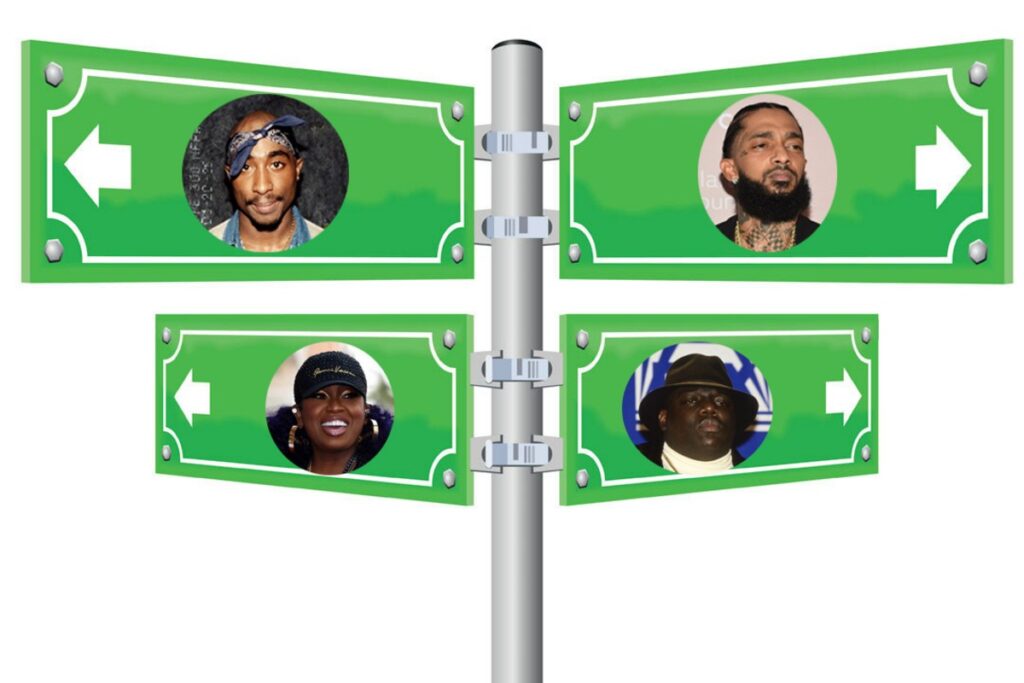
Take, for instance, the iconic Tupac Shakur. The late rapper’s impact on the culture is immortalized in the very streets of his hometown. Each time fans and locals traverse Tupac Shakur Way, they are reminded not just of his lyrical genius but also of his enduring message of resilience and hope. His music was a reflection of the struggles faced by many, and having a street named after him serves as a beacon for those who continue to fight against the odds.
Then there’s the legendary Notorious B.I.G., whose legacy lives on in the heart of Brooklyn. Christopher Wallace Way is a testament to Biggie’s unparalleled influence on hip-hop, capturing the essence of a neighborhood that shaped his artistry. This is more than just a street sign; it represents a cultural landmark that tells the story of a community nurtured by creativity and raw talent.
These honors highlight how rap isn’t just a genre; it’s a movement that has carved out a place in our streets and our hearts. Naming streets after these icons is a way to celebrate their contributions while ensuring that their stories are woven into the very fabric of the neighborhoods they once roamed. They remind us that true legends never fade—they only become a part of the landscape they once inspired.
About The Author