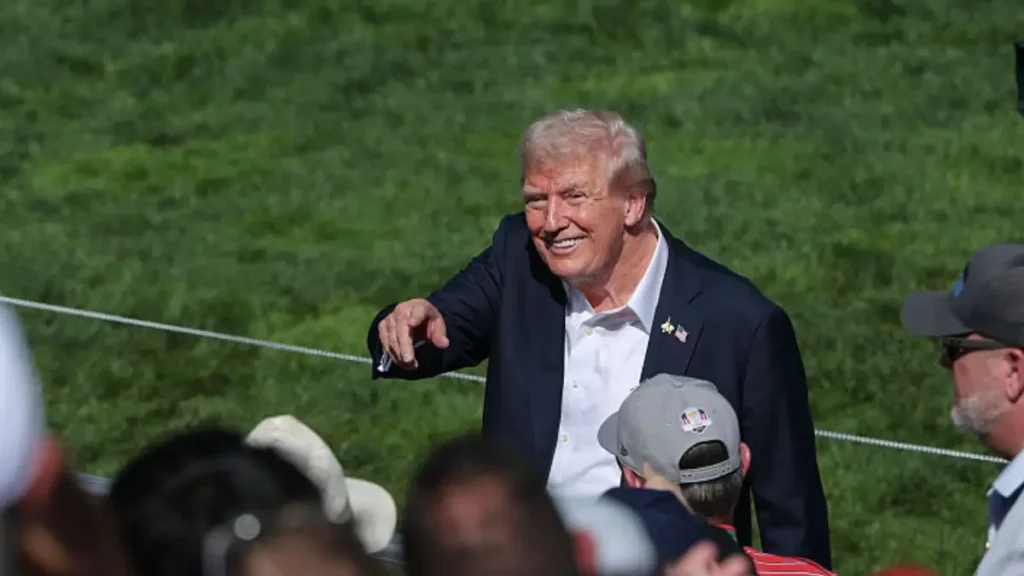
Donald Trump has always had a flair for the dramatic, and his style choices often reflect the magnitude of the persona he projects. But now, as reports emerge of heightened security concerns surrounding him, the narrative shifts from the runway to the real world—the kind where threats loom large and safety becomes paramount. After a chilling scare recently, the former president is reportedly considering high-tech body armor, a decision that underscores the gravity of the situation he finds himself in. It’s a startling contrast to the politics of spectacle that has characterized his career, where symbolic bravado met real-life implications.
The White House is bracing itself for what could be an uptick in threats against Trump, and the atmosphere is palpably tense. For someone who thrived on the edge of controversy, the need for fortified protection reveals an unsettling truth: the stakes have never been higher. As the country digs deeper into a fraught political climate, the implications of these threats extend beyond just Trump; they resonate within the fabric of American society, where political dissent is increasingly met with hostility.
For many, this moment epitomizes the divisiveness that has plagued the nation. Trump, once an entertainer with a penchant for half-joking bravado, now finds himself at the heart of a narrative that challenges the very essence of democratic society. High-tech body armor feels like an ironic twist—an emblem of a leader who, rather than rendering his supporters into a unified front, has instead fueled an environment where fear and aggression fester. The question then becomes not just about Trump’s safety but about the broader implications of a society willing to escalate political differences to a life-or-death scenario.
As we watch the developments unfold, the cultural impact is undeniable. Hip-hop and Black culture have often served as mirrors to societal challenges, addressing themes of struggle, resilience, and the fight against oppression. The growing concern for Trump’s safety could inspire artistic responses that reflect on the state of political discourse and social justice. In a landscape where the marginalized voices are often drowned out by the powerful, how will artists channel this moment? What narratives will emerge as we grapple with the intersection of politics, culture, and identity?
As Trump prowls on the edge of action and spectacle, the call for accountability becomes more urgent. The White House’s need to fortify against threats is a stark reminder of the current climate—one where rhetoric can incite real-world violence. The heart of the matter goes beyond Trump; it’s about safeguarding democracy itself. As we navigate uncharted waters, it’s crucial to reflect on the role of culture in shaping narratives that define our reality and challenge the status quo.
About The Author