By Malik Carter, PowerVault Staff
The part nobody talks about when we say “I can’t wait for tour” is that somebody’s uncle, brother, daughter or best friend is behind that stage making it all move. While we argue about setlists and openers, there are people driving all night, loading trucks at 4 a.m., climbing rigging 60 feet in the air so the lights hit just right when the bass drops.
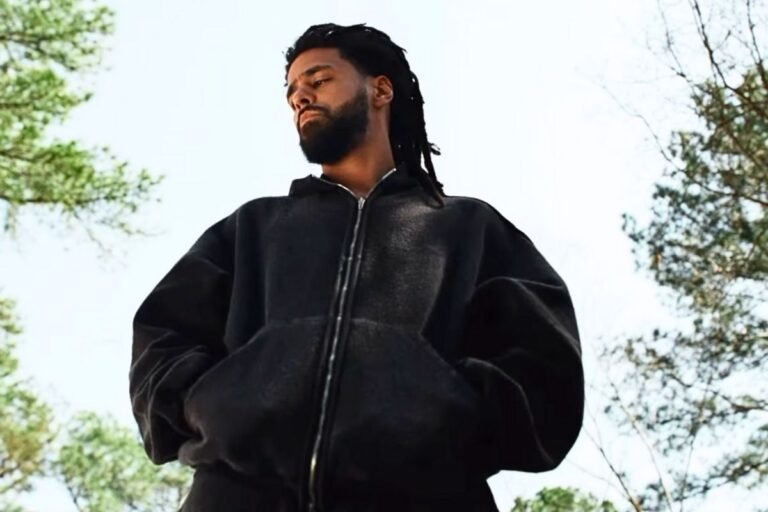
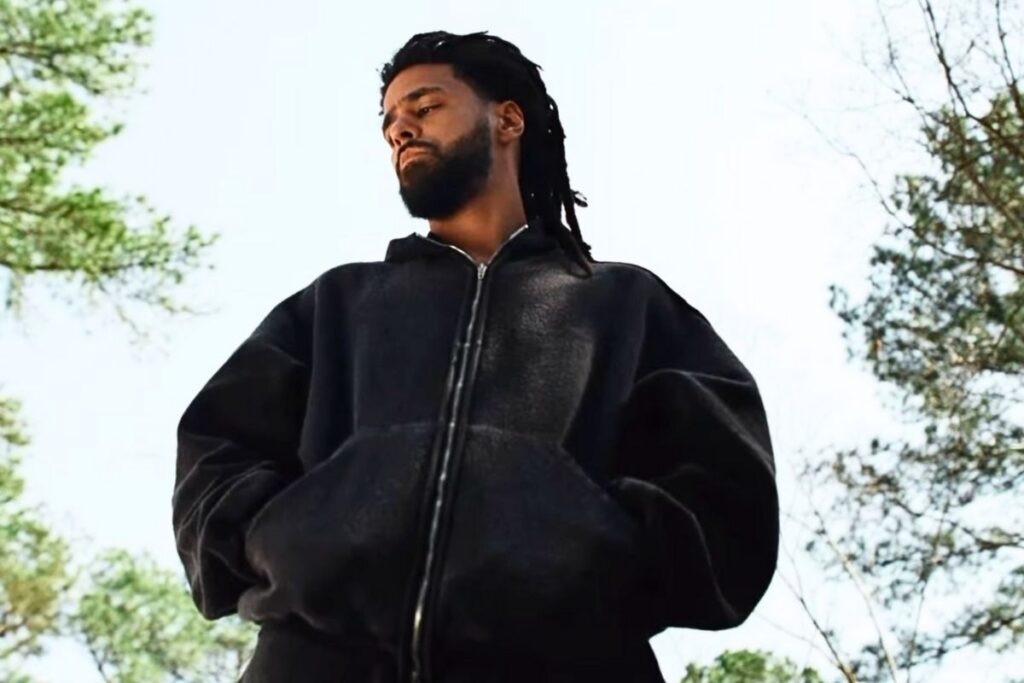
That invisible side of the culture came crashing into the spotlight in the worst way, when news broke that J. Cole canceled his Sacramento show after a deadly big rig crash took the life of a member of his touring crew on Interstate 5.
For fans, it showed up as a notification: “Tonight’s show is canceled.” For Cole, his team, and that family, it was a phone call that changes the rest of your life. One minute you are racing to get to the next city. The next, everything stops.
This is not some flaky artist no-showing. This is grief pulling the emergency brake on a whole machine built around joy, energy and escape.
According to reports, a big rig associated with Cole’s tour was involved in a serious crash on I-5 heading toward Sacramento. A crew member died in that accident, leading to the immediate cancellation of the show. Fans were told the performance would not go on, refunds would be processed, all the standard language. But there is nothing standard about someone not making it home from work.
Tour crews are the spine of live hip hop. The person who died was not “just” a driver or “just” a tech. That was somebody the team probably saw every morning at call time, somebody who knew what city they were in by the smell of the arena hallway, somebody who had stories from three tours ago and jokes from last night. On long runs, crew become family faster than most of us realize.
J. Cole is one of the few mainstream rappers whose brand is rooted in empathy and humanity. This is the same artist who showed up in Ferguson and Baltimore when protests erupted, who walked through streets, who rapped about addiction, depression, capitalism, and survivor’s guilt. So when a tragedy like this hits his own camp, it is not surprising that the response was to shut everything down instead of just powering through.
The hip hop touring grind has always lived in this weird space where fans only see the spectacle, not the cost. People debate ticket prices, VIP packages and whether the DJ plays too much old stuff, but very few ask what it takes to move a massive production city to city. Boxes of truss and lights loaded onto trucks. Gear packed and unpacked every night. Drivers running overnight legs so the stage can be halfway built before the artist even wakes up. One small mistake or one unlucky moment on the highway and the whole thing can turn tragic.
Hip hop has seen this kind of heartbreak before. Old heads remember when Aaliyah’s plane crash in 2001 forced the industry to look at how artists and teams were being moved around in the name of tight schedules and big money. There was the crash that killed Travis Porter’s road manager years back. Even beyond music, Black folks have been watching how institutions treat our lives as expendable, from an ICE agent casually leaving a gun in a San Francisco airport bathroom to police brushing off suspicious deaths as “nothing to see here.” Different stories, same question: who gets protected and who gets treated like collateral?
In this case, canceling Sacramento is a quiet way of saying this person mattered. Not as a line item, but as a human. You cannot ask a team to watch one of their own die on the road and then tell them to clock in and make sure the pyrotechnics hit on beat. Grief does not follow the tour schedule.
Some fans online did what the internet always does. A few complained about travel costs and hotel reservations. A few speculated about rescheduling or whether insurance would cover things. There is room to be disappointed. People spend real money and rearrange real life to see an artist like Cole live. But this is the moment where maturity kicks in. If the culture really believes “family first” and “mental health matters,” that has to apply to crews too, not just the star on the stage.
What often gets lost is that live shows are one of the last places Black joy feels communal and unfiltered. When Cole runs “No Role Modelz” or “Middle Child,” you hear whole generations screaming back every word, from kids who discovered him on streaming to people who rode with him since “The Warm Up.” That energy heals a lot. But the people building that space are working what is basically a high risk job with long hours, heavy equipment and constant travel. They do it because they love it, but love does not erase the danger.
Hip hop history is full of artists whose stories are tied to tragedy on the road. Think about the endless stories of bus crashes in the 90s and early 2000s, when acts were getting pushed through punishing schedules with little oversight. Even now, in an era where we can track every step on our phones and watch shows on TikTok in real time, we still do not really talk about what it means for a mostly Black workforce to be clocking these miles, working these hours and trusting the highways to play nice.
There is also a bigger conversation here about how hip hop treats its “background” people. When a rapper gets locked up and still drops a project, fans rally around it and think about the system, the conditions, the real weight behind those bars. That is part of why albums recorded or released during incarceration, like the ones we broke down in our look at rappers who dropped albums from jail, hit so hard. Because you are hearing a human fighting through something. Tour crews are fighting too, just in a different way, and they rarely get the same attention until something goes terribly wrong.
J. Cole’s decision also hits differently because he has always positioned himself as someone who actually cares about the people around him. This is not an artist known for wild backstage chaos or throwing his own team under the bus. Cole is the guy who shows up in a hoodie and basketball shorts, gives you thoughtful bars, and then disappears back to real life. The Dreamville brand is built around loyalty and family. So when a crew member dies, fans know this is not just PR language about “our thoughts and prayers.” That loss will echo through the camp, through future shows, through how they move from here.
At the same time, this tragedy lands in a moment where Black people are already walking around with a lot of collective grief. From police violence to random acts of hatred to weird institutional negligence, there is a constant reminder that our safety is negotiable. Stories like the Black man found hanging from a tree in North Carolina and immediately labeled a suicide, or viral videos of medical neglect, keep our nervous systems on high alert. So when something like a tour crash happens, it hits that same nerve, even if it is “just” an accident. The feeling is familiar: one moment we are living, the next moment someone is gone, and the world expects us to just keep pushing.
Hip hop is growing up, whether the industry wants to admit it or not. Fans who used to sneak into all ages shows are now parents with kids, mortgages and PTO requests. When Cole cancels to honor a crew member, a lot of people get it in a deeper way because they can imagine that late night phone call. They know what it feels like to lose someone on a random weekday and still be told to show up to work like nothing happened.
The response from the wider culture should not just be “RIP” and move on. This is a chance to rethink how we talk about touring safety, how crews are supported mentally and financially, and how quickly we expect artists to “return to normal” after something like this. There has been more honest conversation in the last few years about burnout, therapy and sobriety in hip hop, like the way people have been rooting for Young M.A’s next chapter and health journey in pieces like our look at her path toward sobriety and faith. That same energy has to extend to the people who are not on the album cover but are absolutely essential to the show.
There is also a spiritual layer here that a lot of Black fans will recognize. Tours are not just jobs, they are moving ecosystems of energy. When someone dies within that circle, everything feels off. Some crews bring in grief counselors. Some bring in chaplains or elders. Some just lean on each other and try to keep going. However Cole and Dreamville choose to move next, it is clear this moment will leave a mark on their story, the same way other losses have shaped artists throughout hip hop history.
So what happens now for J. Cole and his fans in Sacramento and beyond. Practically, people will get their money back. Maybe the show gets rescheduled, maybe it does not. There might be a tribute on stage at future dates, a name on a screen, a moment of silence while thousands hold their phones up. Those gestures matter. They tell the family and the team that this person was seen and valued.
But the deeper thing to watch is how the conversation around touring continues to evolve. As artists speak more honestly about their limits, as fans become more aware of what it takes to put on a show, the hope is that tragedies like this force promoters, labels and management to prioritize safety, rest and real care over squeezing every last dollar out of a route.
J. Cole canceling his Sacramento concert is not just a scheduling update. It is a reminder that this culture we love is built by human hands, driving real trucks on real highways, with families waiting on the other side. Hip hop has always been about turning our pain into something bigger than us. The real test will be whether this loss changes how people move behind the scenes, so the next crew member headed to the next city has a better chance of making it back home.
For now, the music stops in Sacramento, and that is exactly how it should be. Grief gets the floor. The show can wait.
About The Author