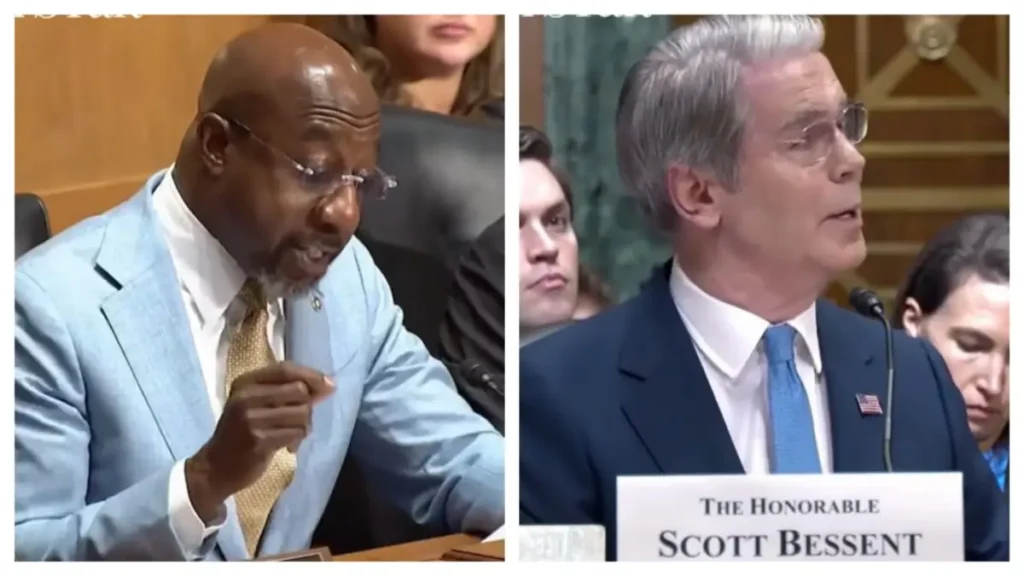
During a Senate Finance Committee hearing on June 3, 2026, Senator Raphael Warnock (D-GA) demonstrated the art of interrogation with Treasury Secretary Scott Bessent. In a high-stakes environment that demanded accountability, Warnock’s approach was relentless. He expertly navigated the discussion, pushing Bessent into a corner with pointed questions that left little room for evasion. The tension in the room was palpable as Warnock’s precise line of questioning stripped away the layers of bureaucratic jargon, revealing the core issues at stake.
As the hearing progressed, it became clear that Bessent was struggling to keep his composure. Warnock, undeterred, maintained the pressure, refusing to let Bessent divert the conversation. The senator’s method was simple yet effective: he demanded straightforward answers to complex questions, often interjecting with the command, “Sir, yes or no!” This insistence on clarity forced Bessent to confront his own statements and the implications of the policies he represented.
But it was when Warnock posed a singular, incisive question that everything changed. With the eyes of the nation upon them, he asked Bessent about the real impact of the Treasury’s policies on everyday Americans. This question, direct and unrelenting, pierced through the bureaucratic haze, compelling Bessent to reveal not only the flaws in current policy but also his own fears about the administration’s direction. In that moment, the facade crumbled, and Bessent’s vulnerability became evident to all. The significance of this exchange extends beyond the hearing; it resonates with the ongoing struggle for transparency and accountability in government.
About The Author