By Renee Fontaine, PowerVault Staff
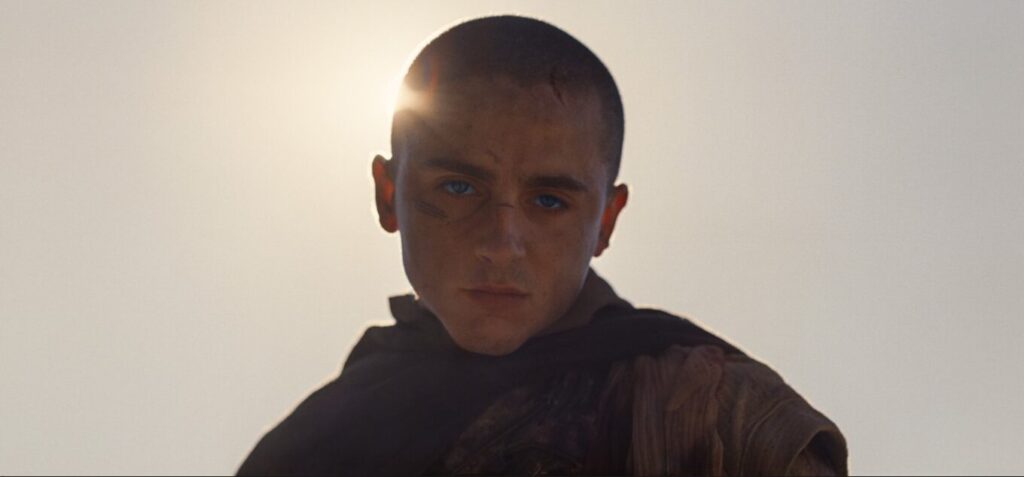
The highly anticipated trailer for *Dune: Part Three* has landed, and it reveals a gripping narrative that resonates on both cosmic and personal scales. Paul Atreides, once the hopeful savior of the empire, now finds himself entangled in a web of enemies and uncertainty. Set 17 years after the explosive events of *Dune: Part Two*, we are thrust into a dark future where even the throne can’t shield him from the consequences of his ascent to power. This next chapter promises to be as much about internal struggle as it is about external conflict, and it raises critical questions about the nature of leadership and the toll it takes on those who wield it.
To truly understand the significance of this film, we have to look back at the cultural legacy of Frank Herbert’s original *Dune* novel. Written in the 1960s, its themes explore colonialism, the complexities of power, and how individuals navigate the heavy burdens that accompany leadership. The story of Paul Atreides, a figure burdened by destiny and the legacies of his ancestors, thrusts us into a narrative that mirrors the historical and contemporary struggles of many in the Black community. Just like Paul, we often grapple with the legacies of those who came before us, navigating systemic structures that can be as unforgiving as the arid deserts of Arrakis.
From a cultural perspective, *Dune: Part Three* serves as a profound commentary on power dynamics. In today’s world, where we see leaders rise and fall, often grappling with the repercussions of their decisions, the narrative of Paul’s uncertain grip on power is strikingly relevant. The trailer hints at the emergence of new villains that challenge his authority, echoing the everyday battles many face against systemic oppression and societal expectations. Just as Paul must confront both external adversaries and his own inner demons, we, too, are faced with the duality of fighting against external systemic barriers while confronting the personal toll of that struggle.
This isn’t the first time we’ve witnessed a complex character grappling with power in a speculative fiction context. The rise and fall of characters in series like *Game of Thrones* also illustrate the consequences of ambition and the fragility of power. However, *Dune* stands apart by weaving in a more profound understanding of destiny influenced by heritage and environment, which resonates deeply within the Black narrative. Where others may seek power for its sake, Paul’s journey becomes a quest for understanding, making the stakes personal rather than merely political.
As we look ahead to the release of *Dune: Part Three*, it’s essential to recognize the larger implications of Paul’s journey. We should pay attention to how these themes of power, legacy, and the quest for identity unfold on screen. This film is not just about one man’s battle; it’s a reflection of our collective experience and the intricate dance between aspiration and consequence. In a world where our own narratives often intertwine with legacies of struggle and resilience, Paul’s story is set to remind us of the complexities that come with leadership and the enduring hope for a brighter future, even amidst darkness.
About The Author