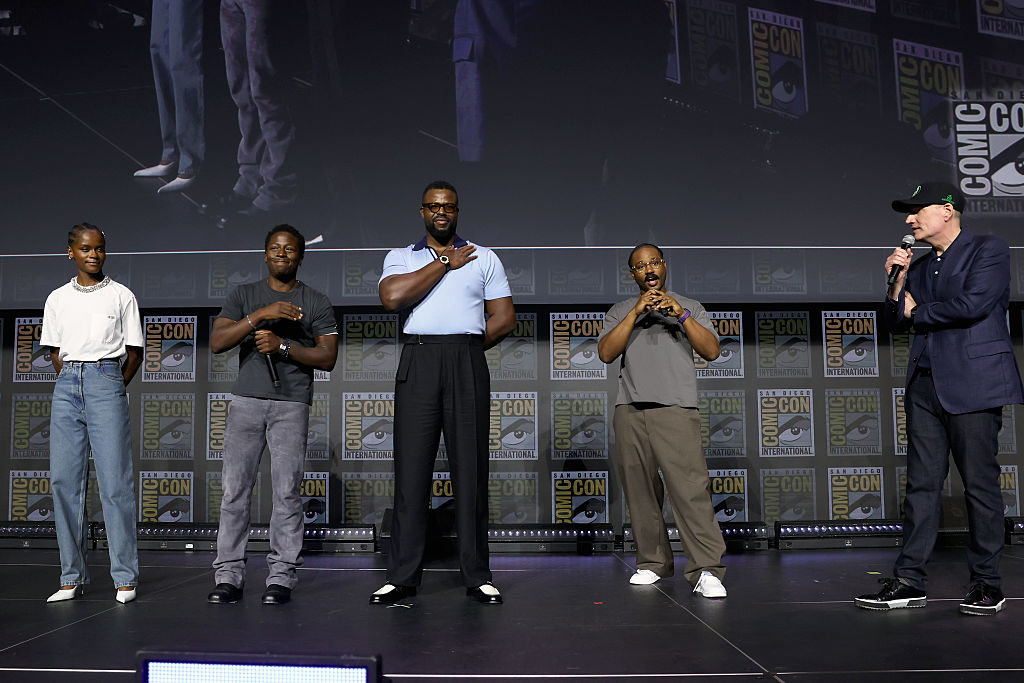
SAN DIEGO, CALIFORNIA - JULY 25: (L-R) Letitia Wright, David Jonsson, Winston Duke, Ryan Coogler and Kevin Feige, President, Marvel Studios speak onstage during the Marvel Studios Panel at 2026 San Diego Comic-Con on July 25, 2026 in San Diego, California. (Photo by Jesse Grant/Getty Images for Disney)
By Malik Carter, PowerVault Staff
In a surprising yet electrifying announcement, Kevin Feige revealed that David Jonsson has been cast as the new Black Panther, a pivotal moment in the Marvel Cinematic Universe that fans have been eagerly awaiting. For the last five to six months, rumors have circulated, but now we know that Ryan Coogler, the visionary behind the first two films, not only found his new lead but was practically bursting with excitement about this choice. It’s a significant moment for the franchise and, more importantly, for the representation of Black talent in mainstream cinema.
To appreciate the gravity of this news, we must take a step back and reflect on what the original Black Panther film achieved. Released in 2018, it was not just a box office success; it became a cultural phenomenon that resonated deeply within the Black community and beyond. It showcased a world where Black excellence ruled, where nuanced characters defied stereotypes, and where audiences were invited into the rich tapestry of African culture. The tragic passing of Chadwick Boseman left an irreplaceable void, but the legacy of his portrayal has sparked discussions about what it means to carry forward the mantle of such a beloved character.
Jonsson stepping into this role is about more than just casting; it’s a statement of progress. He represents a new generation of Black actors who are reshaping the narrative around Blackness in Hollywood. This casting decision signals a commitment to continue exploring complex characters and stories that reflect the diversity within the Black experience. This isn’t just about a superhero; it’s about acknowledging and amplifying the voices of those who have historically been marginalized. In a world where representation still matters, Jonsson’s inclusion offers hope and sparks conversations about identity, legacy, and power.
If we think back to other pivotal moments in cinema, consider the impact of Denzel Washington and Halle Berry winning Oscars. Their historic wins didn’t just signify a personal achievement; they opened doors for countless others in the industry. This casting of Jonsson has the potential to do the same within the superhero genre, which has often struggled with inclusivity. We can draw parallels to the shift seen in other franchises, like the resurgence of characters like Miles Morales in Spider-Man. This evolution is about expanding the narrative landscape, allowing for stories that resonate with a broader audience while still honoring the roots of the characters.
Looking ahead, as we prepare for the next chapter in this story, the conversation around representation will continue to be critical. How will Jonsson interpret the legacy of Black Panther? What fresh narratives will emerge from this new direction? More importantly, how will the industry respond to this moment? As we watch these developments unfold, it’s vital to remember that each step forward for Black talent in film is a step toward a more inclusive and diverse storytelling landscape. The world is watching, and the stakes have never been higher.
About The Author