By Marcus Ellison, PowerVault Staff
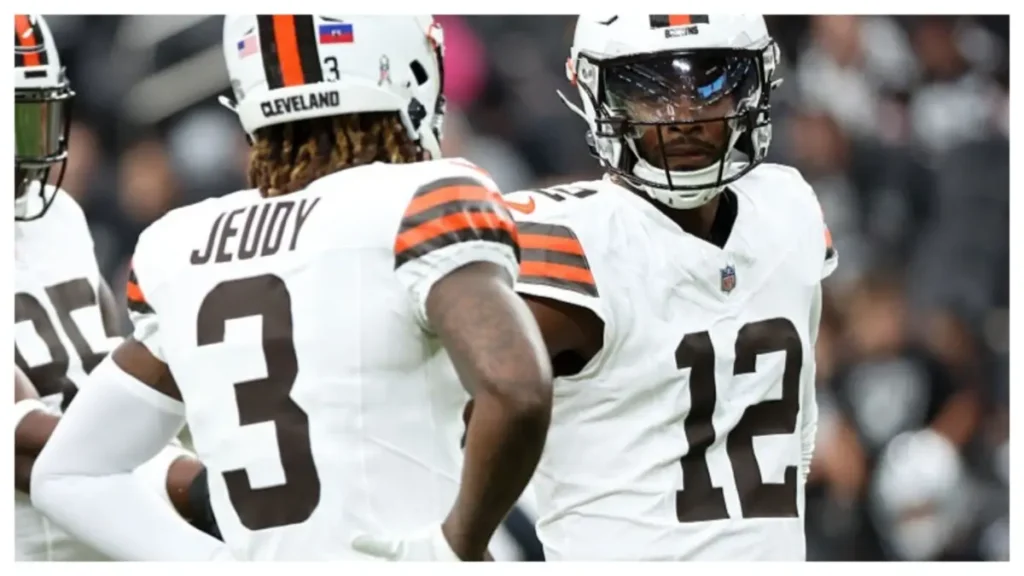
In a world where narratives shape perceptions, Browns wide receiver Jerry Jeudy has come out swinging, expressing his frustration with ESPN for allegedly stoking unnecessary beef between him and Colorado’s standout quarterback, Shedeur Sanders. Jeudy, who clearly values authenticity over sensationalism, highlighted how the media can distort genuine relationships and conversations in sports, pushing stories for the clicks and ratings instead of focusing on the truth.
The backdrop to this tension is not just about two athletes; it’s a reflection of a broader media landscape that often pits young Black men against each other to create drama. Sanders, who carries the weight of his father, NFL legend Deion Sanders’ legacy, is trying to navigate the pressures of social media while maintaining a positive outlook. Furthermore, Jeudy’s comments resonate at a time when athletes are striving for control over their narratives and mental health, often at odds with a media that thrives on conflict and controversy.
From a cultural perspective, Jeudy’s frustration shines a light on the complexities of being a young Black athlete in the public eye. The media’s tendency to fabricate or exaggerate conflicts serves to perpetuate a stereotype of hostility among Black men, rather than focusing on their achievements, struggles, and complex identities. Jeudy’s response is a wake-up call, urging not just fans but also fellow athletes to reclaim their narratives and resist being pawns in a game that reduces them to mere entertainment. It’s a much-needed stance against the commodification of Black excellence.
This isn’t the first time we’ve seen athletes take a stand against media narratives. Think back to the moment when LeBron James and his contemporaries pushed back against the relentless criticism they faced. By forming the “More Than a Vote” initiative, they sought to redefine their public personas and address the issues that matter to them beyond the court. Similarly, Jeudy and Sanders are not just athletes; they are young men with dreams, aspirations, and, yes, the right to control how their stories are told.
Looking ahead, it will be interesting to see if this sparks a larger movement among athletes to hold platforms accountable for their portrayal of Black athletes. As we continue to battle with these narratives in sports and beyond, the onus is not only on the media to reflect more accurately but also on us as a community to support our athletes and encourage them to speak out. The culture deserves more than sensational headlines; it deserves authenticity and respect.
About The Author