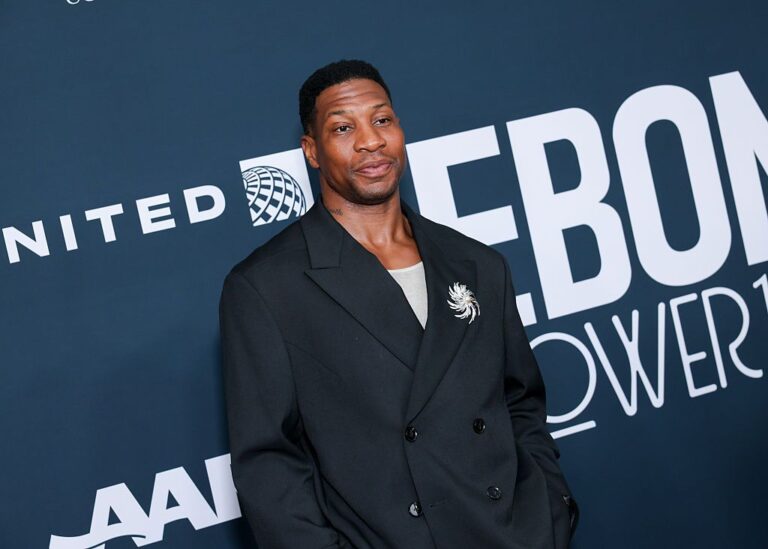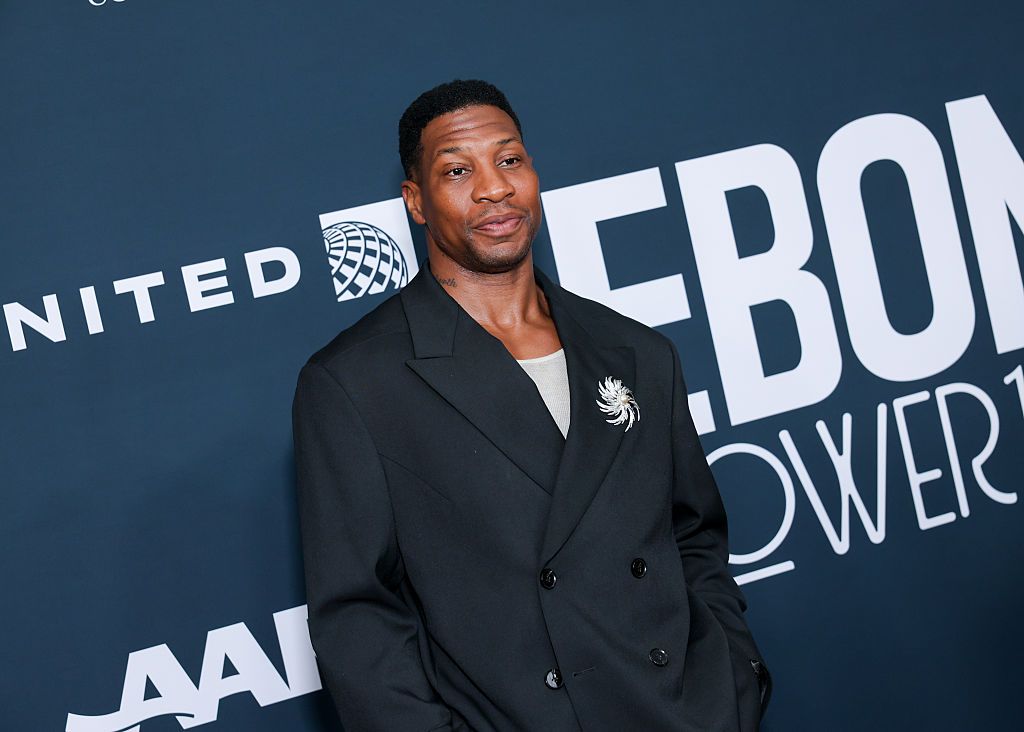
By Tanya Brooks, PowerVault Staff
The culture loves a comeback story until it has to decide if the person even deserves one.
That is the tension sitting on Jonathan Majors’ shoulders right now. Not a new role, not a shiny franchise, but a question: should this man be welcomed back, or has the industry finally hit a line it will not cross, even for a talent it once called the future?
Majors is trying to restart his career with a controversial new film, “Run Hide Fight: Infidels,” and already the reaction feels less like excitement and more like a live trial, streamed in real time. Every casting choice, every press shot, every panel has turned into a referendum on his assault conviction, his treatment of Black women, and how Hollywood handles Black men accused of violence.
Before everything crashed out, Majors looked like the next great Black leading man. “The Last Black Man in San Francisco” had people whispering about a generational actor. “Lovecraft Country” made him a star in our circles, a weird, smart, genre-blending show that put a complex Black hero at the center of horror and history. Marvel positioned him as the new Thanos-level villain. Magazine covers, brand deals, award buzz. Studios do not hand that much power to Black actors often, and when they do, it is supposed to mean the machine is fully behind you.
Then came the arrest, the public breakup, the text messages, the trial, and the guilty verdict for reckless assault. Marvel cut ties. Agencies stepped back. Projects quietly disappeared. The arc snapped from “next Denzel” to “maybe done forever” almost overnight.
Now here comes “Run Hide Fight: Infidels,” a project already raising eyebrows because of its title, its politics, and who is backing it. Instead of a carefully curated prestige indie or a healing, introspective drama, Majors is stepping back into the spotlight through a film that feels built to stir outrage, conversation, and clicks. That alone has people wondering whether this is a comeback or a cash grab on controversy.
Hollywood loves a redemption tour, but that love has always been selective and powered by PR money. White men accused or even convicted of abuse have been allowed to disappear for a few years, grow a beard, do one emotional interview, and slide right back into million dollar roles. The machine forgave Mel Gibson. It found room for Johnny Depp again. It kept Roman Polanski’s name alive on red carpets. For them, “second chance” is almost a genre.
For Black men, the pattern is messier and way more public. Chris Brown never really left but became a permanent lightning rod. Nate Parker’s Oscar push for “Birth of a Nation” collapsed under the weight of a resurfaced case and a community that could not stomach him being framed as a freedom fighter while questions about consent and harm lingered. When Black men are accused of violence, especially against Black women, the debate gets wrapped up in our trauma, our distrust of the system, and our fear of feeding carceral narratives that already target us.
That is exactly where Jonathan Majors lives right now. Some people feel the case was mishandled and see him as another Black man crushed by a racist system. Others look at the trial details, the court’s decision, and the way Black women’s pain is consistently minimized and say, no, enough, this is where the line is. The split is not just about him, it is about what kind of harm we are willing to explain away for the sake of talent.
Majors choosing a loaded project like “Run Hide Fight: Infidels” as a comeback vehicle makes that split even sharper. Instead of something grounded in accountability and healing, it looks like an attempt to leapfrog the hard part and jump straight back into edgy, conversation-baiting cinema. When someone has never really sat with the harm, never made a clear public effort to address what happened beyond courtroom statements, a splashy return can feel less like growth and more like arrogance.
There is also the question of who backs you on the way back in. In this industry, your second act sends a message about whose values you are aligned with when the chips are down. Are you returning through community centered work, collaborations with Black creatives, or studios and platforms known for courting outrage and courting the culture wars audience? The answer matters, not just for Majors, but for how Black talent moves when traditional Hollywood doors close.
The stakes here are bigger than one actor. Majors was positioned as the rare Black man allowed to be weird, intellectual, physically imposing, and emotionally layered on screen. Losing that kind of representation hurts. It narrows the lane again. That is part of why some fans are tempted to gloss over the case, to protect what he symbolized. But symbols do not go home with you. Real people do, and real harm does.
Black women especially are watching this rollout with justified side eye. The pattern is familiar. A man harms or is accused of harming a woman, the machine rallies to protect the bag, and suddenly the narrative becomes about his genius, his potential, his suffering. Her name fades. Her pain becomes an inconvenient detail. We just saw similar dynamics play out in the conversation around relationships, respect, and public humiliation with stories like Serayah and Joey Bada$$’ breakup, where so many folks were quicker to analyze vibes than confront how Black women are treated.
Majors’ situation brings up something else the culture does not always want to sit with. Accountability and cancellation are not the same thing. Accountability asks: what did you do, who did it hurt, what are you doing to repair that harm, and what boundaries or consequences are appropriate going forward. Cancellation is just exile with no path back. Right now, most of the energy around Majors is not about genuine accountability. It is about whether he can finesse his way around consequences through a splashy film and a sympathetic interview.
There is also a media responsibility piece here. Some outlets are already trying to frame this as a simple “comeback narrative,” softening the conviction and leaning into artistry. That is the same pattern that has people heated in other spaces too, like when law enforcement or government agencies move reckless and the coverage feels sleepy. Look at how an ICE agent left a gun in an airport bathroom and the story barely made a ripple outside certain circles. Who gets protected by soft focus storytelling and who gets dragged on sight is never random.
Historically, Black entertainers caught in scandal have had very different roads back. Mike Tyson served time and became a media personality and actor, but his past is still a loud asterisk for many survivors and advocates. R. Kelly operated above consequence for decades before the truth crashed through. Chris Brown has lived in a limbo where he can tour, chart, and get features, but every award show announcement sparks a fresh fight about whether he should even be on that stage. The pattern shows that talent and demand can keep you employed, but they cannot force the community to respect you again.
Majors’ path might end up looking closer to those limbo careers than a full Hollywood coronation. Even if “Run Hide Fight: Infidels” does well within its target audience, that does not automatically rebuild trust with the people who once saw him as a symbol of Black excellence and possibility. A section of the public will probably rock with him regardless, framing him as a victim of cancel culture instead of a man who made choices and faced legal consequences. Another section will never be able to watch him the same way, no matter how strong the performance is.
Meanwhile, the system around him deserves just as much scrutiny. Casting directors, producers, and festivals are all making decisions here too. They are deciding whose pain counts, whose rehabilitation deserves investment, and how much they are willing to gamble on backlash in exchange for a buzzy name. The same Hollywood that drags its feet on funding truly fresh Black stories never seems to struggle when it is time to fund a messy comeback that might trend on social media.
There is a deeper cultural question hiding underneath all this. Black communities have always wrestled with how to handle our own when they cause harm, especially under a racist system that over polices and over punishes us. From the barbershop to Black Twitter to family cookouts, people are torn between fighting mass incarceration and refusing to excuse violence, especially toward Black women. That tension shows up everywhere, from our reaction to locked up rappers dropping projects, which we just explored in our breakdown on albums from jail, to how we treat athletes and actors who fall from grace.
Jonathan Majors’ return attempt through “Run Hide Fight: Infidels” is a test of how much the culture has evolved in that conversation. Will people demand visible, ongoing repair work before they hand out forgiveness and streaming numbers, or will the thirst for charismatic Black faces on screen override the discomfort one more time? Will studios learn that quietly casting men with fresh convictions and expecting us to separate art from artist on command is not going to fly, or will they double down and chase controversy clicks?
What happens next will not just shape Majors’ career, it will send a signal to every young Black actor, writer, and director watching from the sidelines. They are taking notes on which values actually matter when the money is on the line, and what kind of harm this industry is still willing to look past if the box office projections look pretty enough.
Keep an eye on where “Run Hide Fight: Infidels” premieres, which platforms support it, and who publicly aligns themselves with Majors as the promo ramps up. Watch what he says about the conviction and who he centers when he finally sits for a long form interview. Most of all, watch how our own communities respond. This moment is a mirror, reflecting what we are willing to accept, who we are willing to protect, and what accountability really looks like when a fallen star tries to climb back into our good graces.
About The Author