A$AP Rocky Sneaker Launch Fight Draws NYPD Response
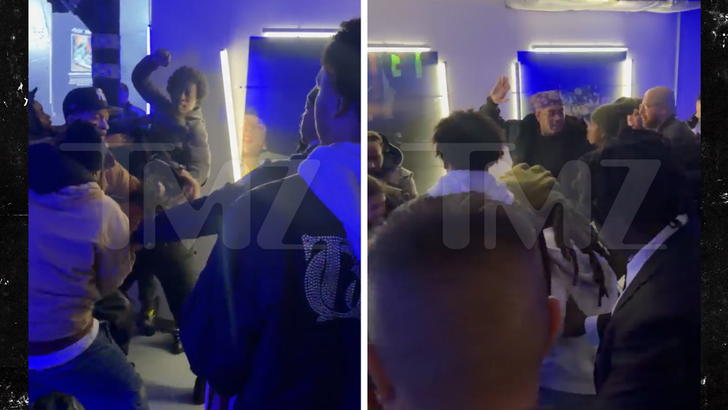
By Jasmine Reed, PowerVault Staff A$AP Rocky’s sneaker launch drew an NYPD response after a fight was caught on video, according to the available report. That is the news. Whether Rocky participated, what started the...
Advertisement

By Jasmine Reed, PowerVault Staff
A$AP Rocky’s sneaker launch drew an NYPD response after a fight was caught on video, according to the available report. That is the news. Whether Rocky participated, what started the confrontation, and what police ultimately determined are separate questions the supplied account does not answer. Those distinctions matter when a celebrity’s name can turn somebody else’s behavior into his headline. Association is easy to package; responsibility takes actual reporting. A footwear event should put the design, the collaboration, and the people building it in focus. Instead, the fight now threatens to become the entire conversation. That deserves scrutiny without turning an incomplete account into a verdict.
PVN’s initial item about the sneaker launch fight identifies three central elements: an event connected to Rocky, a confrontation captured on video, and an NYPD response. The summary provided for this article does not identify the people fighting or include a police statement. It also does not establish that Rocky was involved in the confrontation. No direct quotation from him, an organizer, or an officer accompanies it. Readers deserve that boundary before the commentary starts flying. A familiar face in the thumbnail cannot supply the missing identification, no matter how clickable the pairing becomes. An event carrying a famous name and an incident involving that famous person are not interchangeable stories, even when a crowded headline makes them look alike.
The video component requires its own discipline. The summary says the fight was captured, but it supplies no footage for independent review here. That means there is no responsible basis to describe who threw a punch, who intervened, or what happened immediately beforehand. Even an authentic clip can show a confrontation without showing its cause. A camera records what falls inside the frame, not every exchange outside it. A shortened repost can also remove the moments that distinguish someone approaching a conflict from someone trying to leave it. Anyone assigning blame needs more than the promise that video exists. Identification, sequence, and context still matter. The camera can be a witness, but the caption underneath it does not become sworn testimony.
The NYPD response also needs to stay in its proper lane. Police responding to an incident does not establish that anyone was arrested, charged, or found responsible. The supplied summary gives no arrest information, injury details, or account of how the situation ended. Those gaps should remain gaps until reporting fills them. They should not become dramatic assumptions because the story involves a rapper. Even confirmation that officers arrived would not, by itself, establish whom they spoke with or why those people were present. Any follow up should establish what officers encountered and whether an official complaint or enforcement action followed. That information would tell readers far more than another round of reposts pairing Rocky’s photograph with an increasingly dramatic verb.
Rocky’s fashion credentials explain why a sneaker event bearing his name attracts attention beyond music coverage. PUMA named him creative director of its Formula 1 partnership in 2023, placing his design perspective inside a major sportswear business. That background does not establish which product or partnership was involved in this particular launch. The available summary does not name the sneaker, venue, or event date. Still, his fashion work gives the story meaningful stakes. Rocky has spent years making style part of his creative identity. That deserves coverage of the creative decisions and commercial responsibilities, not just whatever footage travels fastest after an event. Reducing that work to an unrelated person’s possible misconduct would erase the very business that brought people together.
Hip hop’s relationship with sneakers has never been a side project. Run DMC released “My Adidas” in 1986 and helped turn an existing community relationship with sportswear into a landmark endorsement partnership. Michael Jordan’s first Air Jordan arrived in 1985, connecting basketball achievement, Black aspiration, and consumer desire through footwear. Later, artists became designers and business partners, not merely famous faces holding products. The distinction matters: cultural influence can generate sales long before the people supplying that influence receive decision making power or a meaningful financial stake. Getting credit is also a business question. Rocky’s fashion career belongs within that longer shift toward creative authority. PVN’s examination of Bay Area hip hop’s influence asks a related question about credit: who creates the value, and who gets recognized for it? A fight should not swallow that history whole.
The real test is whether coverage can address the disruption without making Rocky the disruption.
A celebrity’s name on the invitation does not make him responsible for every person in the room.
Rocky deserves neither automatic absolution nor automatic blame. He deserves reporting that attaches responsibility to evidence. A celebrity’s name on the invitation does not make him responsible for every person in the room. Conversely, fame should not shield anyone if reliable reporting establishes direct involvement. That standard protects the person and the public at once. The temptation is to treat every uncomfortable incident as a revelation of character. Please. A launch recap is not permission to rummage through someone’s entire public history and present unrelated moments as proof of what happened here. Sometimes the evidence supports a narrow account, and the narrow account is the honest one. Celebrating a Black artist’s fashion influence does not require ignoring a fight. It requires refusing to manufacture his role in it.
The industry argument goes beyond whichever clip gets the most attention. A launch is a workplace for retail employees, security staff, photographers, publicists, and production crews. Their safety should rank above protecting a polished recap. Depending on the format, organizers need suitable staffing, clear entry rules, and a plan for handling conflict. None of that proves this event lacked those protections. It identifies what meaningful accountability would examine. Who had authority to intervene, and could workers report a concern without being pressured to keep the promotional schedule moving? Those are operational questions worth asking. A publicist can distribute a statement, but a statement cannot substitute for sound operations. The useful questions concern preparation and response, not whether the brand can bury an awkward search result beneath enough product photographs.
The audience has a role here, too. Sharing a clip with an invented explanation turns spectators into unpaid distributors of misinformation. That does not mean fans must stop discussing celebrity news or pretend a fight is harmless. It means separating what a post shows from what its uploader claims. Check who published it, whether the footage is complete, and whether anyone has verified the identities involved. Ten accounts repeating the same unsupported caption are still repeating one unsupported caption. A bigger audience does not make the underlying claim stronger. Then keep the joke proportionate to the facts. Black audiences deserve entertainment coverage that respects their intelligence, not a daily loyalty test. Nobody should have to choose between enjoying Rocky’s work and asking sensible questions about an event associated with him.
Race and money shape which parts of these stories get amplified. Black creativity can sell the sneaker, set the visual language, and make a brand feel relevant. Yet coverage can quickly replace that creative authority with a familiar image of disorder. That is an editorial choice, not an unavoidable feature of reporting a fight. Class matters, too: the star has a team, while workers and ordinary guests may have less control over how they appear online. Someone briefly visible in the background should not become a named suspect because strangers decide their expression looks suspicious. Visibility is not involvement. PVN’s coverage of Beyoncé’s Cécred development process offers a useful counterweight to spectacle. Black celebrity businesses deserve attention to the work behind them, alongside scrutiny when something goes wrong.
Advertisement
What comes next should depend on reporting, not momentum. An attributable NYPD account, verified footage, or statements from identified participants could establish details missing from the current summary. Any response from Rocky or the event’s organizers should be assessed for what it actually answers. A polished message expressing concern would not necessarily resolve the factual questions, and silence would not establish guilt. Fans can also keep the product and the people who worked on it in view without dismissing safety concerns. The standard should hold whether the next update flatters the star or complicates the story. Cover the fight. Verify responsibility. Do not let somebody else’s confrontation become Rocky’s biography by default.
More from PowerVault Network: