How Two Ohio Women Escaped from Jail and What It Reveals About Prison Security
By Renee Fontaine, PowerVault Staff Under the fading light of an October evening in Ohio, two women made a daring escape from the confines of the Stark Regional Community Correction Center. Hope Skerrett and Kerriah O...
Advertisement

By Renee Fontaine, PowerVault Staff
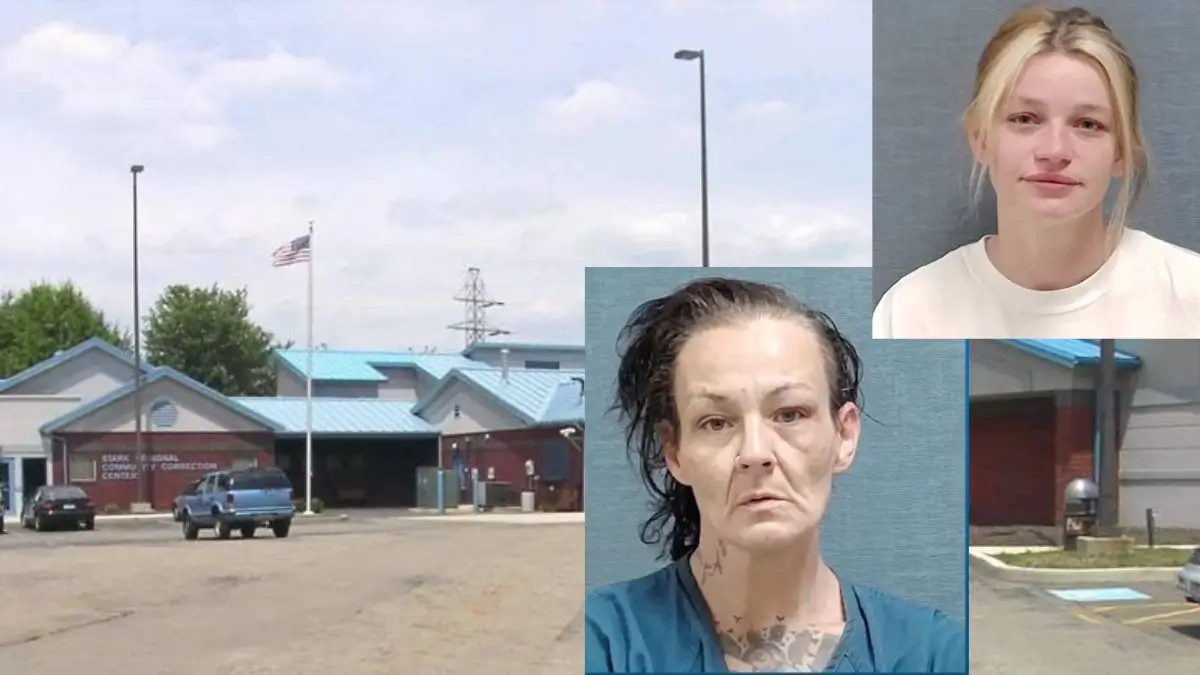
Under the fading light of an October evening in Ohio, two women made a daring escape from the confines of the Stark Regional Community Correction Center. Hope Skerrett and Kerriah Ohler, driven by a shared determination to reclaim their freedom, devised an escape plan that involved scaling the facility’s walls with nothing but a robe and sheer courage. Their footsteps led them into the dense woods of the Fairhope Nature Preserve, leaving behind a trail of hasty decisions marked by a lone shoe and discarded clothing. This audacious act was not merely an escape attempt but proof of their desperation and resolve in the face of confinement.
According to Cleveland 19, the breakout unfolded on October 12 around 7 p.m. By the time a routine check revealed the absence of the two women, they had already melted into the shadows of the surrounding area. Law enforcement agencies, including U.S. Marshals, were immediately alerted, triggering a manhunt that would stretch across 25 miles, encompassing both urban landscapes and rural terrains. While their intended destination, a sunny retreat far removed from the confines of Ohio, remained elusive, their brief journey into hiding quickly became the talk of the town, capturing the imaginations and conversations of residents as they speculated about the fugitives' next move.
Investigators meticulously pieced together the escape route, uncovering that Skerrett and Ohler had planned to evade capture by rendezvousing near a Walmart on U.S. Route 62 before making a beeline for Florida. The plan seemed foolproof on paper, but in reality, their freedom was abruptly halted when a timely tip-off directed authorities to an address in Dover. This development was critical, as it showcased the importance of community involvement in law enforcement operations. The intensity of the manhunt that followed is vividly captured in this YouTube video, which highlights the coordinated efforts and urgency that defined the pursuit.
It was a crucial tip from a resident in Dover that ultimately led the marshals to their unlikely underground hideout. Found covered in dirt near a basement foundation, Skerrett and Ohler surrendered without resistance, their plans of escape thwarted by an alert community member. Dover Police Capt. Michelle Seibert confirmed the arrest details to WJER, emphasizing the swift and effective action taken by local law enforcement once the pair's location was pinpointed. The response highlights the seamless cooperation between residents and police, a vital component in ensuring public safety and accountability.
Their capture showcased a remarkable community-wide response, with police deploying advanced technology such as drones and K-9 units to meticulously track their movements through challenging terrains. U.S. Marshal Pete Elliott's confirmation of their arrest to WKYC underscored the coordinated efforts and dedication of law enforcement to apprehend the escapees swiftly and safely. The question that lingers is how Skerrett and Ohler managed to orchestrate such a bold escape attempt under the watchful eyes of correctional staff. This video offers a visual narration of their journey, providing insights into the duo's audacious attempt to reclaim their freedom.
Historically, prison escapes have captivated public interest and raised significant concerns. Notable incidents, such as the infamous 1962 Alcatraz breakout and the audacious 2015 escape from the Clinton Correctional Facility in New York, often expose systemic flaws within correctional institutions. Each case echoes a haunting refrain of security lapses that demand introspection and reform. In 2020, a similar escape in Ohio explain outdated surveillance systems and inadequate staffing, emphasizing a pattern of vulnerabilities that persist across correctional facilities. These recurring issues highlight the need to address root causes rather than merely treating symptoms, calling for a comprehensive overhaul to ensure safety and security.
The narrative emerging from the Stark facility forces a critical reevaluation of prison security measures.
The ease with which Skerrett and Ohler devised their escape plan highlights troubling vulnerabilities in our correctional systems.
The ease with which Skerrett and Ohler devised their escape plan shows troubling vulnerabilities within our correctional systems. The fact that two individuals, armed with nothing but limited resources and sheer determination, could exploit these weaknesses raises serious questions about the level of oversight and effectiveness of current security protocols. Are the measures in place genuinely deterring such attempts, or are they merely providing a false sense of safety to both inmates and the public? This incident serves as a stark reminder of the urgent need to reassess and strengthen security frameworks to prevent future breaches and maintain the integrity of correctional facilities.
From a broader societal perspective, this escape saga reflects the ongoing struggles within the prison system, where outdated policies frequently clash with the realities of modern-day incarceration. Financial constraints, coupled with issues of overcrowding and understaffing, perpetuate a cycle of inefficiency and risk, compromising the safety of both inmates and the surrounding communities. These systemic issues are not unique to Ohio but resonate across the national scene, highlighting the urgent need for comprehensive reform. Recognizing these challenges as a collective responsibility is crucial to crafting effective solutions that address the root causes of these persistent problems.
For the community surrounding the Stark Regional facility, this incident serves as a wake-up call to the unseen dynamics at play within correctional institutions. It challenges residents to question the accountability of these institutions, which are tasked with maintaining public safety and administering justice. What does it mean for a community when those responsible for correctional care are simultaneously the subjects of scrutiny and criticism? This tension is reminiscent of sentiments shared by Soulja Boy during the France protests, as discussed in our coverage on global activism, highlighting the complex interplay between institutional accountability and public trust.
Advertisement
Beneath the surface of this escape narrative lies a complex layer of race and class dynamics. Media portrayals of Skerrett and Ohler's escape often focus on the sensational aspects, overshadowing the deeper systemic issues at play. Such narratives can skew public perception, framing the women as reckless rather than as individuals handling a flawed system. There is an urgent need for narratives that get into the intersection of race, gender, and incarceration, themes that resonate with our investigation into institutional accountability. By exploring these dimensions, we can foster a more complicated understanding of the challenges faced by marginalized communities within the justice system.
Looking ahead, the recapture of Skerrett and Ohler should serve as a catalyst for not only relief but also meaningful reform. As they face legal proceedings, it is imperative that the broader conversation shifts toward fortifying our correctional facilities and addressing the systemic issues that facilitate such escapes. Communities and authorities must collaborate to ensure that this episode is not merely a footnote in the annals of prison escapes but a turning point for change. By doing so, we can hope to strengthen the system that serves as a pillar of justice, ensuring safety and accountability for all involved.