Janet Jackson's Super Bowl Fallout: An Unseen Legacy
By DeShawn Price, PowerVault Staff Janet Jackson's career took a seismic hit after the 2004 Super Bowl halftime show, but what's often overshadowed is how different her aftermath was compared to her co-performer Justi...
Advertisement

By DeShawn Price, PowerVault Staff
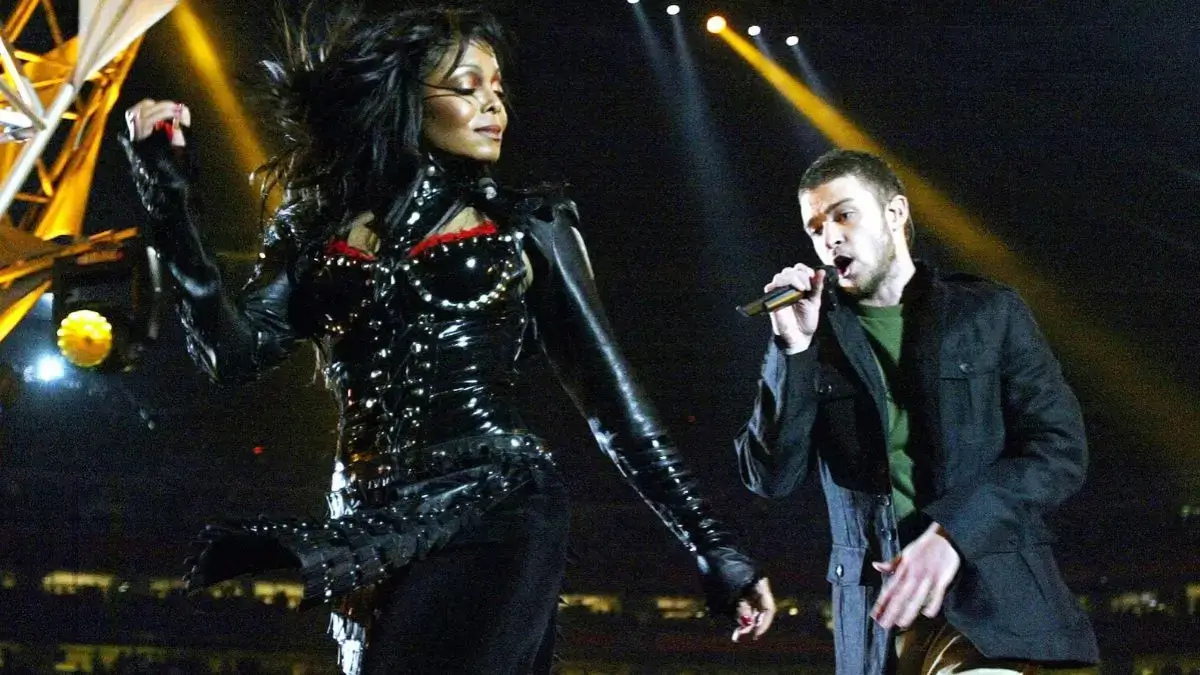
Janet Jackson's career took a seismic hit after the 2004 Super Bowl halftime show, but what's often overshadowed is how different her aftermath was compared to her co-performer Justin Timberlake. While the world focused on Jackson’s exposed breast, a moment that became etched into the cultural memory, Timberlake slipped away relatively unscathed. His career continued to flourish, marked by successful albums and acting roles, while Jackson faced an industry that seemed eager to sideline her. The disparity in their fates shows a persistent double standard in the entertainment industry, one that disproportionately hammers Black women. Jackson's ordeal is emblematic of how quickly the industry can turn its back on Black women, leveraging its power to exclude them from opportunities and erase their contributions, while simultaneously extending leniency and forgiveness to their white counterparts.
The infamous 'wardrobe malfunction' might have seemed like a blip, but it was catastrophic for Jackson. Her music was reportedly pulled from stations, silencing her voice on platforms that once celebrated her artistry. She faced a de facto blacklist that kept her away from key industry stages, like the Grammys, where her absence was as glaring as the silence that followed her music. Meanwhile, Timberlake, who ripped the garment, apologized and was welcomed back with open arms, performing at the Grammys just a week later. This unequal treatment, detailed in a report, highlights systemic biases that echo far beyond the music industry. It reflects a broader societal tendency to hold Black women to harsher standards, often punishing them more severely for moments beyond their control while offering redemption and opportunities to those who share the same stage without bearing the same burden.
While Jackson bore the brunt, other performers that night like Diddy, Kid Rock, and Nelly ventured down their own paths. Diddy, once the epitome of hip-hop success, is currently serving a federal prison sentence, a stark contrast to his 2004 'Bad Boy for Life' swagger that captivated audiences. Kid Rock, who once courted controversy with a flag-draped performance, has morphed into a political provocateur and Trump ally, using his platform to amplify divisive rhetoric. Meanwhile, Nelly settled into a quieter life, marrying Ashanti and occasionally stepping back into the limelight with performances that nod to his early 2000s peak. The clip of their performance remains a time capsule of entertainment and politics' entangled dance, illustrating how the paths of those who shared the spotlight with Jackson have diverged dramatically over the years.
The post above encapsulates the moment that defined Jackson's struggle, a struggle that was rooted not just in entertainment politics but in cultural and racial dynamics. It's a moment that asks why the industry was so quick to penalize her while elevating others who shared the same stage. This disparity points to a deeper narrative about who gets to recover from public missteps and who is left to weather the storm alone. In a predominantly white industry, Jackson's harsh penalty shows a racial and gender bias that has long dictated the fates of Black women. Her experience serves as a stark reminder of the industry's readiness to scapegoat women of color while shielding others from similar scrutiny, revealing the underlying power dynamics that dictate who is allowed to thrive and who is forced to fight for redemption.
The video unpacks the timeline of events, with Timberlake's actions at the forefront. It’s a clear depiction of the media circus that followed and the narratives that shaped public perception. This portrayal of events highlights how the media played a pivotal role in shaping the aftermath, often framing Jackson as the sole figure of controversy while minimizing Timberlake's involvement. The fallout from that broadcast became a cultural touchstone, one that still resonates in how Black women are treated in the industry today. The incident serves as a lens through which we can examine the persistent biases that continue to influence media narratives, illustrating how the intersection of race and gender can determine the trajectory of an individual's career in the face of public scrutiny. It is a reminder of the power of the media to construct narratives that can uplift or dismantle careers.
This incident is not isolated; it fits a larger historical pattern. From Serena Williams facing disproportionate scrutiny in tennis to the NBA's mounting injury crisis affecting Black athletes, it's clear that Black excellence is often met with harsher criticism and bigger consequences. Jackson’s treatment reflects a legacy of double standards that trace back decades in American culture. These patterns reveal how systemic biases manifest in sports and entertainment, where Black individuals often face more significant repercussions for their missteps compared to their white counterparts. The scrutiny Jackson faced mirrors the challenges many Black athletes encounter, where their achievements are overshadowed by an unforgiving spotlight that magnifies their mistakes. This legacy of unequal treatment shows the need for a cultural reckoning that addresses these disparities and challenges the status quo that allows such inequities to persist.
Janet Jackson’s downfall after the Super Bowl incident is a glaring example of how society often punishes Black women more harshly.
Janet Jackson’s downfall after the Super Bowl incident is a glaring example of how society often punishes Black women more harshly.
The entertainment industry’s politics often reflect broader societal biases, making Jackson's post-Super Bowl experience a litmus test for racial and gender dynamics. It’s a stark reminder that the industry is not just about talent, but also about who holds power and decides the rules of engagement. In Jackson's case, the industry's swift and harsh response to her perceived transgression illustrates how power can be wielded to enforce systemic biases. Her experience exposes the underlying mechanisms that determine who is allowed to recover and who is left to bear the brunt of public backlash. Jackson was a casualty of an industry that flipped a switch on her without batting an eye, revealing the fragility of success for Black women in spaces where their presence is often conditional and their achievements precariously balanced on the whims of those in power.
For the community, Jackson's experience speaks to a broader narrative of resilience and reinvention. Despite the industry's cold shoulder, she has remained a cultural icon, evolving and adapting without the validation of mainstream channels. Her ability to continue creating and influencing culture in the face of adversity resonates deeply within the Black community, serving as proof of the strength and perseverance required to handle spaces that are often unwelcoming. Jackson's resilience echoes through every Black woman who’s had to handle similar battles in their respective fields, demonstrating the power of self-determination in the face of systemic barriers. Her journey is a powerful reminder of the importance of community support and the ability to find strength in one's identity, even when mainstream recognition is withheld. It’s a narrative that shows the enduring spirit of those who refuse to be defined by the obstacles placed before them.
The video above highlights Timberlake's and Jackson’s starkly different journeys post-Super Bowl, evoking questions about accountability and media complicity. For the audience, this moment was not just about entertainment but a reflection of societal faults. The disparate trajectories of their careers illustrate the pervasive nature of racial and gender biases that influence public perception and professional opportunities. It’s a call to reckon with our complicity in narratives that uplift some while burying others, urging us to examine how our consumption of media can perpetuate or challenge these disparities. This moment serves as an opportunity for reflection on the roles we play in shaping the cultural scene, emphasizing the need for greater awareness and responsibility in how we engage with stories that impact the lives of individuals and communities. It challenges us to consider the power of collective action in advocating for equitable treatment and accountability within the industry.
Beyond race and gender, the Super Bowl incident shows the unforgiving nature of the entertainment industry's power dynamics. It’s a sphere where contracts, alliances, and public persona can shift in an instant, leaving even the most iconic figures vulnerable. Jackson's experience highlights how quickly the industry can pivot, turning its back on those who once stood at its center. The politics behind the scenes often dictate who sails and who sinks, with power concentrated in the hands of a few who can shape narratives and influence careers with a single decision. This incident is a reminder of the precariousness of success in an industry that values image over substance and loyalty over justice, challenging us to question the structures that allow such volatility to persist. It shows the need for systemic change that prioritizes fairness and transparency, ensuring that all individuals are afforded the opportunity to thrive on their own merits.
Advertisement
Looking forward, the industry owes it to figures like Janet Jackson to reevaluate its unwritten rules. As cultural shifts push for greater accountability, the Super Bowl fallout should remind us of the need for equitable treatment. It’s not just about rectifying past injustices but ensuring future stars don’t face similar fates. Jackson's story challenges us to rethink how we support, criticize, and uplift those in the public eye. The lessons drawn from her experience should guide us in advocating for systemic change that prioritizes equity and accountability, ensuring that the industry reflects the diversity and talent of those who contribute to its success. It is a call to action for industry leaders and audiences alike to create a cultural scene that values fairness and inclusivity, paving the way for a future where all artists are afforded the opportunity to thrive without fear of unjust retribution.
More from PowerVault Network: