Kameela Russell Murder Case: What a Trial Must Prove
By Jasmine Reed, PowerVault Staff Ernest Roberts’ proposed plea deal in the Kameela Russell murder case was rejected after her family urged a Florida judge to proceed to trial. Roberts, 47, had appeared prepared to pl...
Advertisement

By Jasmine Reed, PowerVault Staff
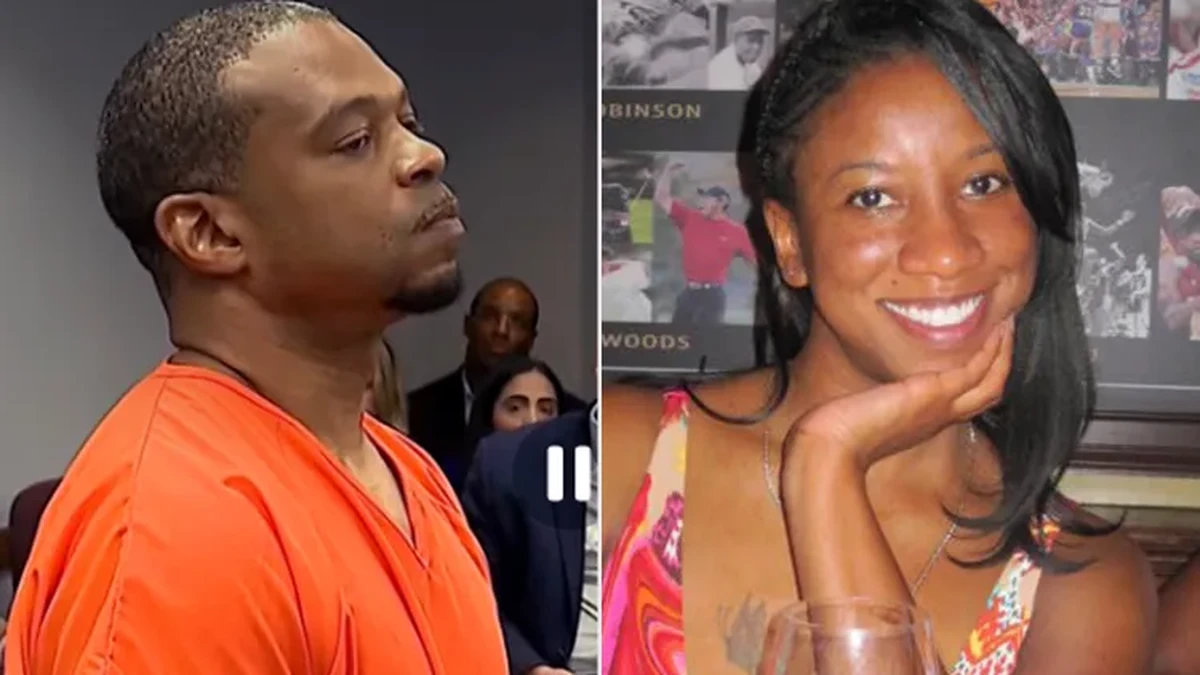
Ernest Roberts’ proposed plea deal in the Kameela Russell murder case was rejected after her family urged a Florida judge to proceed to trial. Roberts, 47, had appeared prepared to plead guilty to second degree murder. The proposed punishment was 30 years in prison followed by five years of probation. Russell’s mother wanted a trial instead. According to Court TV’s account of the hearing, the judge rejected the agreement after hearing from relatives. Their statements placed the consequences of Russell’s death before the court as it considered the proposed resolution. That leaves an essential distinction: prosecutors have serious allegations to prove, but the proposed plea did not produce a conviction.
Russell was a mother of two and a test administrator at Norland Senior High School in Miami Gardens. Roberts had worked there as an assistant principal before leaving about seven months before she disappeared. Their connection stretched beyond the school building. He had known Russell for more than 30 years and was her children’s godfather, Court TV reported. Her younger daughter recalled their last encounter: “I will always remember the last time I saw her in the driveway to pick me up for gymnastics,” she said. “The moment she drove off, I was so confused.” That memory belongs at the center of this case, not beneath the defendant’s job title.
Family members last saw Russell alive on May 15, 2019, outside her sister’s home. She had come for her daughter but left before the girl came outside. An affidavit reviewed by Court TV said Roberts called Russell around that time. Prosecutors said surveillance footage captured her departure and travel to his home. The arrest warrant also cited phone records placing her there. Ten days later, a teenager discovered her body in a canal near that house. She was wrapped in a tarp. The medical examiner classified her death as a homicide caused by blunt force injuries to both sides of her head. Those findings establish a death requiring criminal investigation, not the identity of the killer by themselves. The accompanying video appears below.
Beyond the accompanying video, the reported physical evidence deserves careful attention. According to the arrest warrant cited in the reporting, investigators found Russell’s blood in Roberts’ master bedroom and signs of attempted cleaning with bleach. A school employee also reported that Roberts directed them to a file cabinet containing Audi keys and a handwritten note. The note sought help making a vehicle disappear and gave a location near a racetrack on 441. It specified the Speedway racetrack by the county line and ended with an instruction: “Throw this note away.” That employee contacted police. Atlanta Black Star’s May 2019 reporting provides contemporaneous context for the investigation. The prosecution still must establish how each item connects to Roberts and Russell’s death.
The employee supplied another account investigators would need to corroborate. Roberts allegedly told them, “I did something crazy.” He also allegedly described striking an intruder with a baseball bat and moving a body wrapped in a tarp. That account included allegedly dragging the body through his home, a detail investigators could compare against physical findings. Those are reported statements, not testimony this article has independently verified. The distinction matters because an employee’s recollection, a recovered note and laboratory findings require different foundations in court. Who collected the note? How were the blood samples preserved? What did testing establish about the suspected cleaning? The supplied reporting does not answer those questions. Their absence from an article does not establish investigative misconduct. Another accompanying video follows below.
Neither accompanying video replaces the legal framework behind this hearing. Florida voters approved Marsy’s Law in 2018, expanding constitutional protections for crime victims, including opportunities to be heard during plea proceedings. Being heard does not mean controlling the verdict or setting the sentence. Another Florida case marks the opposite side of that balance: Gideon v. Wainwright, decided in 1963. The Supreme Court held that states must provide counsel to indigent defendants charged with felonies. These protections serve different people, but neither should depend on public sympathy. Russell’s relatives deserve meaningful participation. Roberts deserves counsel and a fair process. Respecting the family does not require treating an accusation as a verdict, just as protecting the accused does not require marginalizing relatives. A court must honor both duties, especially when an allegation makes the public want an immediate answer before evidence is tested.
Trust explains why this allegation cuts so deeply; evidence must determine whether the prosecution proves it.
A family should not have to trade its right to be heard for the promise of a finished case.
A family should not have to trade its right to be heard for the promise of a finished case. A plea agreement can spare relatives repeated testimony and uncertainty. It can also leave them feeling that essential questions will never receive public answers. Russell’s mother expressed a preference for trial, and that position deserves respect without being treated as every grieving family’s obligation. Relatives who accept a negotiated sentence are not valuing a life less; those seeking trial are not responsible for the wait. Trial carries risks, including acquittal and further delay. Neither outcome can be promised away. PVN’s coverage of what a murder sentence means reflects why punishment needs explanation beyond a number. Here, the first task is understanding what resolution Russell’s family sought and what the court actually decided.
The plea hearing also exposed a problem that cannot be brushed aside as awkward courtroom theater. Roberts initially said he understood the offer as 30 years of probation, according to the reporting. After consulting his lawyer, he said he would accept prison. That is an enormous difference. The proposed agreement actually required three decades in state custody before another five years under probation supervision, not three decades outside prison. A valid guilty plea requires an understanding of its consequences, not merely agreement when a judge asks a question. Nothing supplied establishes that this confusion caused the judge’s rejection. Still, it shows why careful questioning matters. Speed cannot substitute for comprehension, even when everyone wants a case resolved. That distinction should remain in view when readers encounter the Instagram reel below.
A reel cannot establish the chain of custody for a blood sample or authenticate a handwritten note. Readers who follow this case closely should demand those connections rather than mistake repetition for corroboration. Phone records can support a location theory, but their precision depends on the underlying data. The supplied account does not specify the location technology or its limits, so reporting should not invent that precision. Surveillance can establish movement without necessarily showing what happened inside a house. Alleged statements require scrutiny of context and credibility. None of those cautions dismisses the prosecution’s evidence. They explain how evidence becomes proof. The community deserves reporting that identifies what is documented, what a witness alleges and what remains unknown. Sharing a claim a thousand times does not give it another independent source.
For Black readers, the godfather relationship carries a weight that a workplace description cannot capture. That title often places someone inside a family’s circle of care and responsibility. Here, that relationship also followed more than 30 years of knowing Russell, making the allegation one involving longstanding familiarity, not a stranger. It does not establish guilt, and neither does a respected school position establish innocence. Russell’s standing should not have to compete with Roberts’ professional credentials for attention. The national attention surrounding Gabby Petito’s disappearance in 2021 renewed scrutiny of whose missing person cases receive sustained coverage. Black families should not need comparable visibility to secure careful investigation. PVN’s coverage examining the Scott Colom story takes the same approach: examine institutional decisions rather than letting prominent names determine which questions get asked.
Advertisement
The next meaningful developments will come through court orders, scheduling decisions and any renewed plea discussions. The supplied reporting establishes no trial date. If the case reaches a jury, watch how prosecutors authenticate the note, explain the phone evidence and connect the physical findings to their account. Watch the defense’s challenges, too. Russell’s relatives should not disappear from coverage once the hearing clip stops circulating. Her daughter remembered a mother arriving for gymnastics pickup, an ordinary act of care that became their last encounter. The court’s task is not to resolve that grief. It is to make the state prove its case.
More from PowerVault Network: