
Quavo Calls for Young Thug and Gunna Peace: Why Now?
By Simone Walker, PowerVault Staff Quavo wants Young Thug and Gunna to reconcile after Offset warned that their fallout has helped divide Atlanta hip hop. His appeal came through an Instagram Story, where he shared Of...
Advertisement

By Simone Walker, PowerVault Staff
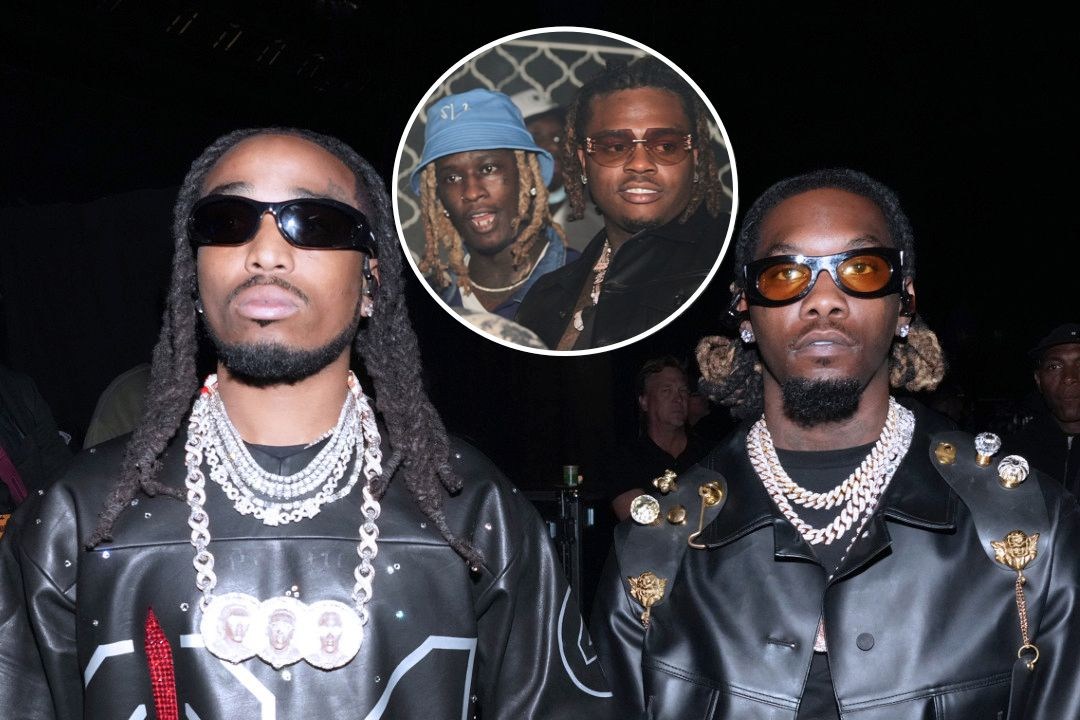
Quavo wants Young Thug and Gunna to reconcile after Offset warned that their fallout has helped divide Atlanta hip hop. His appeal came through an Instagram Story, where he shared Offset’s remarks and tagged Thug. The message was direct: “We all family. We all some playas. We gon fix it or let's hit.” That is a public invitation, not proof that either artist has agreed to anything. Still, Quavo putting his name behind reconciliation gives this conversation weight beyond another comment section demanding a reunion record. He is addressing artists with shared history and overlapping relationships, where choosing sides can put mutual collaborators in the middle of somebody else’s fallout.
Offset made his case during an appearance on The New York Times’ Popcast published Friday, Nov. 13, according to XXL’s reporting on the exchange. He described a city losing some of the shared purpose that helped make Atlanta rap a dominant force. “I just really wish we would all unify,” he said, pointing to Atlanta’s command of the scene. “Now it's a gap,” he said. “It ain't no real [unity], which makes hip-hop drain and lose its powers.” That is Offset’s assessment, not a measured finding about Atlanta’s output or audience. The distinction matters. A city can keep producing successful artists while its established circles struggle to work together. Chart presence and a healthy creative community are not the same thing.
Offset also explained why he has continued embracing Gunna, including collaborating with him multiple times since his release from jail. “I'm not a follower,” he told Popcast. “I rock with who rock with me. I rock with who I rock with.” He also referenced having weathered his own “cap internet storm,” framing his stance through experience with online judgment. His position rests on his own relationships, rather than the online pressure surrounding Gunna’s plea deal. Nothing in that explanation establishes what happened privately between Gunna and Thug. It does establish that Offset refuses to let strangers select his collaborators. For an artist whose features carry their own audience, that is a meaningful choice. The YSL discussion begins around the 37 minute mark in the interview below.
The interview shows Offset separating his personal dealings with Gunna from the broader campaign against him. That separation deserves more care than the internet usually gives it. Gunna entered an Alford plea in December 2022, a form of guilty plea that allows a defendant to maintain innocence. A plea agreement and an accusation of informing are not interchangeable descriptions. Specific claims about cooperation require specific evidence. The reporting behind Quavo’s appeal does not establish those claims, and an Instagram demand cannot settle them. Offset describing loyalty to a collaborator is not testimony about another defendant’s legal decisions. Readers should resist treating every feature, unfollow, or public appearance as a substitute for court records. Real legal stakes deserve better than fan detective work.
Lil Baby has addressed the public side of Atlanta’s friction, too. During an October Popcast appearance, he said disagreements involving people from his city should stay personal rather than become public entertainment. “We got a problem, we can handle our problem off the internet, in person. Just us,” he said. His remarks came amid rumored tension with Gunna, but the rumors remain distinct from a confirmed account of their relationship. Baby’s position and Quavo’s appeal share a concern: public conflict can damage Atlanta beyond the people directly involved. Baby specifically argued that even winning an exchange could make the city look bad as a whole. Neither statement confirms a private breakthrough. Quavo’s appeal to Thug, shared alongside Offset’s remarks, appears in the Instagram post below.
That appeal draws on a real history of Atlanta artists building through each other. Lil Baby and Gunna released Drip Harder in 2018. Young Thug and Gunna’s “Ski” arrived in 2021, giving their musical partnership another recognizable calling card. Those records matter because listeners heard chemistry before they were asked to choose sides. A joint project gives artists room to trade flows and develop a shared sound, something a lone guest verse cannot always deliver. That creative exchange is worth protecting. Atlanta’s collaborative muscle also reaches beyond rap crews. Kandi Burruss helped write TLC’s 1999 hit “No Scrubs,” part of the songwriting legacy discussed in PVN’s coverage of her Songwriters Hall of Fame nod. Different circles, different eras, same practical lesson: a city becomes powerful when its talent can connect. Unity never required everybody to be best friends.
But Atlanta cannot rebuild trust by making injured relationships perform unity for an audience.
Fans can support an artist without appointing themselves the judge of every relationship around him.
For Thug and Gunna, the reasonable goal may be smaller than fans want. A respectful distance could be progress. So could a private conversation that produces no photograph, song, or announcement. Quavo can open a door without deciding what either man owes the other. Offset can maintain his own connection with Gunna without becoming the referee for everyone else. The people closest to a fractured relationship have information outsiders do not, and reconciliation cannot mean surrendering personal boundaries. Baby’s stated preference for handling problems away from the internet leaves room for that distinction: privacy does not automatically mean friendship. PVN’s position is simple: give peace room to exist without demanding intimacy. A reunion engineered to satisfy spectators could leave the actual disagreement untouched. Public pressure is a poor foundation for rebuilt trust.
The industry argument is different: division can narrow the routes through which music gets made and heard. A guest verse can introduce an artist to another audience. A shared show can connect fan bases that streaming recommendations keep apart. Closing those doors carries a cost, even when no contract changes hands. An artist can remain commercially successful while losing access to particular creative partnerships. Streaming totals alone will not reveal which sessions never happened. Still, there is no evidence here that a label ordered anyone to avoid Gunna or engineered this dispute. That claim would need receipts. Business relationships deserve the same precision as personal ones, including the distinctions around IDK’s move to Shady and Interscope. A label affiliation does not, by itself, reveal ownership, creative control, or private instructions.
Fans have their own decision to make. Supporting Gunna’s music does not require mocking Thug’s experiences, and respecting Thug does not require turning every Gunna collaborator into a suspect. Fans can support an artist without appointing themselves the judge of every relationship around him. That matters for younger listeners encountering these artists through clips rather than complete interviews or full projects. A short excerpt rewards a quick verdict. Listening asks for more patience. In this case, hearing Offset’s full explanation matters more than letting a caption turn his personal choice into a declaration of war. The audience cannot control a private disagreement, but it can stop rewarding accounts that present speculation as inside knowledge. Wanting another great Atlanta record is fair. Treating somebody else’s unresolved conflict as a weekly elimination contest is not.
There is also a racial and class burden beneath all this talk about keeping Atlanta together. Black artists are often expected to represent an entire neighborhood or city through decisions that other entertainers get to call personal. Street credibility becomes a public test, administered by people who may face none of the consequences. Meanwhile, platforms and commentary pages can earn attention from the argument without carrying its risks. The artist gets the loyalty test; the spectator gets content. That imbalance should trouble anyone claiming to care about Atlanta. Calling for peace should not become another demand that Black men make their private pain publicly useful. No rapper should have to prove authenticity by extending a dispute, and no plea agreement should become a guessing game for people insulated from the legal stakes.
Advertisement
The next thing to watch is not whether Quavo’s message produces an immediate studio photo. It is whether the public temperature drops, whether collaborators stop becoming targets, and whether the people involved get space to decide their own terms. No response from Thug or Gunna is established in the reporting behind this appeal. Until one comes, peace remains a request rather than an outcome. Quavo has made that request publicly. Offset has explained his position. Listeners now have a chance to respond without demanding another confrontation. Atlanta does not owe the internet a feud, and peace does not owe it a rollout.
More from PowerVault Network:
