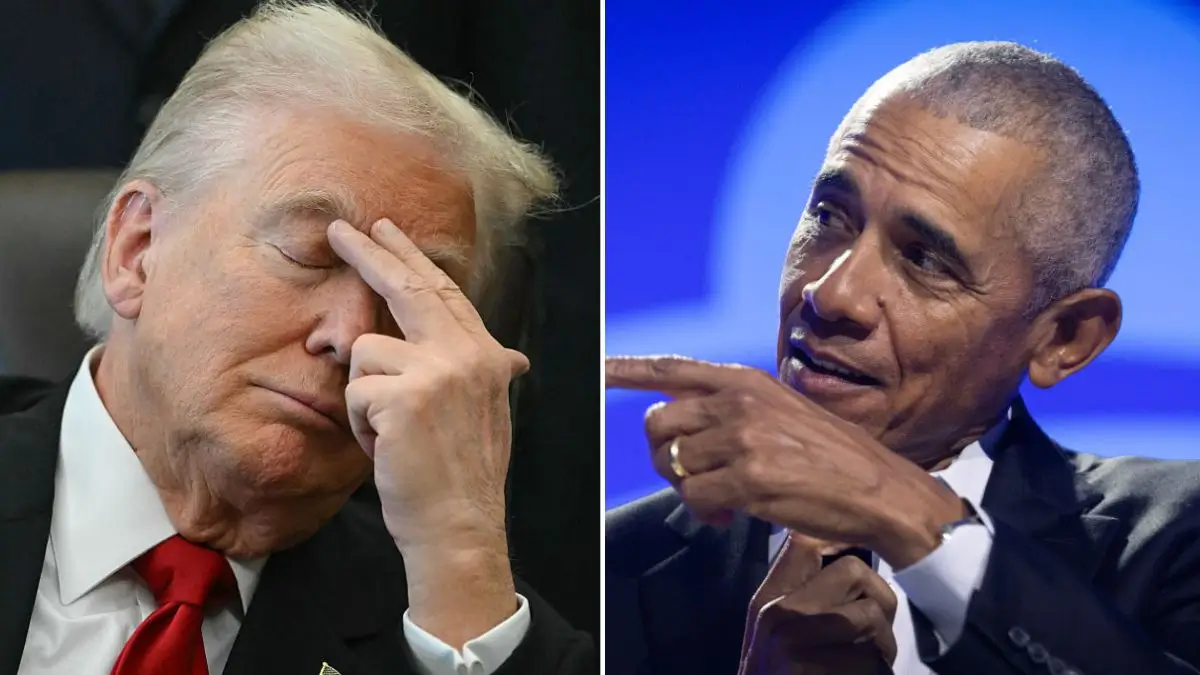
Trump’s Obama Netflix Claim: What Still Needs Proof
By Andre Coleman, PowerVault Staff Donald Trump’s reported swipe at Obama’s Netflix deal does not answer questions about foreign money and presidential conflicts of interest. But the account supplied for this story al...
Advertisement

By Andre Coleman, PowerVault Staff
Donald Trump’s reported swipe at Obama’s Netflix deal does not answer questions about foreign money and presidential conflicts of interest. But the account supplied for this story also needs scrutiny before readers accept its dramatic setup. It describes an election defeat, a television interview and a reporter’s challenge without providing the complete exchange. That leaves important claims unverified. Black readers deserve more than a satisfying headline about Trump getting caught. They deserve reporting that separates an established business deal from an alleged presidential deflection, then explains why the distinction matters. Accountability cannot depend on whether a story flatters the audience.
The supplied summary describes a “60 Minutes” interview about foreign entities investing in a company run by Trump’s son. It attributes the reporting to CBS News but identifies Ross Douthat, a New York Times opinion columnist, as the correspondent. That mismatch requires clarification. The excerpt also asserts sweeping Democratic midterm victories without supplying election results or supporting reporting. Control of Congress is a consequential claim, not background decoration that an editor can wave through. Then it cuts off before presenting Trump’s actual Obama claim or the reporter’s supposed correction. Those gaps prevent a responsible account of an embarrassing confrontation. The underlying ethics question deserves coverage, but the missing evidence cannot be replaced by confidence, attitude or assumptions about either president.
Barack and Michelle Obama announced their Netflix production agreement in May 2018, after he left office in January 2017. Their company, Higher Ground, produces entertainment and documentary programming. That sequence matters because earning money after leaving office differs from holding presidential power while relatives seek investment. A former president cannot offer the same executive authority that a sitting president exercises over federal policy. Neither situation escapes scrutiny. Both require specifics about the parties, services and financial arrangements. The supplied excerpt does not establish the Netflix agreement’s price, so no dollar figure belongs here. Nor does it reproduce the comparison Trump allegedly made. The supplied X post is presented as a fact check, but its contents have not been independently verified here.
That post cannot substitute for the missing interview transcript. The available excerpt offers one direct quotation: “Look, every president has a problem,” Trump is quoted as saying. Even if accurately reproduced, that sentence answers nothing about a particular transaction. A meaningful response would identify the company, the investors, the amount invested and any government interests those investors held. The account supplies none of those details. It also leaves unclear which son and which company the interviewer supposedly discussed. Whether an investor is a private individual or a foreign government matters, too, because those relationships raise different questions. Readers should resist filling those blanks from unrelated Trump business stories. Allegations become stronger through documentation, not through borrowing facts from another controversy.
A president’s estimated fortune is also different from money actually received through a particular deal. Readers consulting Forbes’ accounting of Trump’s wealth should keep that distinction in view. Asset values can change without a cash payment. Investment in a family company does not automatically become personal income for the president. Neither point eliminates potential conflicts. They establish what investigators must trace: ownership, payments, benefits and official decisions. The critical issue is whether a financial relationship creates leverage over public power, not simply whether somebody got richer. A sharp question follows money through those steps instead of treating every impressive number as interchangeable. The first supplied video needs comparison with a complete, dated interview before it can establish what Trump actually said.
Whatever that video contains, the constitutional history supplies a firmer starting point. The Constitution’s Foreign Emoluments Clause restricts federal officeholders from accepting certain benefits from foreign states without congressional consent. Its application to Trump’s businesses generated litigation during his first presidency. The Supreme Court ordered those cases dismissed as moot in January 2021 after he left office, without resolving their merits. That was not a blanket declaration that every business arrangement was lawful. A case ending because the dispute is no longer live does not establish that the challenged conduct passed constitutional muster. That distinction matters whenever politicians sell a procedural outcome as vindication. Watergate offers another lesson. Richard Nixon’s resignation in 1974 followed investigations that pursued records, testimony and abuses of office. Presidential accountability has never depended on accepting a president’s preferred comparison. It depends on establishing what happened.
Obama is not a substitute for a balance sheet, and indignation is not an audit.
Obama is not a substitute for a balance sheet.
For Trump, the relevant standard should remain painfully simple: answer the question about the money. For Obama, the standard should also be straightforward: evaluate his actual conduct, not a comparison assembled to redirect attention. A former president’s commercial success does not clear a sitting president’s financial arrangements. Nor does disliking Trump establish misconduct in an unnamed company. PowerVault’s position is that the public deserves precision because precision makes accountability harder to dodge. Ask who paid, what they received and whether official authority helped deliver it. Any answer that skips those steps should face another question. The president controls an enormous federal apparatus; scrutiny of competing financial interests comes with that authority, regardless of his preferred subject. Celebrity combat may dominate a clip, but it cannot resolve a conflict of interest.
The media’s responsibility is equally demanding. A headline promising humiliation can attract attention while leaving readers without the central evidence. Editors should publish the relevant exchange, identify the business arrangement and distinguish an allegation from a finding. Readers need enough surrounding dialogue to judge whether a response addressed the question or changed the subject. That standard protects the reporting from easy dismissal and gives audiences something useful to examine. It also prevents an ethics story from becoming another personality contest. PVN’s coverage of Rihanna, Trump and the right to speak about America addresses a related question about whose voice gets heard. Here, the test is whose claims get checked. The second supplied video likewise requires a verified date, context and transcript before serving as evidence.
No video, however shareable, relieves the audience of asking what has actually been proved. For Black families, corruption coverage has practical value when it explains whether public decisions serve private access instead of public need. A questionable investment does not, by itself, prove that anyone lost housing assistance or a business contract. Reporters must establish those connections rather than imply them. But readers can demand scrutiny of the systems distributing those benefits. Transparent eligibility rules and enforceable disclosure requirements help reveal whether personal connections are getting somebody through a publicly funded door. That is the useful connection to PVN’s coverage of Birmingham Opportunity Zones and wealth building: ownership and access matter. Political coverage should help people recognize who can reach decision makers, who cannot and what safeguards protect everyone else.
Race also belongs in this conversation, without becoming a shortcut around evidence. Trump promoted the false birther claim that questioned Obama’s American birth. Obama released his long form birth certificate in April 2011. That history gives efforts to cast his success as inherently suspicious a particular weight for Black readers. Birtherism demanded that a Black president repeatedly prove his legitimacy; financial reporting should not recycle that burden in another form. The first Black president’s earnings deserve examination under the same standards applied to other former presidents, not automatic suspicion or automatic immunity. A paid production agreement requires different evidence from an allegation that investors sought influence over government. Treating those categories as identical erases the transaction itself. Black achievement should not have to stand trial whenever another powerful man faces questions about his finances.
Advertisement
The next step is verification, followed by scrutiny that refuses distraction. CBS should be checked for the complete interview, the speaker’s identity and the exact exchange. Any account of election results needs authoritative results behind it. Any allegation involving foreign investment needs named entities, ownership records and a clear account of possible government benefits. Until that evidence is available, this particular confrontation remains unverified from the supplied material. The broader demand does not change: presidents owe the public answers about interests that could compete with their duties. Obama’s name cannot do that work for Trump. Follow the money, and make power answer for itself.
More from PowerVault Network: