Trump’s Veterans Day Speech: Who Answers for Iran?
By Tanya Brooks, PowerVault Staff Donald Trump used his Veterans Day address to defend the Iran war, according to Atlanta Black Star’s account of his Arlington appearance. The report describes a ceremony meant to hono...
Advertisement

By Tanya Brooks, PowerVault Staff
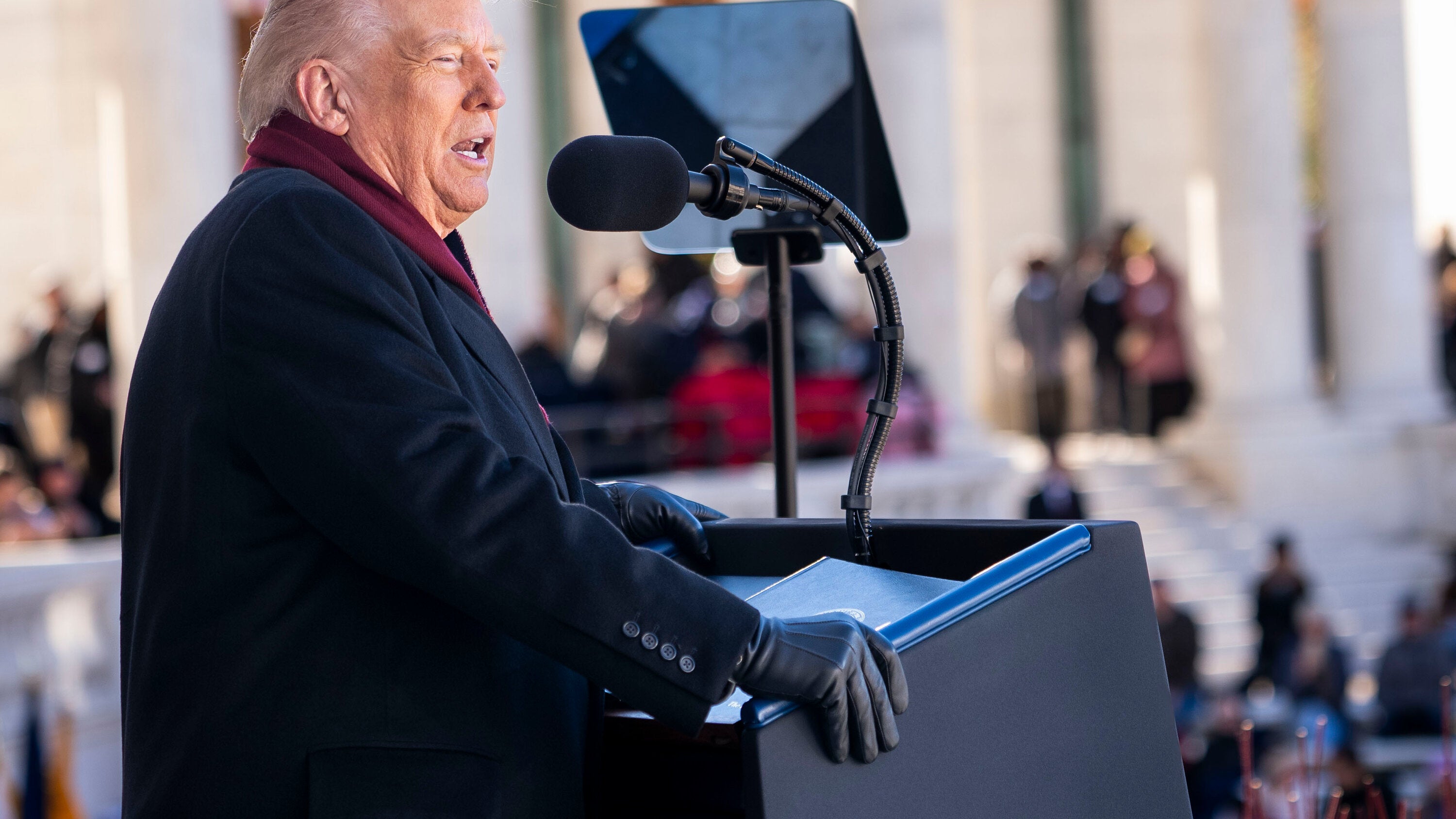
Donald Trump used his Veterans Day address to defend the Iran war, according to Atlanta Black Star’s account of his Arlington appearance. The report describes a ceremony meant to honor service becoming a platform for presidential vindication. That deserves scrutiny, not automatic acceptance of either Trump’s defense or his critics’ accusations. The supplied account does not include the disputed sentence about who started the conflict. Without those words and the underlying military record, calling that specific claim a proven lie would outrun the evidence. The accountability question still stands: Why should veterans share their national day of recognition with a president’s argument for his own war record?
Atlanta Black Star describes Trump speaking at Arlington National Cemetery before service members and families, then turning toward the conflict with Iran. Its account says critics challenged his description of how the war began, but the excerpt provides neither their evidence nor a complete transcript. A related Atlanta Black Star report about Trump claiming he could end the Iran war identifies another assertion that warrants examination. Presidential confidence does not establish operational control over an adversary. Readers deserve the terms, conditions, and evidence behind any promise that a war can end whenever one person decides. Military families cannot plan around a president’s certainty when their loved ones remain subject to deployment orders. That distinction matters far beyond a disputed holiday speech.
The first reporting obligation is straightforward: establish exactly what Trump said, then compare it with documented events. Who ordered the opening military action? What justification did the administration provide? Was Congress notified, and what evidence supported the stated threat? Those questions cannot be answered by a headline accusing him of rewriting history. Nor can applause at a military ceremony settle them. Dates matter because a president’s explanation after an attack is not necessarily the justification offered before it. A short video can establish that particular words were spoken, but surrounding remarks may change their meaning. The complete speech matters alongside official records and independent reporting. The accompanying X post should be assessed against that standard, not treated as the entire case.
Whatever readers conclude from that post, responsibility for war requires more than judging a president’s delivery. Article I of the Constitution gives Congress the power to declare war. Article II makes the president commander in chief. The War Powers Resolution, enacted in 1973 over Richard Nixon’s veto, addresses consultation, reporting, and limits on certain deployments without congressional authorization. Presidents and lawmakers have fought over its reach for decades. Nothing in that dispute turns a Veterans Day address into legal authorization. Lawmakers owe military families an explanation of what authority they believe permits continued fighting and under what limits. If the administration invokes self defense, reporters should examine the asserted threat and legal rationale. A confident speech cannot do that work for them.
The next test concerns the people carrying out the policy. A serious assessment would examine deployment lengths, injuries, reserve activations, family support, and access to treatment after service. The provided excerpt supplies no figures for those measures, so none should be invented to strengthen an argument. But their absence exposes the weakness of treating presidential messaging as the whole story. A service member’s household needs reliable information about the next rotation, not another prediction designed for television. That uncertainty can shape childcare arrangements, a spouse’s work schedule, and whether relatives must step in as caregivers. Veterans need functioning care systems after the cameras leave Arlington. The second accompanying X post should face the same test: Does it document events, express an opinion, or supply evidence?
That distinction between an assertion and evidence has a history Americans cannot afford to forget. The George W. Bush administration’s central claims about Iraqi weapons of mass destruction helped sell the 2003 invasion. The Iraq Survey Group later found no stockpiles of the kind used to justify that case. That history does not prove any particular allegation about today’s Iran conflict. It establishes why skepticism toward wartime assurances is a public duty. The people asked to fight deserve evidence before deployment, not merely revised explanations after the country has already committed them to combat. Trump’s own first term offers another reference point. He ordered the January 2020 strike that killed Iranian commander Qassem Soleimani. Congress subsequently passed a resolution seeking to limit hostilities against Iran without authorization, and Trump vetoed it. Executive power was contested then; patriotic ceremony cannot settle it now.
A president’s need for vindication must never outrank a military family’s need for answers.
Black veterans should not have to trade their right to question a president for recognition of their service.
For veterans themselves, the problem is being reduced to scenery in someone else’s defense. Their service does not certify every decision a commander in chief makes. Some veterans support Trump. Others oppose him. Many hold complicated views that cannot fit inside a campaign slogan. All deserve recognition without being drafted into an argument they did not choose. Black veterans should not have to trade their right to question a president for recognition of their service. A uniform is not a pledge of personal allegiance to whoever occupies the White House, and citizenship does not expire after discharge. Respect means allowing disagreement without questioning loyalty. It also means hearing from caregivers, surviving spouses, and veterans whose struggles make poor television. Their needs remain real when a ceremony ends and the presidential motorcade leaves.
For the political system, the danger is allowing ritual to replace oversight. Arlington carries authority because of the people buried there, not because a president borrows its backdrop. News organizations should resist packaging every military appearance as proof of leadership. Congress should demand the records and testimony needed to assess the conflict. Oversight means asking who approved the mission, what objectives remain, and how officials will measure success beyond the president declaring that he has achieved it. Military leaders should not be treated as campaign validators simply because they stand near an elected official. PVN’s coverage of Pete Hegseth and the Arlington respect debate belongs beside that broader question about official conduct. The accompanying YouTube video should be examined for what it actually documents, without assigning motives it cannot establish.
Whatever that video establishes, audiences deserve coverage that separates visible conduct from conclusions about policy. A clip may reveal a remark or reaction. It cannot independently establish a war’s origins, legality, or prospects. Black readers have good reason to demand a higher standard than competing outrage packages. That means asking whether a politician’s claims match public documents, whether promised services materialize, and whether lawmakers accept scrutiny themselves. A benefits announcement deserves follow through: who qualifies, how someone applies, what obstacles remain, and whether the agency has the staff to deliver that help. PVN’s question about who shows up after the Veterans Day parade applies here. Public gratitude is easy to perform. Sustained accountability requires following the budget, checking delivery, and returning to families after their usefulness as political symbols expires.
Black military service also carries a specific history that generic appeals to unity can erase. President Harry Truman signed Executive Order 9981 in 1948, directing equality of treatment and opportunity in the armed services. Desegregation did not happen overnight. Black veterans also faced discrimination when seeking benefits under the 1944 GI Bill, including barriers in housing and higher education. Their uniforms did not make local racism disappear. Those barriers restricted opportunities to build home equity and obtain credentials that could help support the next generation. That history makes the distance between ceremonial praise and material support especially familiar. Today’s coverage should examine benefits access, disability decisions, housing costs, and employment outcomes without assuming every veteran has the same resources. Families with less savings have less room to absorb delayed assistance or disrupted civilian earnings.
Advertisement
The next step should be documentation, not another round of personality theater. Publish the complete Veterans Day remarks. Identify the disputed claim precisely. Compare it with military announcements, congressional records, and independently verified reporting. Then follow the policy into veterans’ clinics, household budgets, and deployment decisions. If Trump’s account fails those tests, say exactly where and how. If a criticism fails, correct it with equal clarity. Black readers do not need a president protected from scrutiny or an accusation protected from verification. They need reporting that keeps power answerable to the people carrying its costs. Arlington’s dead cannot question a president. The living still can.
More from PowerVault Network: