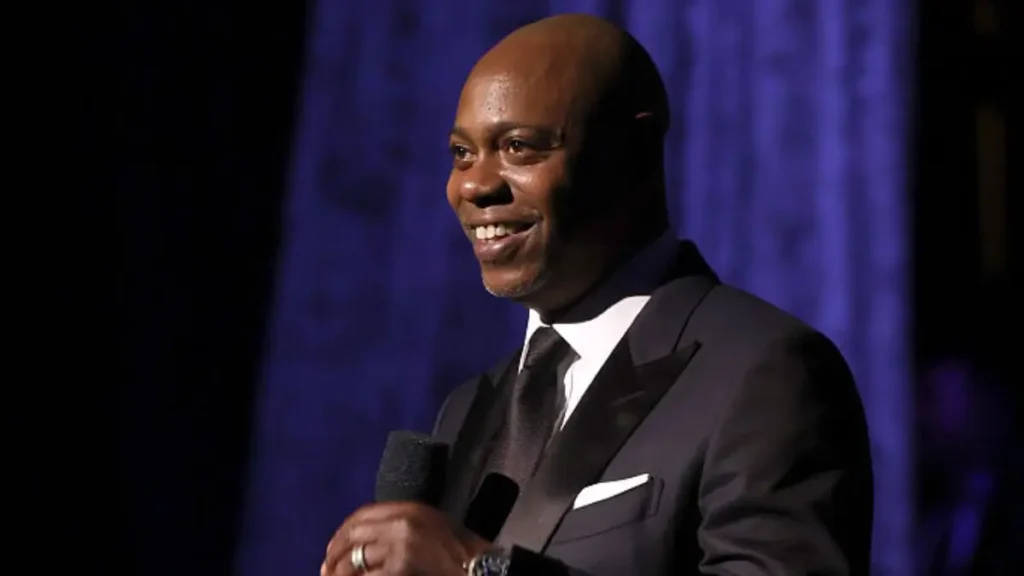
Cancel culture couldn’t sideline Dave Chappelle, and the intersection of race and double standards in comedy won’t stop him from making money. The razor-sharp comedian recently found himself in the crosshairs of criticism after announcing a show in Saudi Arabia, an engagement that sparked heated debates about ethics, morality, and the so-called ‘dirty money’ associated with such performances. In true Chappelle fashion, he pushed back, clarifying that the discourse surrounding his decision is often laced with a troubling racial subtext.
Chappelle contends that the narrative around ‘dirty money’ is frequently wielded against Black artists, a phenomenon he argues betrays a deeper bias within society. While other entertainers have participated in lucrative gigs across the globe without similar scrutiny, Chappelle’s every move is dissected, with critics quick to label him as morally compromised simply for pursuing a payday. This reaction not only reveals the double standards at play but also speaks volumes about the pervasive attitudes towards Black success in predominantly white spaces.
As Chappelle embraces the complexity of his career, he’s not backing down. He understands the risks that come with his platform, and he refuses to let condemnation dictate his choices. The comedian’s resilience in the face of such backlash is a testament to his belief in artistic freedom—something that has always been at the heart of his work. In an industry that often appears to thrive on cancel culture, Chappelle remains unapologetically committed to navigating his own path, regardless of the noise around him.
Ultimately, Chappelle’s stance sheds light on a crucial discussion regarding race, capitalism, and the arts. It offers a reminder that as much as society grapples with the implications of money earned in different contexts, the conversation around who gets to profit is still steeped in race. The backlash may come, but Chappelle’s unwavering perspective encourages a collective reflection on how we view success, morality, and the complex intersections of culture and commerce.
About The Author