By DeShawn Price, PowerVault Staff
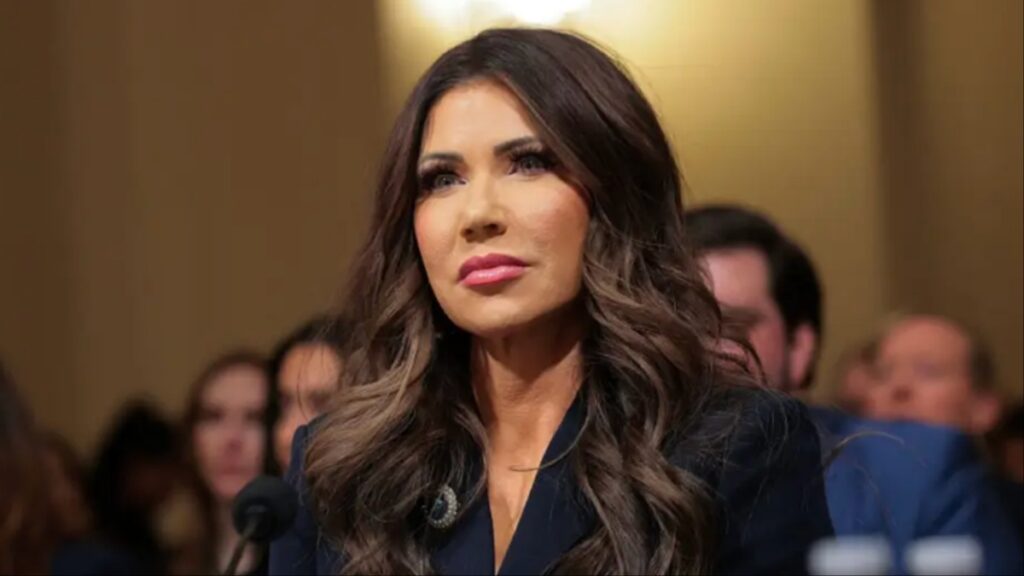
In a stunning turn of events, South Dakota Governor Kristi Noem has filed for divorce, a decision that echoes through the landscape of American politics and personal relationships. This isn’t just any divorce—it’s one wrapped in the kind of drama that suggests deeper issues at play. Recently, as rumors of infidelity swirled around Noem, she was caught in a moment where a senator nonchalantly showcased photographs of a private jet’s ‘bedroom’ while her husband stood awkwardly in the background. Talk about an uncomfortable family photo.
To understand why this is more than just a tabloid story, we need to dive into the longstanding whispers surrounding Noem’s personal life. For years, her marriage has been scrutinized, with speculation about her loyalty and integrity rising with her political capital. Noem, often positioned as a conservative flag-bearer, now finds herself in a precarious social dialogue about fidelity, power dynamics, and the expectations placed on women in politics. In a world where a woman’s achievements can be overshadowed by scandalous narrative threads, this situation becomes a glaring spotlight on how personal lives are dissected under public scrutiny.
From PowerVault’s perspective, this unfolding drama is more than a personal affair; it’s a reflection of broader cultural narratives that impact how women—especially women of color—navigate spaces dominated by patriarchal views. The political arena is notorious for demanding perfect images from its female representatives while simultaneously holding them to standards not imposed on their male counterparts. Noem’s situation raises crucial questions about authenticity, vulnerability, and the double-edged sword that is public perception. In a community that often celebrates resilience and authenticity, seeing a woman in a powerful position falter in her personal life can evoke both sympathy and critique.
If we take this moment and compare it to past political scandals—think of Bill Clinton and Monica Lewinsky or even the more recent fallout from Andrew Cuomo’s controversies—it’s evident that these situations provide a lens through which we can analyze not only personal failures but also systemic issues. Both Clinton and Cuomo faced significant backlash, but their careers were often defended by their male peers, while women like Noem may not have that same cushion. This disparity in public reaction often amplifies the stakes for women in politics.
Looking ahead, one must ponder what this means for Noem’s political future and how it might influence the landscape for other women in leadership roles. As she navigates the complexities of a public divorce amid swirling rumors, we should watch closely to see how this will affect her supporters and political allies. Will she remain a figure of strength within the GOP, or will this become a pivot point that reshapes her trajectory? In a culture where power dynamics are continually shifting, especially for women, it’s essential to track these narratives, not just for the gossip, but for the implications they hold for future generations. The conversation is just beginning.
About The Author