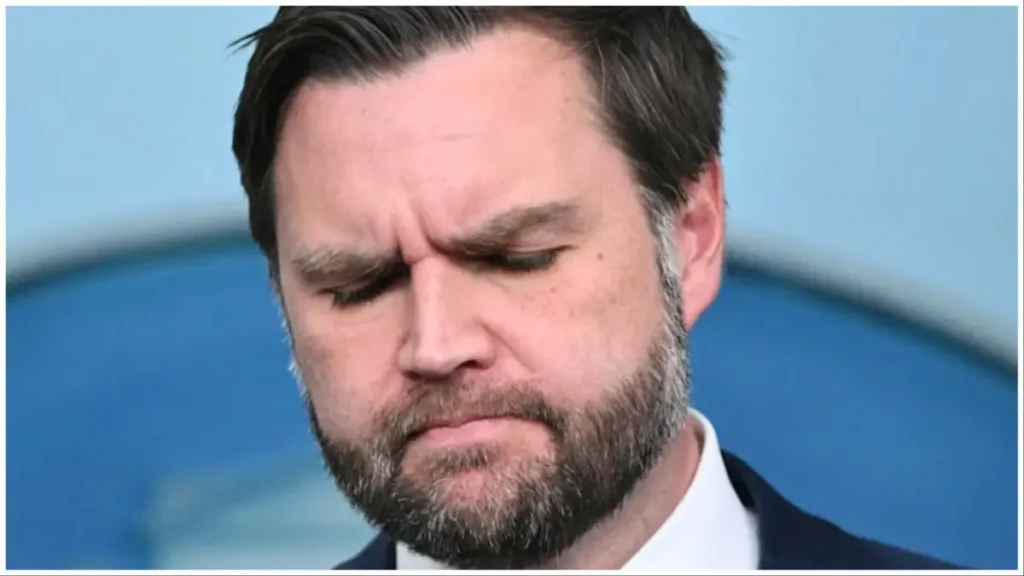
Vice President JD Vance’s recent meltdown at a press conference underscores a troubling pattern of evasiveness when it comes to accountability, especially regarding former President Donald Trump. When a reporter dared to question Vance about Trump’s questionable financial disclosures—documents that raised eyebrows and spurred concerns of impropriety—Vance’s reaction was nothing short of explosive. Instead of addressing the serious implications of the inquiry, he opted for a defensive outburst that left many in the room stunned.
Vance’s response was emblematic of a broader issue within current political leadership: a refusal to engage with challenging questions that demand transparency. Faced with the reporter’s straightforward inquiry, Vance’s frustration bubbled over, leading him to lash out in a whiny tirade that only highlighted his inability to confront uncomfortable truths. This kind of behavior not only undermines the trust that the public places in its leaders but also reflects a deeper discomfort with accountability for actions taken in the highest offices of the land.
The fallout from this incident is far-reaching. As the nation grapples with questions of ethics and integrity in politics, Vance’s reaction serves as a disturbing reminder of the lengths some will go to avoid scrutiny. It’s not just about one man’s tantrum; it’s a crucial moment that reflects a systemic issue in our political discourse, where legitimate inquiries are met with hostility instead of reasoned debate. If we are to move forward as a society committed to justice and accountability, leaders must be willing to face the music and answer tough questions head-on.
About The Author