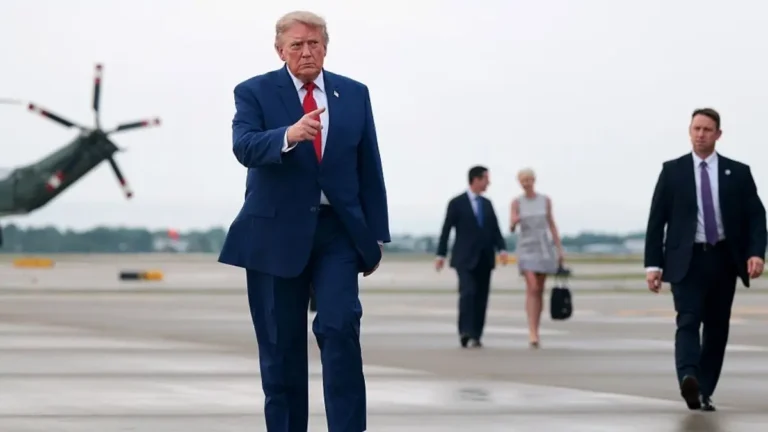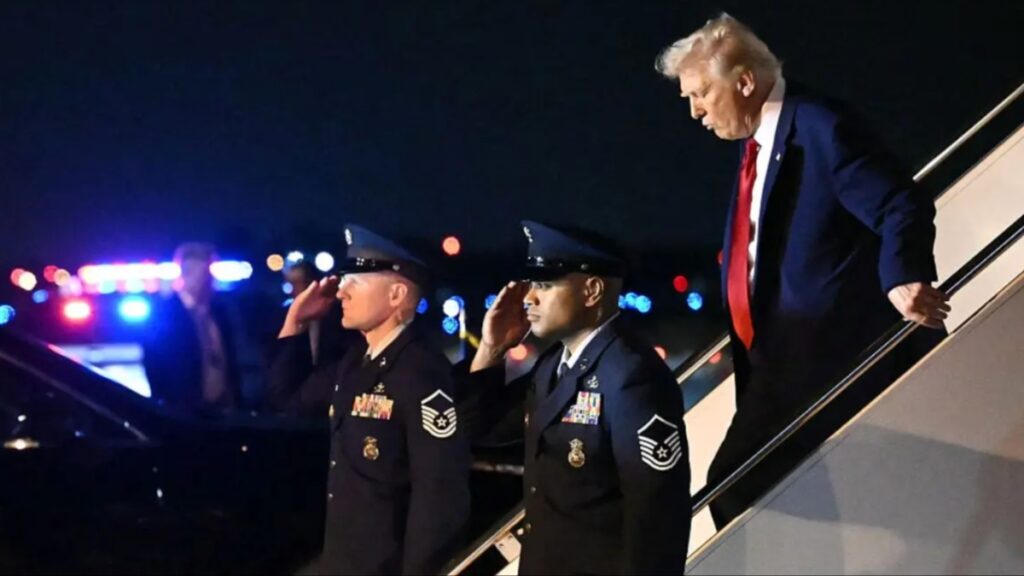
In a scene reminiscent of a slapstick comedy, former President Donald Trump found himself struggling to navigate a flight of stairs, raising eyebrows and questions about his physical condition. The incident, which unfolded in full view of cameras, left many wondering if the symptoms of chronic venous insufficiency—diagnosed by the White House last year—are taking a toll on his mobility. As he labored to ascend, the lack of grace and ease was apparent, leading to a flurry of activity from aides who rushed in a desperate attempt to shield the unfolding drama from the public eye.
The stark reality of Trump’s health has become a topic of conversation that his administration has struggled to manage. The condition, which affects blood flow in the legs, has been downplayed and dismissed, but each public appearance seems to contradict those efforts. It’s not just about an awkward moment on stairs; it’s about the implications of a leader’s fitness for duty. In a world where every movement is scrutinized, the panic among aides is telling. Are they more concerned about optics than the gravity of the situation?
This incident raises critical discussions about transparency and the expectations placed on public figures. Trump’s struggles are not merely a personal concern; they reflect broader issues of accountability and health awareness. As society grapples with the portrayal of leaders and their vulnerabilities, it becomes essential to confront these realities head-on instead of attempting to block them from view. After all, it is these very moments that shape public perception and trust.
About The Author